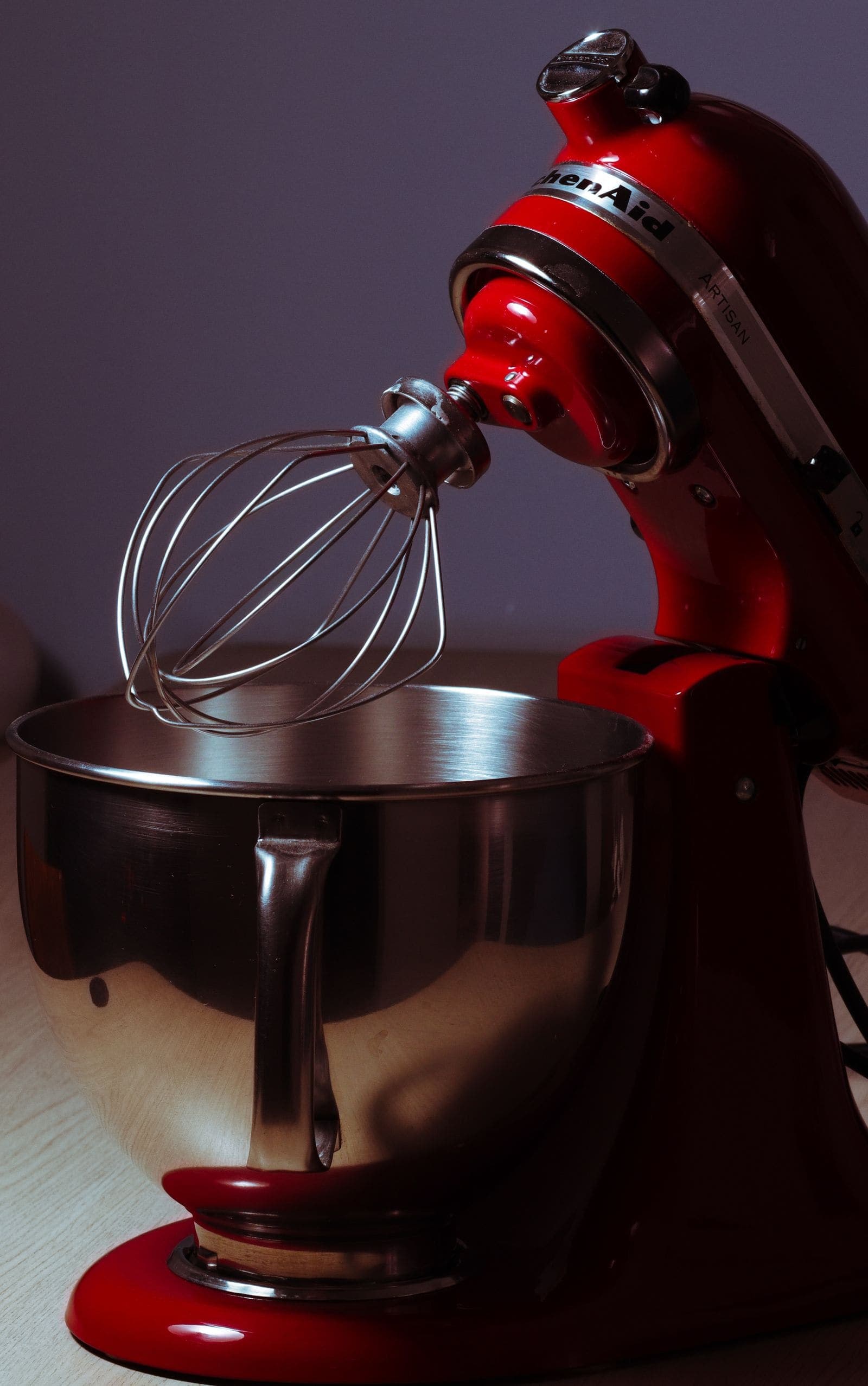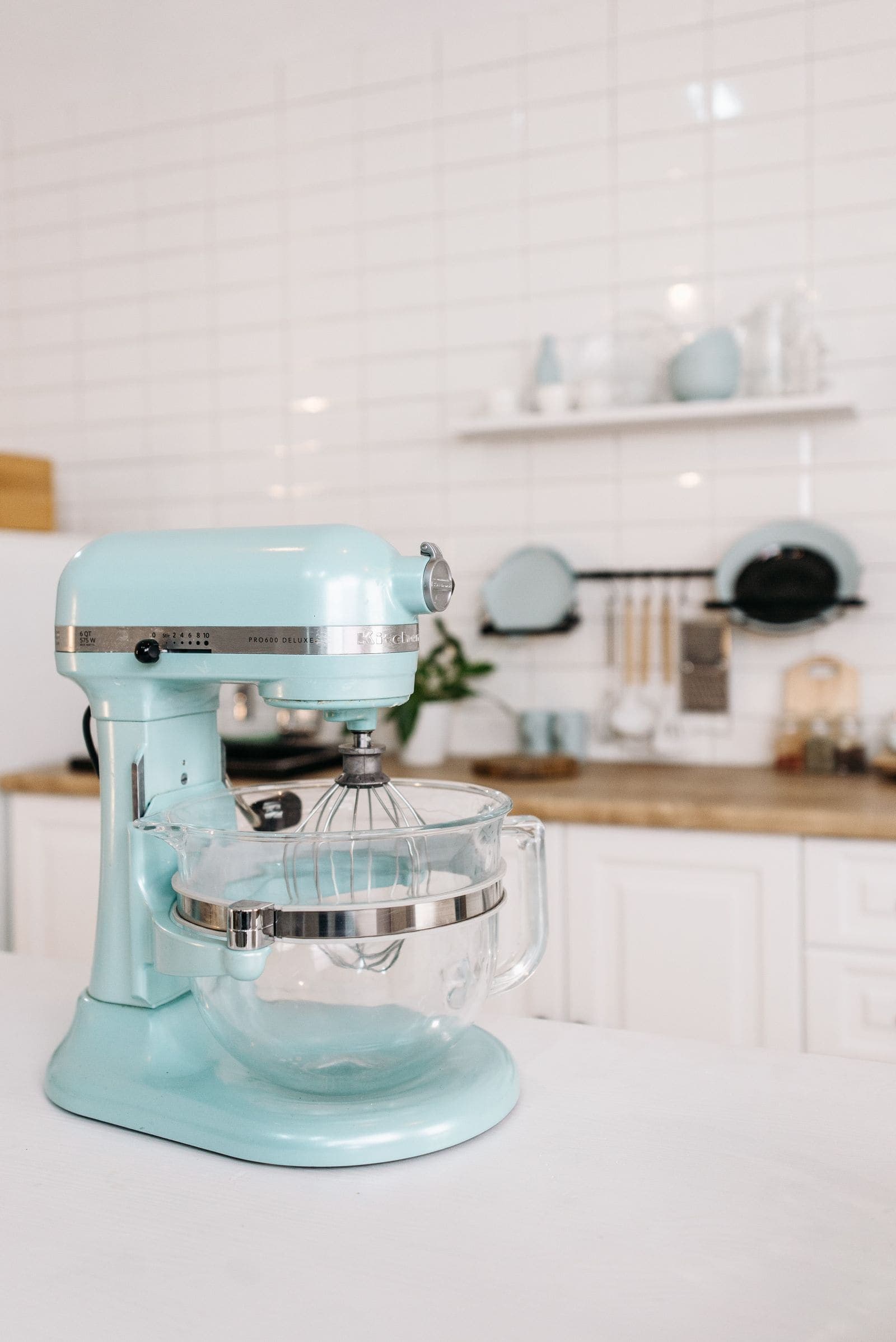
The short version: For most people, the 5-quart tilt-head Artisan is the right KitchenAid — enough motor and bowl for the baking a typical household actually does, in the widest range of colors. Shopping on price? The 4.5-quart Classic does nearly everything the Artisan does for less. Tight on counter space, or cooking for one or two? The 3.5-quart Artisan Mini. Baking bread often, or in big or dense batches? Step up to a bowl-lift Professional 600. Want the newest features? The 2026 Artisan Plus — if its extras justify the premium to you. Everything below is how to be sure which of those is you.
Here is the good news that makes this decision less stressful than it looks: nearly every KitchenAid stand mixer shares the same power hub, so the attachments — pasta rollers, meat grinders, the spiralizer — fit models going back over a century, per Consumer Reports. You are not locking into an ecosystem. You are choosing three things: how much you make at once, how the bowl attaches, and which convenience features you will actually use. If you are still weighing whether a stand mixer earns its counter space at all, start with do you need a stand mixer; if you have decided you want one, read on.
The quick-answer decision table
| You are | Best KitchenAid | Why | Price band |
|---|---|---|---|
| Most home cooks | Artisan (5 qt, tilt-head) | Right capacity for typical baking, 40-plus colors | $$ |
| Budget-focused, performance-first | Classic (4.5 qt, tilt-head) | Near-identical mixing for less money | $ |
| Small kitchen or small batches | Artisan Mini (3.5 qt) | Lightest, smallest footprint | $$ |
| Frequent or heavy bread baker | Professional 600 (6 qt, bowl-lift) | More motor and bowl for dense or double dough | $$$ |
| High-volume or near-commercial | 7-qt bowl-lift or Commercial NSF | Largest usable capacity, DC motor | $$$$ |
| Wants the newest features | Artisan Plus (5 qt, 2026) | Precision speed, LED, soft start — at a premium | $$$ |
Price bands are relative, not live prices: $ is the most affordable full-size KitchenAid, $$$$ is the pro tier.
KitchenAid’s lineup at a glance
The names are a maze — “Professional” alone spans four different machines — so here is the whole range in one place. Specifications are reconciled across Prudent Reviews’ comparison charts and KitchenAid’s own product pages; treat the wattages as advertised figures, for reasons the wattage section explains.
| Model | Capacity | Mechanism | Motor (advertised) | Weight | Cookie batch |
|---|---|---|---|---|---|
| Artisan Mini | 3.5 qt | Tilt-head | 250W DC | ~16.5 lb | ~5 dozen |
| Classic / Classic Plus | 4.5 qt | Tilt-head | ~275W | ~22 lb | ~6 dozen |
| Artisan (KSM150) | 5 qt | Tilt-head | 325W | ~23 lb | ~9 dozen |
| Artisan Plus (KSM50, 2026) | 5 qt | Tilt-head | 350W | ~23 lb | ~9 dozen |
| Professional 5 Plus | 5 qt | Bowl-lift | 525W | ~30 lb | ~9 dozen |
| Professional 600 (KP26M1X) | 6 qt | Bowl-lift | 575W | ~28 lb | ~13 dozen |
| Pro 6500 Design | 6 qt | Bowl-lift | 745W DC | ~29 lb | ~13 dozen |
| Pro Line | 7 qt | Bowl-lift | 969W DC | ~32 lb | ~14 dozen |
| Commercial (KSM8990, NSF) | 8 qt | Bowl-lift | 1.3 HP DC | — | ~13 dozen |
Classic / Classic Plus (4.5 qt, tilt-head)
The value pick, and a stronger one than its price suggests. America’s Test Kitchen named the Classic 4.5-quart (the K45 family) its best mid-priced stand mixer in 2026, praising “across-the-board performance” that, in its words, knocked out bigger and much more costly competitors. You give up a little bowl capacity, the comfort handle, and the color range, but the core mixing is there. If you bake in normal household amounts and do not care about matching your backsplash, this is the smart-money choice.
Artisan and the 2026 Artisan Plus (5 qt, tilt-head)
The Artisan (KSM150) is the default KitchenAid for a reason: a 5-quart polished bowl, a comfortable handle, and more than 40 colors. Reviewers have kept it near the top of their recommendations for over a decade. America’s Test Kitchen rates it competent but priced meaningfully above the Classic for what it calls roughly equivalent performance — so the premium buys capacity and color, not a better mix.
The Artisan Plus (KSM50), launched in March 2026, is the shiny new option. Forbes Vetted and other reviewers report it adds precision speed control (eleven speeds, roughly 20 to 260 RPM), a soft-start that eases into speed to fight flour clouds, a fold speed, an LED bowl light, and a Double Flex Edge beater. America’s Test Kitchen’s early read: the Plus performs on par with the previous Artisan and is “not our favorite KitchenAid mixer.” Because it is brand new, long-term reliability data does not exist yet. Buy it for the features if you want them; do not expect it to mix better. Our Artisan vs. Professional breakdown goes deeper if you are torn between tilt-head and bowl-lift at this tier.
Artisan Mini (3.5 qt, tilt-head)
The Mini is the Artisan shrunk about 20 percent in bowl and footprint. It is the lightest full-feature KitchenAid at around 16.5 pounds, which matters if it lives in a cabinet and gets lifted onto the counter. Right for singles, couples, small kitchens, and anyone who bakes in modest amounts. Wrong if you regularly double a cookie recipe — the usable bowl space is genuinely small, as the sizing section shows.
Professional 5 Plus and Professional 600 (bowl-lift)
This is where you cross from tilt-head to bowl-lift. The Professional 600 (KP26M1X) pairs a 6-quart bowl with a stronger motor and is widely treated as the better KitchenAid for bread — it can knead up to roughly 14 cups of flour and handle several loaves per batch. The Professional 5 Plus keeps the 5-quart capacity in a bowl-lift body. Both are heavier and pricier than the tilt-heads. The honest catch: for cakes, cookies, and whipped cream, you will notice zero difference versus an Artisan.
Pro 6500 Design and Pro Line (bowl-lift, DC motors)
The specialist tier. The Pro 6500 Design ships with a see-through glass bowl and a quieter, cooler-running DC motor; the Pro Line pushes to a 7-quart bowl and the most powerful motor in the consumer range. These earn their keep for frequent, heavy baking or for the glass bowl specifically — not for occasional use, where the money is better left in your pocket.
Commercial NSF (8 qt, bowl-lift)
The KSM8990 is a different animal: NSF-certified for commercial use, an 8-quart bowl, a “J”-hook dough arm, a 1.3-horsepower DC motor, and an orange commercial cord. Per KitchenAid’s product page and restaurant-supply listings, it is built for cafés, caterers, and serious high-volume home bakers. Most home kitchens do not need it — but if you bake to sell, this is the one that will not flinch.
Sizing: 3.5 vs 4.5 vs 5 vs 6-7 quarts
Match the bowl to your household and your baking volume, not to the biggest number you can afford:
- 3.5 qt (Mini): one to two people; single batches of cookies, small doughs, whipped cream.
- 4.5 qt (Classic): the everyday household size; a standard batch of cookies or a couple of cake layers.
- 5 qt (Artisan): the popular middle; comfortable for most baking and light-to-moderate bread.
- 6-7 qt (bowl-lift): frequent bread bakers, big-batch cookie makers, holiday and crowd cooking.
Now the number nobody on the marketing side wants to highlight: the printed capacity is not the usable capacity. A mixer needs headroom so the beater can actually move ingredients, so real working volume runs well below the label. America’s Test Kitchen measured it:
| Model (nominal) | Nominal capacity | Usable capacity (ATK) |
|---|---|---|
| Artisan Mini | 3.5 qt | ~1.9 qt |
| Artisan | 5 qt | ~3 qt |
| Classic | 4.5 qt | ~3.25 qt |
| 7-qt bowl-lift (KSM70) | 7 qt | ~5.25 qt |
Read that table twice, because it contains the guide’s most useful surprise: by America’s Test Kitchen’s measurements, the cheaper 4.5-quart Classic offers slightly more usable room than the 5-quart Artisan. Capacity is a reason to buy the Classic, not a reason to skip it — and a reason the jump to a bowl-lift is the real capacity upgrade, not the step from Classic to Artisan.
Tilt-head vs bowl-lift
Two mechanisms, and the difference is more than cosmetic.
Tilt-head models (Mini, Classic, Artisan, Artisan Plus) let you tip the motor back to add ingredients and swap the beater. They are lighter, cheaper, and come in far more colors. Bowl-lift models (the Professional and Pro tiers) keep the head fixed and raise the bowl to the beater on a lever; they are heavier, more powerful, and offer far fewer colors.
Here is the clearance point most buyers get backwards. Tilt-heads are shorter overall — around 14 inches tall, the Mini closer to 12 — but they need extra room above to tip the head back, so they can be awkward under a low cabinet. Bowl-lifts are taller at rest, roughly 16 to 17 inches, yet because the head never moves, they can actually need less working clearance under an overhead cabinet, per KitchenAid and Prudent Reviews. Measure the gap under your cabinets before you assume the smaller machine fits.
Wattage claims, and why they mislead
Wattage is the spec buyers over-weight most, and it is close to meaningless for comparing mixers. Watts measure the electricity going in, not the torque coming out. Consumer Reports is blunt about it: higher wattage sounds like more power, but “wattage doesn’t affect performance much” in its tests — and it found lower-wattage KitchenAids out-performing higher-wattage rivals. The 325-watt Artisan comfortably handles up to about 9 cups of flour.
What actually matters is motor design and gearing, and whether the motor is DC or AC. The DC motors in the Mini, Pro 6500, Pro Line, and Commercial run longer with less heat build-up, which is why they show up in the machines meant for sustained work. So do not pay for watts; pay for the drive type and capacity that fit your baking.
One genuine limitation to know, because affiliate roundups tend to bury it: America’s Test Kitchen flags that every KitchenAid restricts dough kneading to speed 2, which slows gluten development on bread. It is not a wattage problem — it is a design choice, and it is the main reason serious bread bakers sometimes look elsewhere.
Glass vs metal bowl
The bowl material is a real fork in the road, and it is mostly about how you work.
| Glass bowl | Stainless-steel bowl | |
|---|---|---|
| Weight | Heavier | Lighter |
| See-through | Yes — watch proofing and mixing | No — opaque |
| Microwave / freezer | Safe | Not microwave-safe |
| Durability | Can chip or crack | Near-indestructible |
| Measurement marks | Usually printed on | Usually none |
| Best for | Proofing, melting, prepping in one bowl | Fast chilling for whipping; heavy daily use |
Per KitchenAid, glass adds measurement marks, microwave and freezer safety, and a see-through wall that is genuinely handy for watching dough proof — at the cost of weight, fragility, and price. Steel is lighter, effectively unbreakable, and chills quickly for whipping cream or egg whites. Glass ships standard on the Pro 6500 Design and select Artisan Design models; on most others it is an accessory bowl.
Color, finish, and where to save
Color is a tilt-head luxury: the Artisan spans more than 40 shades, while bowl-lift models are typically limited to a dozen or fewer. If a specific color matters to you, that alone can point you to a tilt-head.
On price, a few honest levers:
- Buy the Classic over the Artisan if color and the comfort handle do not matter — the mixing is close, per America’s Test Kitchen.
- Skip the Pro tier unless you bake dense bread frequently; most kitchens never use the extra motor.
- Watch for bundle SKUs. Consumer Reports notes that sets pairing a mixer with a pouring shield and an extra bowl can cost less than buying those accessories separately later.
- Refurbished and holiday-sale KitchenAids are common and a legitimate way to drop a tier in price without dropping a tier in machine.
If a pasta roller or grinder is part of the appeal, it is worth reading which KitchenAid attachments are worth it before you spend, because those add up fast.
Best KitchenAid for bread — and when to look past KitchenAid
For occasional loaves, the Artisan is fine: it manages up to roughly 9 cups of flour, though owners report that on heavy or large batches the motor strains audibly and the machine can “walk” across the counter. For frequent bread, step up to the Professional 600 — a widely cited sourdough-mixer roundup calls it the better KitchenAid for bread thanks to its bigger bowl and stronger motor, good for several loaves at once.
Now the part most affiliate posts skip: for serious, high-volume bread, the best answer might not be a KitchenAid at all. The speed-2 kneading limit and the tilt-head’s tendency to strain lead testers — including America’s Test Kitchen, whose overall stand-mixer winner is a motor-in-base Ankarsrum, not a KitchenAid — to rank machines like the Ankarsrum and the Bosch Universal Plus higher for dedicated bread work. If bread is your main reason to buy, weigh the KitchenAid vs. Bosch vs. Ankarsrum comparison before committing. And if you are baking no-knead and artisan loaves, the mixer is only half the setup — a good Dutch oven for the bake and our meat temperature chart for pulling loaves at the right internal temperature finish the job.
Reliability and the “plastic gear” myth
You will see warnings online that KitchenAids have a “cheap plastic gear.” That framing is misleading. The nylon worm gear is a deliberate, sacrificial safety part — a mechanical fuse. Under an overload, it is designed to strip so the far more expensive motor survives, and it is a cheap, DIY-replaceable component, as repair guides from iFixit and Sears PartsDirect document. A machine that shreds a five-dollar gear instead of burning out its motor is built to be fixed, not thrown away. That is the opposite of a defect.
The genuine caveats, per America’s Test Kitchen: the coated aluminum attachments can chip over time, some bowls stick after heavy mixing, and the standard warranty is one year (five on the Pro Line). Broadly, though, Consumer Reports’ verdict holds — a KitchenAid stand mixer is, in its words, “a real workhorse, and made to last a long time.”
How we researched this
I’m Ari Marrow, founding editor at Cookloom, and I want to be straight about method: this is an editorial buying guide, not a first-hand test-kitchen bake-off. Every performance claim above is attributed to a named source rather than to us, and prices are given as bands, not invented figures. The backbone is America’s Test Kitchen’s 2026 stand-mixer testing, Consumer Reports’ KitchenAid guidance, KitchenAid’s own comparison pages, and Prudent Reviews’ spec charts, with repair details from iFixit. Where a claim rests on a single test, we have said so, and the newest model — the Artisan Plus — is covered as recently launched, without durability verdicts it hasn’t yet earned. For the machines we recommend by name, see our tested stand-mixer picks. Full source list below.
The bottom line
Buy the mixer that matches your baking, not the biggest number on the box. For most people that is the Artisan ($$); the Classic ($) is the value-smart near-equal; the Artisan Mini ($$) fits small kitchens; the Professional 600 ($$$) is the bread-baker’s step up; and the Artisan Plus ($$$) is worth it only if you want its new features. Ignore the wattage race, respect the gap between printed and usable capacity, and remember the nylon gear is a feature, not a flaw. Get the size and mechanism right and any of these will outlast the decade.
Sources
- America’s Test Kitchen — The Best Stand Mixers
- Consumer Reports — Which KitchenAid Stand Mixer Is Right for You?
- KitchenAid — Tilt-Head vs. Bowl-Lift Stand Mixers
- KitchenAid — Glass Bowl vs. Stainless Steel Bowl
- KitchenAid — Commercial 8-Qt Bowl-Lift Mixer (KSM8990)
- Prudent Reviews — KitchenAid Mixer Comparison Chart
- Prudent Reviews — KitchenAid Tilt-Head vs. Bowl-Lift
- Prudent Reviews — KitchenAid Artisan vs. Professional
- Forbes Vetted — KitchenAid Artisan Plus Stand Mixer
- iFixit — KitchenAid Classic K45SSWH Worm Gear Replacement
- Sears PartsDirect — How to Replace a Stand Mixer Worm Gear
- Best Stand Mixer for Sourdough Bread — roundup
- WebstaurantStore — KitchenAid KSM8990 Commercial NSF Mixer