Most serious home bakers should still buy a KitchenAid — it is the best all-rounder on the counter, and for a loaf or two a week it is genuinely enough. But if bread is your main event and you bake in volume, two specialist machines will out-knead and outlast it: the Bosch Universal Plus is the value workhorse for big batches, and the Ankarsrum Original gives the gentlest, most hand-like knead and the longest life. The catch is uncomfortable — the KitchenAid you already trust is the weakest of the three at exactly the job that defines a serious bread kitchen: moving heavy dough. Here is how to decide which one belongs on your counter.
If you are still deciding whether a stand mixer earns its footprint at all, start with our guide to whether you actually need a stand mixer. If you have already decided, read on.
The three picks at a glance
Best all-rounder — KitchenAid (get the bowl-lift Pro for bread). Unbeatable for cookies, cakes, frostings and light bread; the widest attachment ecosystem; the machine most kitchens should own. For serious bread, skip the tilt-head Artisan and buy a bowl-lift Pro.
View KitchenAid Pro 600 at AmazonView at KitchenAid
Best value for bread — Bosch Universal Plus. The lightest, most storable machine here, built around a bottom-drive open bowl that kneads large batches evenly with little babysitting. The pick for the frequent, high-volume bread baker on a budget.
View Bosch Universal Plus at Bosch
Best knead and longest life — Ankarsrum Original. A rotating bowl and roller that mimics hand kneading, gentle enough to resist over-working delicate doughs, backed by a seven-year warranty. The choice for high-hydration and enriched bread, the biggest batches, and buyers who want an heirloom.
View Ankarsrum Original at Ankarsrum
The 30-second answer — buy this if…
- You bake occasionally (a loaf or two a week) and also want a do-everything mixer: buy a KitchenAid. Nothing else here matches its versatility for the rest of your baking.
- You are a committed KitchenAid loyalist who bakes real bread: buy a bowl-lift Pro, not a tilt-head Artisan. The fixed head and stronger motor make a large difference on dense dough.
- You bake bread often, in volume, and want the most machine for your money: buy the Bosch Universal Plus.
- You bake high-hydration, sourdough or enriched doughs, want the biggest batches, and plan to keep the machine for decades: buy the Ankarsrum Original.
- You make stiff, low-hydration dough like bagels or pretzels regularly: buy the Bosch or Ankarsrum, not a KitchenAid.
Why bread breaks stand mixers — planetary vs bottom-drive vs roller
The reason these three machines behave so differently on bread comes down to one thing: how the dough gets moved. Cake batter and cookie dough are forgiving. A stiff, developing bread dough fights back, and the drive system is what determines whether the mixer works with that resistance or grinds against it.
KitchenAid — the planetary design, and its bread ceiling
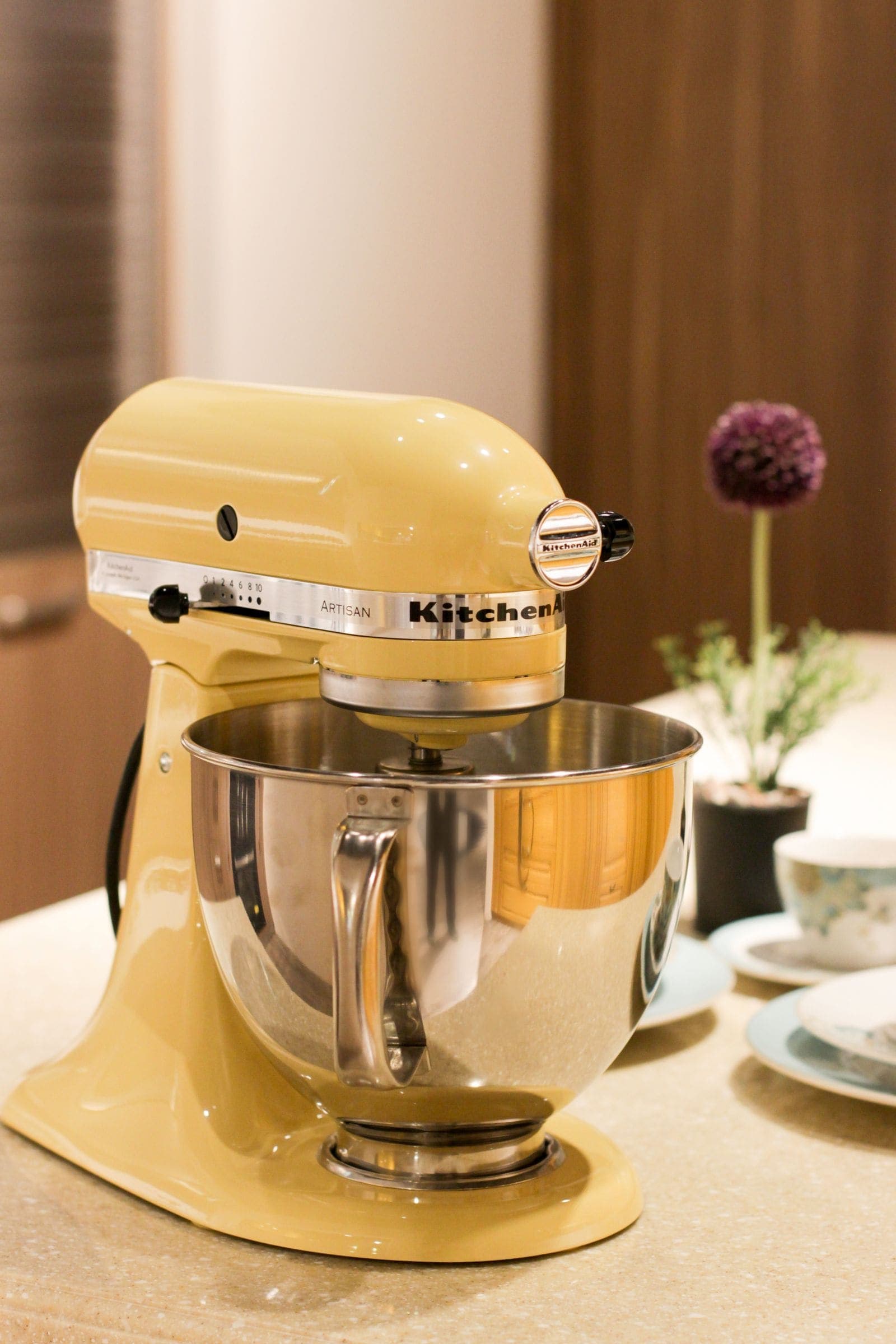
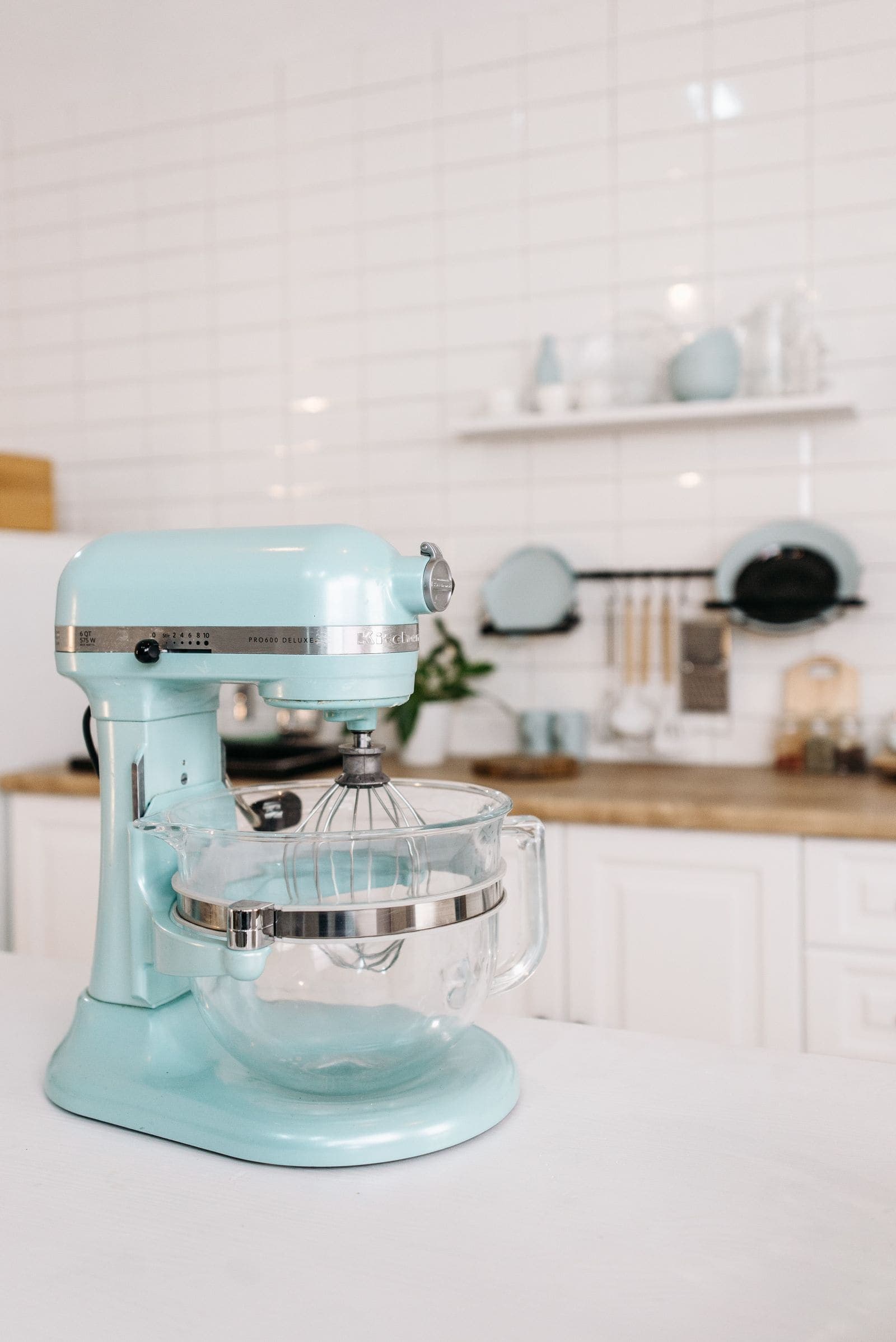
A KitchenAid uses a planetary drive: a single hook orbits inside a stationary bowl, the same motion you would make stirring by hand. It is brilliant for aeration — whipping, creaming, beating — which is exactly why it dominates general baking. But to develop a bread dough, that one hook has to physically drag the whole mass around a fixed bowl, and that demands high torque from a relatively small motor.
Two facts set the ceiling. First, the head-drive gear in many models is nylon, a deliberate sacrificial part; under heavy dough its teeth can strip, protecting the motor at the cost of the gear. Second, KitchenAid’s own guidance is telling: it specifies mixing yeast dough at Speed 2 only, and advises that if the mixer head becomes too warm to touch during a long knead, you should stop and let it rest 30 to 45 minutes before continuing. That is not a machine asking to run marathons. For one or two loaves it is fine. For a serious bread routine, it is working near its limit by design.
A note on models: within the KitchenAid line, bowl-lift Pro machines beat tilt-head Artisans for bread. They pair stronger motors with a fixed head that will not bob and rattle on dense dough. KitchenAid itself frames the bowl-lift as the choice for heavier, higher-volume mixing. If you want the full breakdown of that split, see our KitchenAid Artisan vs Professional comparison and our guide to which KitchenAid to buy.
Bosch Universal Plus — bottom-drive, open bowl, workhorse
The Bosch flips the geometry. Instead of a hook orbiting a fixed bowl, a center column drives a rotating dough hook through a stationary, open bowl. Because the drive comes from below and the dough is pushed against the bowl wall on every rotation, coverage is full and even — one independent review describes the result as more even kneading, with the practical bonus that you can add flour mid-mix through the open top and rarely need to stop and scrape.
That open-bowl, bottom-drive layout is the reason the Bosch punches so far above its size and price on bread. There is no head to overheat, less dough climbing the hook, and far less babysitting. It is the least glamorous of the three and the most quietly capable.
Ankarsrum Original — rotating bowl and roller, the artisan’s machine
The Ankarsrum is the outlier and, for bread purists, the point. The bowl itself rotates, spinning the dough against a stationary roller and scraper arm rather than dragging it with an orbiting hook. Bakers describe the action as mimicking hand kneading: it stretches and folds the dough rather than beating it, which develops gluten gently and is forgiving of delicate, high-hydration doughs. It is hard to over-knead. For stiffer or lower-hydration doughs, Ankarsrum also includes a dough hook that swaps in for the roller.
Bread technician Andrew Janjigian, formerly of Cook’s Illustrated, endorses the Ankarsrum for serious bread and makes a point that anyone who has watched a loaded KitchenAid walk toward the edge of the counter will appreciate: the Ankarsrum stays put and does not wobble its way across the bench. The trade-off is a learning curve, which we cover below.
Head-to-head specs and dough capacity
Here is how the three compare on the numbers that matter for bread. A caution before you read the wattage row: motor wattage is not comparable across these drive types. A bottom-drive or rotating-bowl design does different work per watt than a planetary head, and — as the section further down explains — the same Ankarsrum motor is labeled differently in the US and Europe. Read wattage as a rough indicator within a design, never as a cross-brand ranking.
| Spec | KitchenAid (Pro 600 bowl-lift) | Bosch Universal Plus | Ankarsrum Original |
|---|---|---|---|
| Drive type | Planetary (orbiting hook) | Bottom-drive, open bowl | Rotating bowl + roller/scraper |
| Bowl | 6 qt | 6.5 qt (plastic; stainless optional) | 7 L (~7.4 qt) + 3.5 L whisk bowl |
| Motor label | 575 W | 500 W current (older listings 800 W) | 600 W US / 1500 W EU (same motor) |
| Warranty | 1 yr | 3 yr motor/transmission | 7 yr |
| Weight | ~31 lb | ~12.3 lb (lightest by far) | ~28.7 lb |
| Price band | $$–$$$ | $$ | $$$ |
And the number bread bakers actually care about — how much dough each will move. Treat these as approximate; manufacturers and retailers quote maximums generously, so we have paired the claim with a realistic working figure.
| Mixer | Claimed max dough | Realistic for serious bread | Basis of the claim |
|---|---|---|---|
| KitchenAid (Pro 600 bowl-lift) | ~4–6 one-lb loaves | 1–2 loaves before it strains | Manufacturer listing; owner reports pull it lower |
| Bosch Universal Plus | ”up to 15 lb” / 6–8 loaves | Large single batches, comfortably | Retailer-adjacent review |
| Ankarsrum Original | 5 kg (~11 lb) per Ankarsrum; 13–15 lb per some retailers | The biggest batches of the three | Manufacturer 5 kg figure; retailers claim more |
Bread-dough capacity — the evidence
The capacity numbers only mean something next to real baking, so here is what independent testing and manufacturer figures actually show.
The most useful head-to-head is a hands-on test by Lo’s Kitchen, which ran the same bread recipe through all three machines. Its findings: the Ankarsrum finished first for loaf lift and open crumb; the Bosch was the easiest to use; and the KitchenAid was the easiest to clean but came third on crumb, leaving dough unevenly kneaded and stuck to the bowl. Notably, once the loaves were baked, blind taste differences between them were described as nominal — the gap is in how hard the machine has to work and how consistent the result, not in whether you can make good bread at all.
A separate multi-mixer review by Amy Bakes Bread reaches a compatible verdict from a different angle: the KitchenAid is best for cookies, cakes, muffins, frostings and light bread; the Bosch is the best value for frequent bread bakers and large batches; and the Ankarsrum is best for high-hydration and enriched dough, with a learning curve attached. That same reviewer reported burning out two KitchenAid motors while kneading bread — a data point, not a lab result, but a consistent one.
On the top end of capacity, Ankarsrum’s own material states the machine will prepare 5 kilograms (about 11 pounds) of dough in a batch. Some Ankarsrum and Bosch retailers quote higher ceilings — 13 to 15 pounds, or flour volumes north of 20 cups. We lead with the manufacturer’s figure and treat the larger retailer numbers as claims, because several of the sites making them also sell the machines. America’s Test Kitchen maintains a well-regarded roundup of the category that we consulted as a reference, though we do not restate its specific award language here.
The honest summary: all three make good bread. The KitchenAid does it in small quantities with more supervision and more wear; the Bosch and Ankarsrum do it in larger quantities, more evenly, with room to spare.
Motor, durability and the wattage myth
This is where the three separate most sharply, and where the marketing is most misleading.
Start with the myth. You will see the US Ankarsrum listed at 600 W and the European version at 1500 W, and conclude the American machine is weak. It is not. Per Ankarsrum, it is the identical machine; the label changes only because the US mains supply is 120 volts and Europe’s is 240 volts. In the company’s own words, the strength of the machine is no different. (One caveat for the spec-obsessed: some product pages render a confusing “1500 W main plus 600 W auxiliary” line. That is a voltage-variant display artifact, not two motors — there is one motor.) Do not let the small US wattage number talk you out of the machine.
Bosch carries its own footnote: current retail Universal Plus units are listed around 500 W, while some older reviews cite 800 W for earlier models. Read the current spec on the exact unit you are buying, and again, do not compare that number head-to-head against a planetary KitchenAid — the drive does different work.
Durability is the real story, and the warranties tell it plainly. The KitchenAid Artisan and Pro 600 carry a one-year warranty. The Bosch offers three years on the motor and transmission. The Ankarsrum offers seven. A manufacturer’s warranty is a statement about how long it expects the machine to survive its intended use, and on bread specifically the pattern in owner reports matches: forum bakers repeatedly call KitchenAid Artisans underpowered for bread, say they cannot really handle stiff doughs like bagels, and describe burning units out — one baker cites going through three KitchenAids in three years before switching to a Bosch. Bosch owners, by contrast, report eight or nine-plus years of heavy bread use without motor trouble. Ankarsrum owners tend to say they will never go back.
(A quick model-warranty note so you are not caught out: the one-year figure applies to the Artisan and Pro 600. A separate KitchenAid “Pro Line” 7-quart model carries a longer warranty — do not assume every “Pro” badge means the same coverage.)
Footprint, noise and everyday use
Specs decide the shortlist; living with the machine decides your satisfaction.
The Bosch is dramatically smaller and lighter — around 12 pounds against roughly 28 to 31 for the other two — which matters more than bakers expect. A mixer that lives in a cabinet gets used less than one that stays on the counter, and the Bosch is the only one here you can lift with one hand and stow easily. For a storage-constrained kitchen, that alone can settle the decision.
The Ankarsrum asks the most of you up front. New owners consistently describe early babysitting: adjusting the roller arm, learning the scraper, dialing in the feel for each dough. The reward, per those same owners, is that it does not heat the dough, handles the largest batches, and — once it clicks — earns fierce loyalty. Budget a few bakes to get comfortable.
The KitchenAid is the easiest to clean and the most familiar, which counts for something. But on bread it needs the most supervision: the Lo’s Kitchen test noted dough climbing the hook and sticking to the bowl, meaning more stopping and scraping precisely when you are trying to develop gluten.
One durability quirk worth flagging on the Bosch: several owners report that the plastic cookie and cake paddles can crack when creaming cold butter (below roughly 20 °C / 68 °F). It is a genuine gripe for pastry work — bring butter to room temperature — but as one baker put it, for bread there is no contest.
Price and value
Prices move, so here are bands rather than a false-precision figure.
- KitchenAid — the tilt-head Artisan sits in the mid band ($$); the bowl-lift Pro you actually want for bread pushes into the upper band ($$–$$$).
- Bosch Universal Plus — the value leader, comfortably in the mid band ($$), and the cheapest genuine high-volume bread machine of the three.
- Ankarsrum Original — the premium ($$$), typically the most expensive here.
The way to think about cost is per year of service, not sticker price. A one-year warranty replaced every few years is not cheaper than a seven-year machine that outlives it — a point the owners cycling through multiple KitchenAids make involuntarily. If you bake bread rarely, the KitchenAid’s versatility is worth its price and the durability question barely arises. If you bake bread constantly, the Bosch pays for itself in avoided frustration and the Ankarsrum in avoided replacement. That is the whole value calculus.
Which should you buy? The decision matrix
| Your baking | Buy this | Why |
|---|---|---|
| Occasional loaves + all-round baking | KitchenAid Artisan | Best versatility; a loaf or two a week is within its comfort zone |
| Committed KitchenAid loyalist who bakes real bread | KitchenAid bowl-lift Pro (not tilt-head) | Stronger motor, fixed head; the most bread the KitchenAid line can sensibly do |
| Frequent, high-volume bread on a budget | Bosch Universal Plus | Best value; even knead, big batches, lightest to store |
| High-hydration, sourdough or enriched dough; biggest batches; wants an heirloom | Ankarsrum Original | Gentlest hand-like knead, largest capacity, seven-year warranty |
| Stiff dough — bagels, pretzels, low hydration | Bosch or Ankarsrum | Built for heavy kneading; a KitchenAid risks its head gear |
Whichever you choose, the mixer is only half a bread kitchen. A reliable read on dough and finished-loaf temperature makes a bigger difference to results than another 100 watts — see our best kitchen thermometers guide. And if you bake hearth loaves, the vessel matters as much as the knead: our best Dutch ovens guide covers the combo cookers that give a home oven its crust. To see the full field beyond these three, browse our best stand mixers roundup.
How we researched this
Cookloom has not lab-tested these three mixers side by side, and we will not pretend otherwise. This comparison is built from primary manufacturer specifications, independent hands-on reviews, and attributed owner reports — each labeled in the text so you can weigh it yourself.
Our mechanical and spec claims come from the manufacturers directly: KitchenAid’s operating guidance and tilt-head vs bowl-lift explainer, Ankarsrum’s product page, 5-kilo dough capacity note and wattage FAQ. Performance judgments are drawn from a same-recipe three-mixer bread test at Lo’s Kitchen and a multi-mixer review at Amy Bakes Bread, with the Bosch’s drive geometry corroborated by Bread Machine Digest and the Ankarsrum’s kneading action by bread technician Andrew Janjigian at Wordloaf. Owner-longevity and failure patterns are community-sourced from The Fresh Loaf and baking forums, and treated as reports, not verdicts. Where a source sells the machines it praises, we say so and lean on independent tests instead.
The bottom line
Buy the KitchenAid if you want one mixer that does everything well and bread is an occasional pleasure — just get a bowl-lift Pro if bread matters to you at all. Buy the Bosch Universal Plus if you bake bread often, in volume, and want the most capable machine for the least money in the smallest footprint. Buy the Ankarsrum Original if you bake high-hydration or enriched doughs, want the biggest batches and the gentlest knead, and intend to keep the machine for decades. There is no wrong answer here — only the right match for how much bread you actually make.
View KitchenAid Pro 600 at AmazonView Bosch Universal PlusView Ankarsrum Original
Sources
- KitchenAid — Head Feels Warm (operating guidance)
- KitchenAid — Tilt-Head vs Bowl-Lift
- KitchenAid — Warranty
- KitchenAid Professional 600 (Amazon, KP26M1X)
- Bosch Universal Plus spec (Everything Kitchens, MUM6N10UC)
- Bread Machine Digest — Bosch Universal Plus review
- Ankarsrum — Original product page
- Ankarsrum — Prepare 5 kilos of dough
- Ankarsrum — Why does the US machine say 600 W and the European 1500 W?
- Kitchen Kneads — Ankarsrum power and capacity
- Wordloaf — All Mixed Up, Part 2 (Andrew Janjigian)
- Lo’s Kitchen — three-mixer bread test
- Amy Bakes Bread — KitchenAid, Bosch and Ankarsrum review
- America’s Test Kitchen — Best Stand Mixers
- The Fresh Loaf — Bosch vs Ankarsrum thread
- Baking Forums — KitchenAid mixer burning out