KitchenAid sells more than a dozen attachments that clip onto the mixer you already own, and the honest answer to whether they are worth it is this: a few genuinely are, most are merely convenient, and one can actually damage your mixer. Because nearly every attachment costs about what a comparable standalone appliance costs, the real question isn’t “is it any good?” — it’s “am I buying capability, or just saving counter space?”
The short answer: Buy KitchenAid attachments for convenience and counter space, not raw capability — most cost about the same as a standalone tool that does the job better. The clear worth-it picks are the 3-piece pasta roller and cutter set and the metal food grinder (for small batches). The spiralizer and ice cream maker are situational. Skip the Gourmet Pasta Press — it can overheat and damage the mixer at the recommended speed — the food processor attachment, and, for most people, the grain mill, sifter-and-scale, and vegetable sheet cutter. And yes: every power-hub attachment fits every household KitchenAid stand mixer, old or new.
If you don’t own a mixer yet and you’re weighing the whole ecosystem before you commit, start with our guide to the best stand mixers — the attachment lineup is a real part of that decision.
How the ecosystem works (and the one fact that makes it rational)
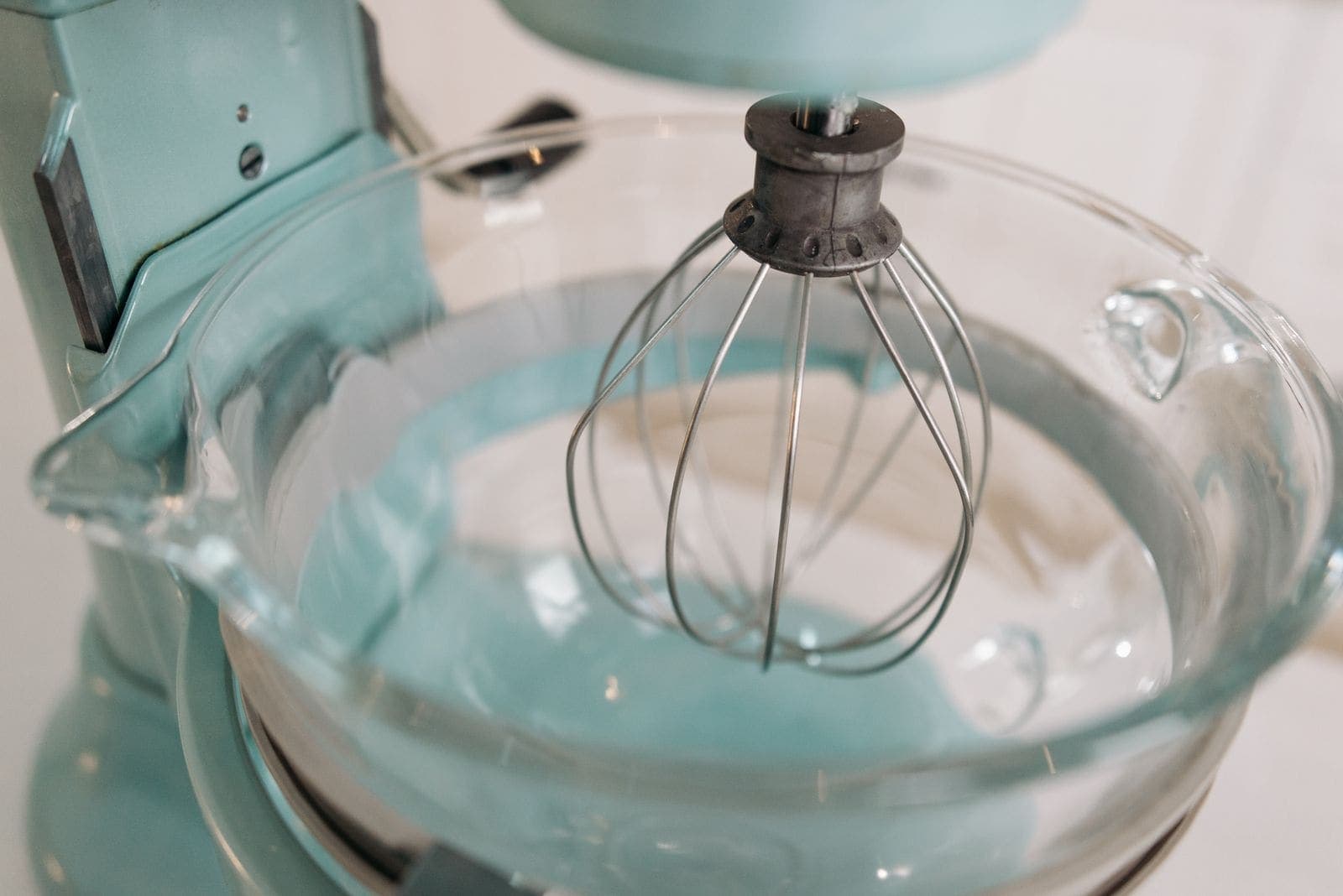
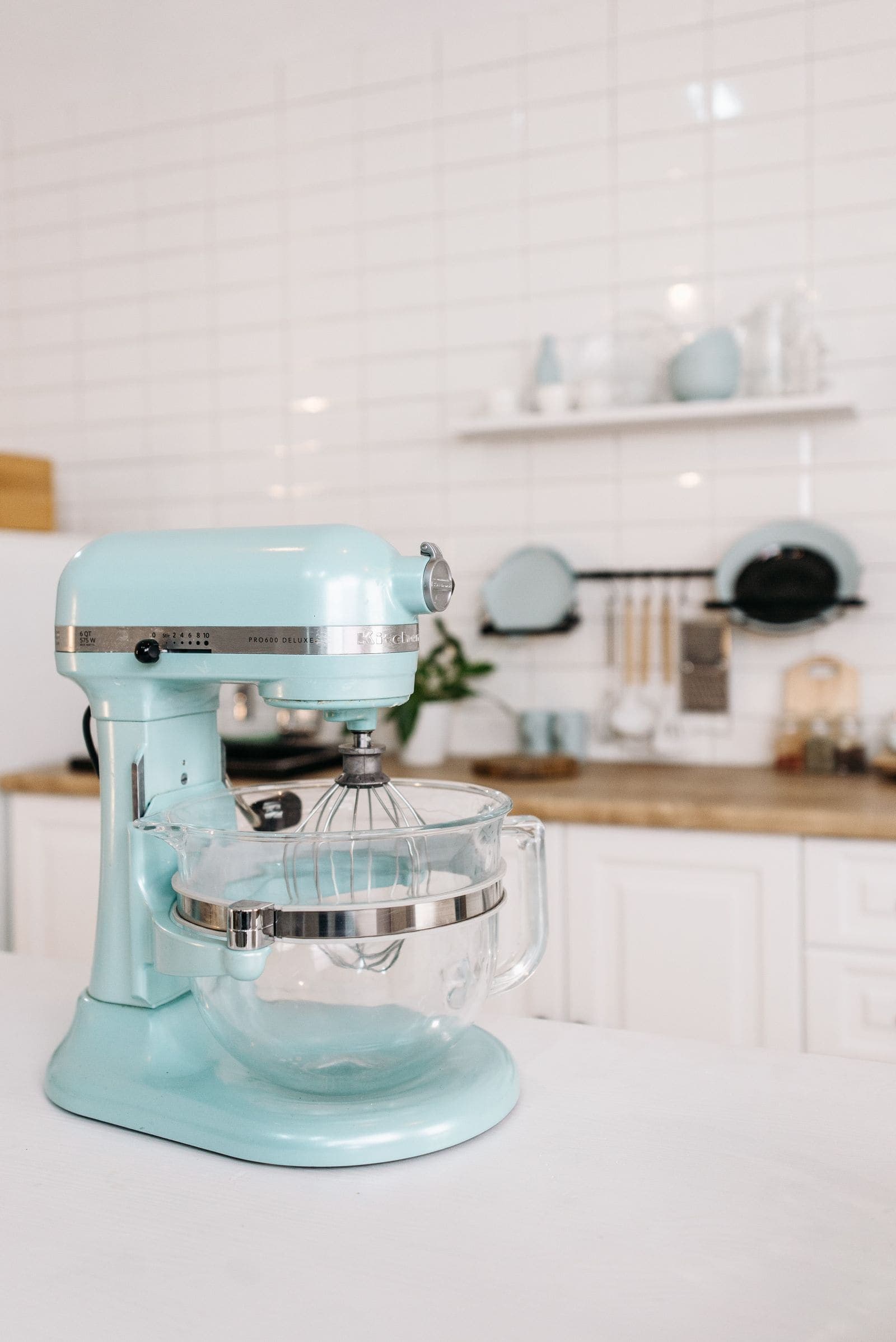
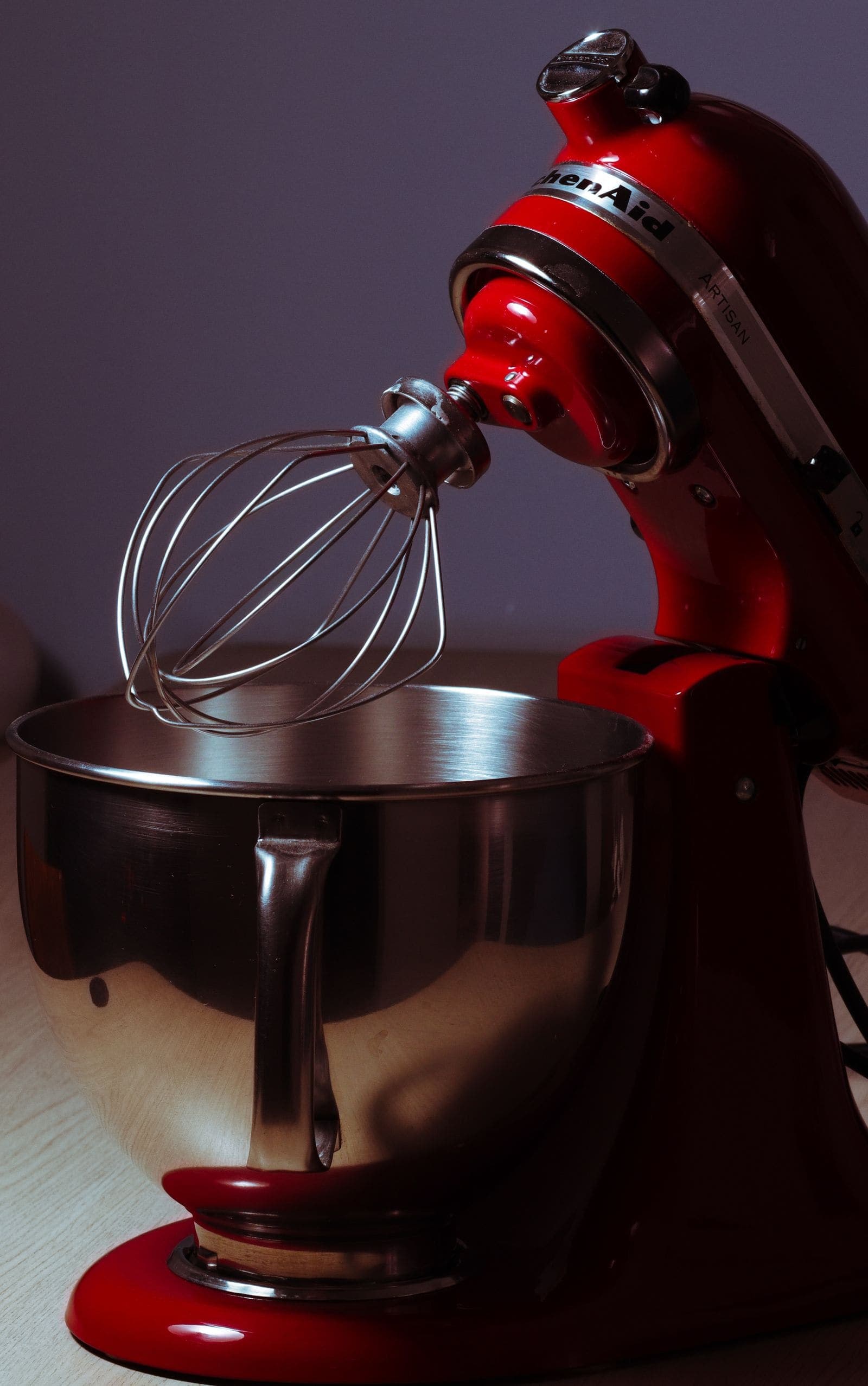
The thing that makes building a KitchenAid attachment collection sensible is the universal power hub. That’s the slanted socket on the front of the mixer head, hidden behind a flip-up cap. Every hub-driven attachment — pasta roller, grinder, spiralizer, food processor — uses the same fitting, so it doesn’t matter whether your mixer is two years old or twenty. The box literally reads “Fits all KitchenAid Stand Mixers,” and KitchenAid backs it with a published Attachment Fit Guarantee. This is a genuine strength, and it’s the reason a good attachment can outlive the appliance you bought it for.
There is one category of exception worth knowing before you buy. A handful of attachments are motor-shaft designs rather than power-hub designs — most notably the ice cream maker and the precise-heat mixing bowl. These use a special bowl that locks to the mixer base, and that bowl is too large for the compact 3.5-quart Artisan Mini. The Kitchn confirms the ice cream maker is “compatible with all… except for the Artisan Mini,” and KitchenAid’s own compatibility guidance flags a few bowl-lift models (including the KPM5 and the 6.9-liter Professional) as having partial incompatibilities with certain bowl-style attachments. If you own a Mini or a large bowl-lift machine, check the model note on the product page before buying anything that comes with its own bowl. Hub attachments are safe across the board.
One more piece of context justifies the whole “invest in the ecosystem” mindset: KitchenAid mixers are long-lived. Prudent Reviews notes these machines average roughly 15 years of service and many run 30 or more. When the base outlasts most of your other appliances, spending on attachments that stay useful for decades is a rational bet — provided you pick the ones that actually earn it.
At a glance: worth it, situational, or skip
Prices shift constantly with sales, so treat these as rough tiers rather than exact figures: $ is the least expensive attachments, $$ the mid range, and $$$ the premium end.
| Attachment | Verdict | Best for | Why | Price |
|---|---|---|---|---|
| Pasta Roller & Cutter (3-pc) | Worth it | Fresh-pasta households | Matches manual quality, faster, one-handed | $$$ |
| Metal Food Grinder | Worth it | Small-batch grinding | Fresh burgers and sausage, minimal waste | $$ |
| Spiralizer | Situational | Frequent zoodle makers | Works, but a cheap handheld matches it | $$$ |
| Ice Cream Maker | Situational | Small batches, no extra appliance | Creamy results, but slow prep and one batch/day | $$ |
| Food Processor | Skip (mostly) | Tight counters only | Standalone is same price, far better | $$$ |
| Grain Mill | Niche | Committed fresh-flour bakers | Small batches only, heats up, slow | $$$ |
| Sifter + Scale | Skip | — | Cleaning gripes; a scale and sieve win | $$–$$$ |
| Vegetable Sheet Cutter | Niche | Low-carb / gluten-free meal prep | Fun but a luxury, and wasteful | $$$ |
| Gourmet Pasta Press | Skip | — | Can overheat and damage the mixer | $$$ |
The attachments genuinely worth it
Pasta Roller & Cutter set — the ecosystem’s crown jewel
If you make fresh pasta, this is the one attachment almost everyone agrees is worth buying. The 3-piece set (model KSMPRA) includes a sheet roller plus fettuccine and spaghetti cutters, and it turns the mixer into a hands-freer pasta machine.
America’s Test Kitchen found the sheets and strands “on par with” a quality manual Marcato, with two real advantages: the powered cutters produced fettuccine and angel hair up to four minutes faster per batch, and because the mixer drives the rollers, you can feed dough one-handed instead of cranking a clamped machine with one hand while feeding with the other. The Kitchn is blunter still: “For making your own pasta at home, this is absolutely worth the investment,” and reports using it successfully even on gluten-free dough.
The owner reports are what really sell it. On cooking forums like Hungry Onion and Discuss Cooking, owners describe it as “one of my favorite gadgets, ever,” and multiple people report 20 to 25 years of trouble-free use. It’s also cleaner than people expect — firm pasta dough doesn’t smear, so you mostly just wipe it down.
Honesty requires the caveats. The automated speed can process dough sideways if you’re not paying attention, folding the sheet or leaving jagged edges, and it can tear very delicate or gluten-free sheets. One owner wore out a roller bearing over years of use (a squeak that turned into a leak), and a few note the base panels are plastic. A minority argue it’s overpriced given how cheap and durable a hand-crank machine is — a fair point if you already own one. Worth knowing: many of the harshest one- and two-star reviews online trace back to counterfeit listings rather than genuine KitchenAid units, so buy from KitchenAid or an authorized seller. Price band: $$$.
Metal Food Grinder — worth it if you actually grind
The metal food grinder (KSMMGA) is the second attachment I’d call a confident buy, with one condition attached: it’s worth it if grinding is something you’ll really do. America’s Test Kitchen rates the grinder “highly recommended,” noting it works faster than a food processor with minimal waste. The current all-metal version ships with fine, medium, and coarse plates, two sausage-stuffing tubes, and a storage case, and it handles burger blends, fresh sausage, hard cheese, and breadcrumbs.
Metal versus plastic
KitchenAid sells a cheaper plastic grinder too, and the verdict here is consistent: get the metal one. Owners on Hungry Onion report the plastic version cracking within a year and note its plastic screw doesn’t cut well. The all-metal grinder has a larger blade, three grate sizes, and is far more durable. The Kitchn adds a practical reason to prefer stainless: you can chill the metal grinder in the freezer beforehand, which keeps the meat cold and stops it gumming up. The plastic model is dishwasher-safe and roughly half the price ($), but the metal version ($$) is the one that lasts.
Small batches, not a game processor
This is the honest boundary. Owners across Rokslide and Kitchen Knife Forums are unanimous that the grinder shines on 2- to 3-pound small batches — home burger blends, meatballs, meatloaf, breakfast sausage, even falafel. What it is not is a high-volume grinder. Push 30 to 40 pounds through it in one sitting and owners report “a burning electrical smell”; as one put it, a dedicated three-quarter-horsepower grinder “runs circles around it.” If you process game or buy meat in bulk, get a standalone grinder. For weeknight-scale grinding, the attachment is genuinely great.
Owner tips that make it work
The same forums repeat a handful of best practices: cube the meat to about half an inch, freeze or thoroughly chill it (and the grinder) before you start, remove silverskin so it doesn’t wrap the blade, and don’t force the pace — let the motor work. One common complaint, “metal shavings in the grind,” is widely attributed to over-tightening the retaining collar, which presses the blade against the plate; back it off slightly and the problem disappears.
Grinding your own burger is also a food-safety moment worth naming: home-ground meat should be cooked to a safe internal temperature, and our meat temperature chart has the numbers. Then sear those patties hard in a screaming-hot cast-iron skillet for the crust store-ground beef rarely delivers.
Situational: buy only if it fits how you cook
Spiralizer
The spiralizer (KSM2APC 7-blade, or the 5-blade KSM1APC) works — it just isn’t essential. America’s Test Kitchen found it made long noodles and ribbons easily and was the easiest of the spiralizers they tested to clean, but also called it “fussy to use,” said it generates significant waste, and noted it struggles with dense vegetables like butternut squash. The Kitchn agrees it’s fairly hands-free for zoodles but says the blades take some trial and error, and it also choked on butternut. The honest read: if you already own the mixer and spiralize often, it’s a tidy addition — but a $20–30 handheld spiralizer does the same job. You’re paying for convenience, not capability. Price band: $$$.
Ice Cream Maker
This is the attachment with the most genuine disagreement among reviewers, so I’ll give you both sides rather than fake a winner. America’s Test Kitchen says skip it: acceptable sorbet but with ice crystals, a finicky paddle, and they’d rather you buy a standalone Cuisinart. The Kitchn disagrees, calling the results “delicious and creamy and perfectly churned in about 30 minutes.”
Where everyone agrees is the constraints, and they matter. You must freeze the bowl 12 to 24 hours ahead, there’s no auto shut-off (so you can over-churn if you walk away), it’s hand-wash only, and it realistically makes about one 2-quart batch per day because the bowl has to refreeze. Remember, too, that its bowl doesn’t fit the Artisan Mini. Verdict: worth it if you already own a compatible KitchenAid, want small batches, and would rather not store another appliance — skip it if you want volume or set-and-forget churning. Price band: $$.
Skip or think twice
Gourmet Pasta Press — the one that can hurt your mixer
This is the strongest “skip” in the lineup, and it comes with a warning. The Gourmet Pasta Press (KSMPEXTA) is an extruder that pushes dough through plates to make shapes like macaroni and bucatini. America’s Test Kitchen’s verdict is flat: “Skip this attachment.” More seriously, running it at KitchenAid’s own recommended speed 10 overheated the gears and broke their mixer. On top of that, extrusion was slow (22 to 27 minutes a batch), cleanup was tedious, and the wire cutter pinched the pasta openings closed. When a manufacturer’s recommended setting can damage the appliance it’s bolted to, that’s a citable reason to pass. Price band: $$$.
Food Processor attachment
The ExactSlice food processor attachment (KSM2FPA) includes slicing, grating, and julienne discs plus a dicing kit, and its one real selling point is counter space — it tucks away when a standalone processor wouldn’t. But it “can’t match the full power of standalone models,” and the community verdict is blunt: these attachments cost about the same as a top 14-cup Cuisinart, “and there is no comparison.” Buy it only if counter space is a genuine, hard constraint. Otherwise, a standalone processor wins on every other axis. Price band: $$$.
Grain Mill
The all-metal grain mill is a true niche pick — worth it only for committed fresh-flour bakers. It grinds roughly a cup of wheat in about two minutes with coarse-to-fine settings, and owners like the grind consistency for small batches. The drawbacks are real: on the finest setting the flour can come out so hot it “felt cooked,” it’s slow, and it heats the mixer’s motor, so you’re forced to keep batches small. It also grinds dry grain only — nothing oily or wet. Serious home millers consistently prefer a dedicated mill like a Mockmill. If you bake fresh-milled bread weekly, maybe; for everyone else, skip. Price band: $$$.
Sifter + Scale
The sifter-and-scale attachment (KSMSFTA) sifts flour straight into the bowl and has a scale that detaches for standalone weighing in grams, ounces, or pounds. Reviewed and retailer feedback are mixed, and the complaints cluster: flour lodges in the scale’s crevices (owners report digging it out with a toothpick), there’s no cup measurement, and the documentation is thin. A $15 digital scale plus a hand sieve does the same work with less fuss. Skip for most people. Price band: $$–$$$.
Vegetable Sheet Cutter
The vegetable sheet cutter (KSMSCA / KSM2SCA) shaves vegetables into thin continuous sheets for things like veg-lasagna, wraps, and ribbons. Owners find it fun and well-made, and it’s genuinely useful for low-carb or gluten-free meal prep — but reviewers describe it as “a luxury rather than a necessity,” it’s size-limited on the vegetables it accepts, and it’s wasteful. Buy it only if that specific use is a standing habit in your kitchen. Price band: $$$.
How to decide what to buy first
There’s a simple rule under all of this. Buy the attachment for the thing you do weekly. If fresh pasta is a real habit, the pasta roller pays for itself in enjoyment and quality. If you grind meat for burgers and sausage on a regular basis, the metal grinder is a joy. For anything you’d do only occasionally, a standalone tool almost always wins on price and performance — the attachment’s edge is convenience and storage, and those only matter when the tool earns its shelf space.
Start with one attachment, use it for a season, and expand only when you find yourself reaching for a job the mixer could handle. The ecosystem rewards patience: because the power hub hasn’t changed and the mixers last for decades, nothing you skip today gets harder to add later.
How we researched this
We didn’t test these attachments ourselves; instead we synthesized the most credible independent reviews with consistent owner reports from open cooking communities. The editorial backbone is America’s Test Kitchen’s attachment review and The Kitchn’s hands-on coverage, cross-referenced against long-run owner discussion on forums like Hungry Onion, Rokslide, and Kitchen Knife Forums. Compatibility claims are verified against KitchenAid’s own Attachment Fit Guarantee and product pages. Prices move with promotions, so we use tiers rather than exact figures — confirm the current price on the product page before you buy.
Related reading
- Best stand mixers — how the attachment ecosystem factors into choosing the machine itself
- Which KitchenAid mixer should you buy? — sizing and model picks, including which take the bowl-style attachments
- Do you need a stand mixer? — the honest case for and against owning one at all
Sources
- America’s Test Kitchen — Reviewing KitchenAid Attachments
- The Kitchn — KitchenAid Stand Mixer Attachments Review
- KitchenAid — Attachment Fit Guarantee
- KitchenAid — 3-Piece Pasta Roller & Cutter Set (KSMPRA)
- KitchenAid — Metal Food Grinder Attachment (KSMMGA)
- KitchenAid — 7-Blade Spiralizer Plus (KSM2APC)
- Hungry Onion — Your KitchenAid stand mixer attachments
- Discuss Cooking — KitchenAid pasta roller attachment
- Rokslide — KitchenAid meat grinder attachment: worth getting?
- Kitchen Knife Forums — Opinions on the KitchenAid meat grinder attachment
- Reviewed — KitchenAid Sifter and Scale Attachment Review
- Lab to Oven — KitchenAid Grain Mill Review
- Our Gabled Home — Grinding Grains at Home: KitchenAid vs. Mockmill
- Prudent Reviews — KitchenAid Mixer Review