Pour-over is the cheapest way to make genuinely great coffee — and the most hands-on. You control the water, so you control the cup. For most people, the forgiving flat-bottom Kalita Wave 185 is the easiest place to start. The Hario V60 gives you the most control once your technique is dialed in, and the Chemex Classic makes the cleanest, brightest cup while brewing enough to share. The honest catch: pour-over exposes your grind and your pour more than any machine does, so a good burr grinder and a little practice matter more here than which cone you buy. New to it? Read our companion guide on how to make pour-over coffee alongside this one.
None of these three is “best” in a vacuum. They’re different tools for different priorities: control, clarity, or consistency. Below is how to match one to the way you actually drink coffee.
At a glance
| Pick | Best for | Shape | Filter | Price band |
|---|---|---|---|---|
| Hario V60 | Most control | Cone (single large hole) | Proprietary cone filters | $ |
| Chemex Classic | Cleanest, brightest cup | Cone in a glass carafe | Thick bonded filters | $ |
| Kalita Wave 185 | Most forgiving / best for most | Flat bottom (3 holes) | Wavy flat-bottom filters | $ |
All three are inexpensive relative to any machine — the ongoing cost is filters and, more importantly, the beans and grinder you pair with them. This is a cluster where the biggest upgrade isn’t the dripper.
How pour-over works — and why the grind matters most
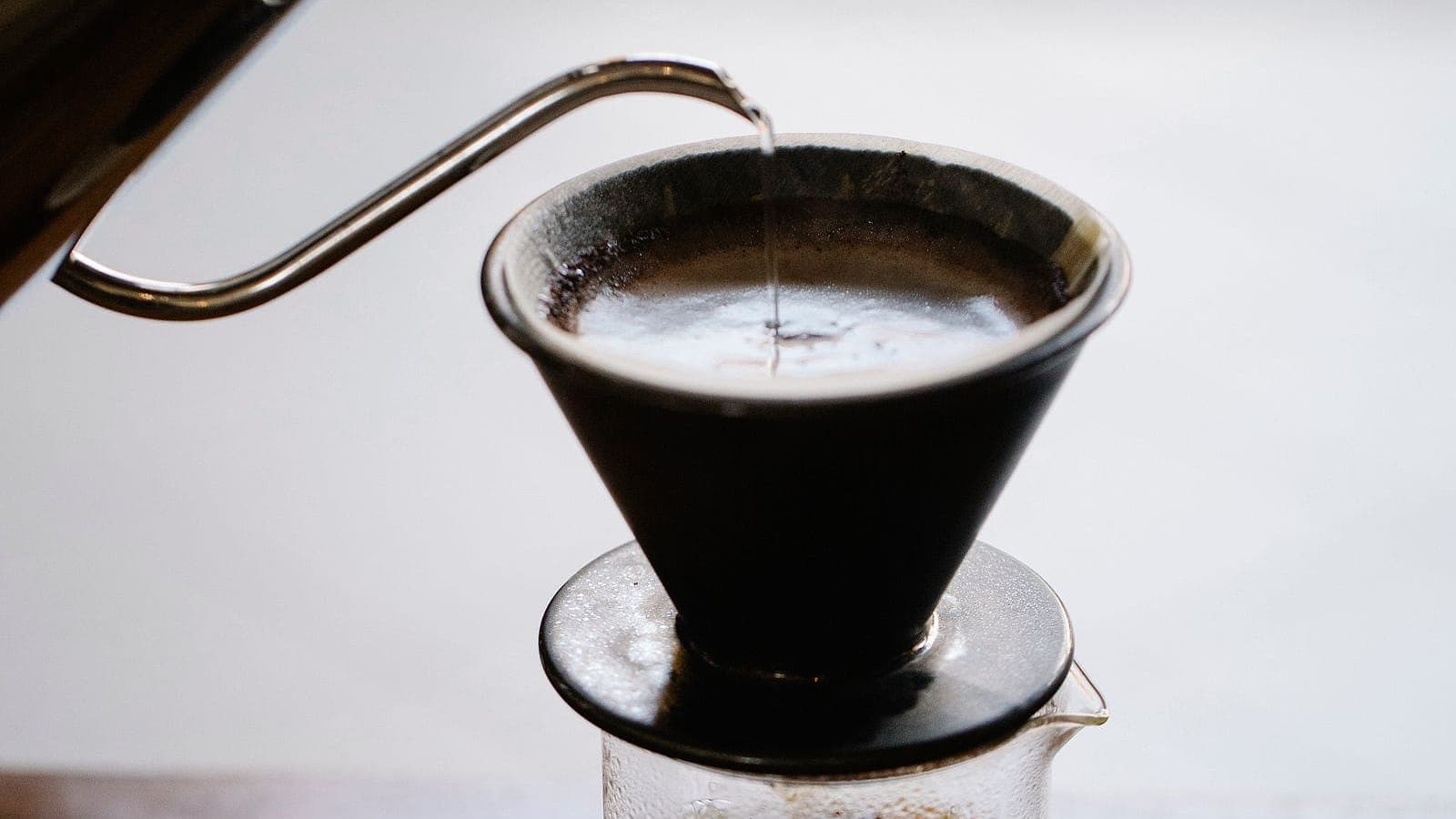
The mechanics are simple: coffee grounds sit in a filter, and you pour hot water over them in stages. Gravity pulls the water through the bed, extracting flavor on the way down. Because you’re the pump, every variable is in your hands — water temperature, pour speed, how evenly you saturate the grounds.
The standard specialty-coffee guidance is a roughly 1:16 to 1:17 ratio (about 60 grams of coffee per liter of water), water at 195–205°F (just off the boil), and a medium grind — think table salt. That grind is coarser than espresso and finer than what you’d use for a French press. If your brew runs fast and tastes thin or sour, go finer; if it’s slow and bitter, go coarser.
Here’s the part people skip: an even grind matters more than the dripper. Uneven particles extract unevenly — the fines over-extract into bitterness while the boulders stay sour — and pour-over hides none of it. A burr grinder produces a consistent particle size a blade grinder never will. Our grinder guide is written around espresso, so treat it as the burr-grinder reference and dial to a coarser, medium setting for pour-over. If you fix one thing before buying a nicer cone, fix the grind.
Most control: Hario V60
The Hario V60 is the enthusiast standard, and it earns that reputation by giving you the most room to steer the cup. Hario points to the design: a 60-degree cone, tall spiral ribs on the interior wall, and a single large hole at the bottom. Because water exits through one big opening rather than draining through a fixed set of small holes, your pour rate sets the flow rate. Pour slowly and the water lingers, extracting more; pour fast and it rushes through. That’s the appeal and the risk in one sentence — you can dial in a spectacular cup, and you can also rush it into a sour, under-extracted one.
The ceramic version holds heat well, which helps keep the brew in that 195–205°F window. The trade-off is that the V60 rewards technique and demands a steady, controlled pour; a gooseneck kettle helps a great deal here. It also needs its own cone-shaped filters. If you like the ritual of pour-over and want a brewer that grows with your skill, the V60 is the one to grow into.
Cleanest cup: Chemex Classic
The Chemex Classic is the outlier of the three and the most striking object in the group — a one-piece hourglass of glass with a wooden collar, in the permanent collection at MoMA since 1943. But the reason it makes such a distinctive cup isn’t the silhouette; it’s the filter. Chemex says its bonded paper filters are considerably thicker than standard cones, and that heavier paper traps more oils and fine particles on the way through. The result is an exceptionally clean, bright, almost tea-like cup with very little body or sediment.
Two things follow from that thick filter. First, the brew is slower — the paper restricts flow, so a Chemex takes its time. Second, those proprietary filters cost more than generic cones and aren’t interchangeable with them. The Chemex also brews into its own carafe, making it the natural choice when you want two or three cups at once rather than a single mug. If clarity and sharing are your priorities — and you appreciate a piece of design on the counter — the Chemex delivers a cup the others can’t quite match.
Most forgiving: Kalita Wave 185
The Kalita Wave 185 is the one we’d hand to most people starting out. It’s a flat-bottom dripper with three small holes and a signature wavy filter, and that geometry is the whole point. Instead of funneling water to a single point the way a cone does, the flat bottom spreads it across a level bed of grounds, and the three holes meter the flow rather than leaving it entirely to your pour. Together they even out an imperfect technique, so your results depend less on a flawless, perfectly steady pour.
The stainless-steel version is durable and travel-friendly, and the size 185 makes one to two cups comfortably. You give up a little of the V60’s top-end control — you can’t manipulate the extraction as aggressively — but in exchange you get consistency, which is exactly what a beginner needs while learning. If you want great coffee without a learning curve, start here.
Cone vs flat-bottom — which is right for you
This is the real decision, and it comes down to geometry. Conical drippers like the V60 funnel water to a single exit point, so your pour rate changes the cup a lot: more control, and more to get wrong. Flat-bottom drippers like the Kalita Wave spread water across a level bed, so extraction is steadier and more forgiving of an uneven pour. The Chemex is its own case — a conical pour-over paired with an extra-thick filter, tuned for maximum clarity rather than maximum control.
So don’t ask which shape is best; ask what you want. Choose the cone (Hario V60) for control and a brewer you’ll grow into. Choose the flat bottom (Kalita Wave 185) for consistency and an easy start. Choose the Chemex Classic for the cleanest cup and enough coffee to share.
The technique, in one paragraph
Rinse the paper filter with hot water first (this warms the brewer and washes out papery taste), then add your medium-ground coffee and level the bed. Start with the bloom: pour about twice the coffee’s weight in water, just enough to saturate the grounds, and wait 30–45 seconds while they release trapped gas and swell. Then pour in slow, steady stages, keeping the bed evenly wet, until you hit your target weight. Total brew time runs about 2.5 to 4 minutes. That’s the whole game — but the details matter, so follow the full walkthrough in how to make pour-over coffee.
How we researched this
Pour-over is a category where reputation and design specs matter more than any single lab test, so we leaned on the makers and on established brewing references rather than making testing claims we can’t back up. Design and filter details come from Chemex and Hario directly; the ratios, temperatures, and bloom-and-pour method reflect the widely taught specialty-coffee standard as laid out in guides like Counter Culture Coffee’s pour-over guide. We present brewing numbers as that shared convention, not as our own measurements.
Prefer something hands-off that brews a full pot while you do other things? A pour-over isn’t it — see our best drip coffee makers instead, or the full coffee-makers guide to match a brewer to how you drink.