Cold brew is the most forgiving coffee you can make: coarse grounds, cold water, and time do almost all the work. Because the coffee never gets hot, it produces a smooth, mellow concentrate that many drinkers report tastes less bitter and less acidic than iced hot coffee — and you brew one batch that lasts most of a week. For most kitchens, the OXO Good Grips Cold Brew Coffee Maker is the pick: it is tidy, one-touch, and makes roughly two weeks of concentrate at a time. If you want a bigger batch and the method coffee shops have used for decades, the Toddy Cold Brew System is the original. The only real catch is patience — plan for a 12-to-24-hour steep — and remember that what you are making is a concentrate you dilute to taste, not a ready-to-drink cup.
This is the cold brew chapter of our broader guide to the best coffee makers, where the through-line is simple: you do not rank brewers one against all, you match the method to how you actually drink. Cold brew’s lane is smooth, low-acid, and made ahead.
At a glance
| Pick | Best for | Filter | Yield | Price |
|---|---|---|---|---|
| OXO Good Grips Cold Brew Coffee Maker | Most kitchens | Reusable stainless mesh | Up to ~32 oz concentrate | $$ |
| Toddy Cold Brew System | Big-batch / the original | Thick reusable felt | Big-batch concentrate | $ |
Both make a concentrate, not a finished cup — you cut it with water or milk over ice. The choice between them is mostly about batch size and how much fuss you want around the filter.
Why cold brew
Every other brew method on our site depends on hot water. The Specialty Coffee Association’s Golden Cup standard, for instance, is built around holding brew water in the roughly 195–205°F window so it extracts evenly. Cold brew ignores that window entirely. Instead of pulling flavor fast with heat, it pulls slowly with time — 12 to 24 hours of cold or room-temperature steeping.
That slow, cold extraction is what gives cold brew its signature: a smooth, round concentrate that is widely reported to taste less bitter and less acidic than the same beans brewed hot and then iced. Worth being precise here — “low-acid” describes the flavor, not a health benefit. Cold water simply pulls fewer of the sharp, bitter, acidic compounds out of the grounds, so the cup lands softer on the palate. Whether that agrees with your stomach is personal and not something a coffee maker can promise.
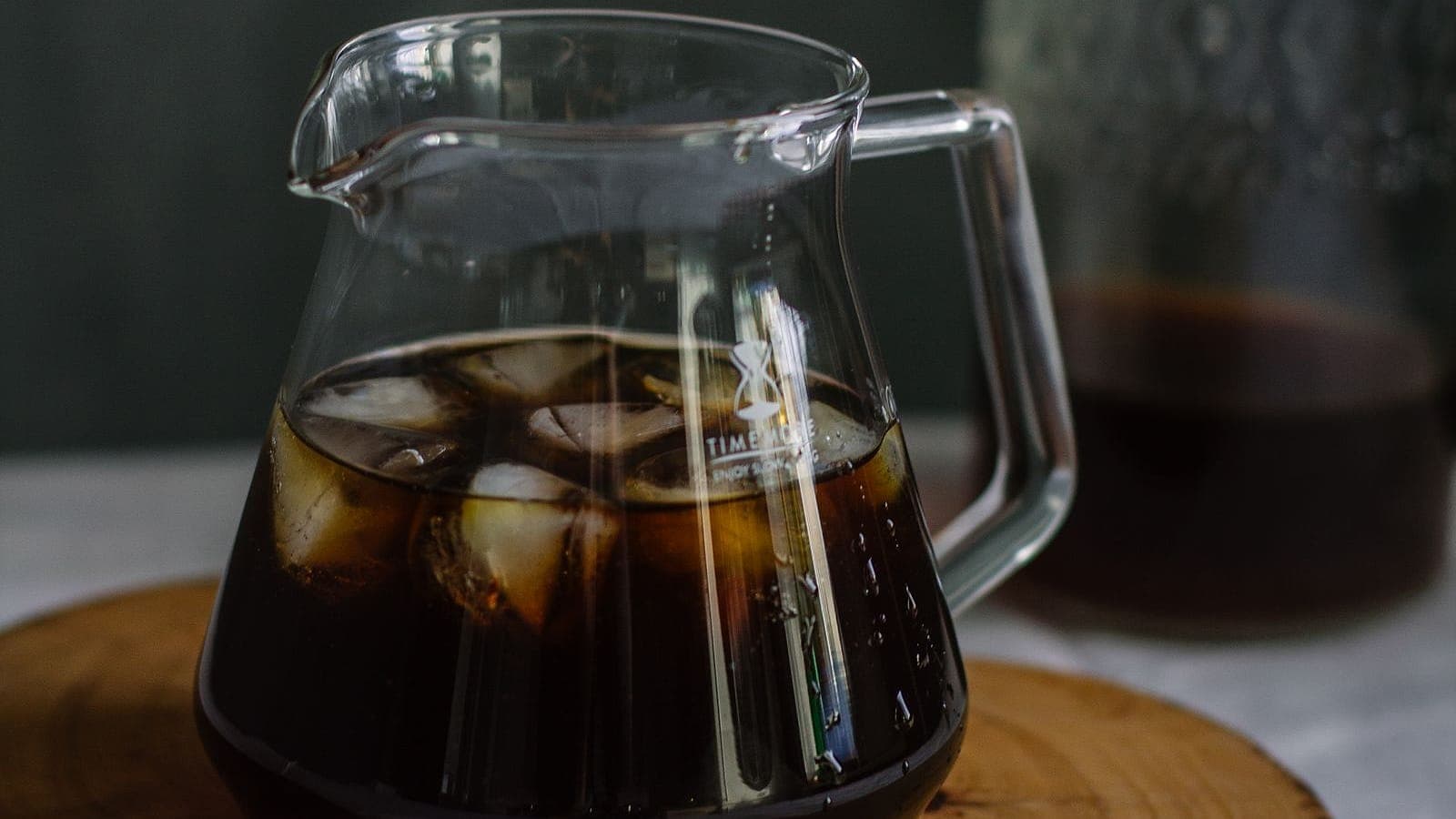
The other reason people love it is logistics. One steep yields a batch of concentrate that keeps about two weeks in the fridge, so a five-minute setup on Sunday becomes a week of iced coffee you pour on demand. The catch worth repeating: it is a concentrate. Straight out of the maker it is intense; you dilute it — roughly one-to-one — with water or milk over ice.
Best for most: OXO Good Grips Cold Brew Coffee Maker
For a single household that wants smooth cold brew without a countertop mess, the OXO Good Grips Cold Brew Coffee Maker is the easy call. It is designed as a tidy, self-contained system rather than a jar-and-cheesecloth improvisation.
A “rainmaker” lid distributes water evenly over the grounds so the bed saturates uniformly — the cold-steep equivalent of an even pour. When the steep is done, you set the brewing container on top of its borosilicate glass carafe and flip a one-touch switch; the concentrate releases and drains through a reusable stainless-steel mesh filter, so there are no paper filters to buy and nothing to wring out. Roughly 10 ounces of coffee yields up to about 32 ounces of concentrate — call it two weeks of iced coffee for one steady drinker.
The trade-offs are honest ones. The mesh filter lets slightly more fine sediment through than a cloth or felt filter would, so grind coarse and the cup stays clean. And while the whole system is compact, it is still a multi-piece rig you rinse and store between batches. For most people, the one-touch release and the reusable filter are worth it.
Best big-batch: Toddy Cold Brew System
The Toddy Cold Brew System is the original — it has been around since 1964, and it is the design a lot of cafes still use to brew cold brew by the gallon. If you drink cold brew daily, brew for a household, or just want the smoothest possible concentrate, this is the one.
Its defining feature is a thick, reusable felt filter. Felt strips out oils and fine particles more aggressively than a metal mesh, which is why Toddy’s concentrate is prized for being exceptionally smooth and low in acidity. The yield is generous — this is a make-a-big-batch system, not a two-cup gadget — and the concentrate stores and dilutes the same way as any other.
The compromises are about upkeep and footprint. The felt filter has to be rinsed thoroughly after each batch and stored damp (Toddy recommends keeping it in water in the fridge) so it does not develop off flavors, and filters wear out and get replaced over time. The system is also bulkier than the OXO. None of that is difficult — it is just more ritual than flipping a switch. In exchange you get big-batch volume and the cleanest cup of the two.
How to make cold brew
The mechanics are the same whichever maker you own. This is the standard specialty-coffee guidance, not a number we measured ourselves:
- Grind coarse. Cold brew wants a coarse grind — think raw sugar, not powder. Fine grounds over-extract during the long steep and slip through the filter, muddying the cup.
- Aim for a strong concentrate ratio, about 1:8. That is roughly one part coffee to eight parts water by weight. You are deliberately brewing something too strong to drink straight.
- Use cold or room-temperature water and steep 12 to 24 hours, on the counter or in the fridge. Longer steeps pull a stronger, more intense concentrate.
- Filter, then dilute. Lift out or drain off the grounds, then cut the concentrate roughly one-to-one with water or milk over ice, to taste.
- Store it. The concentrate keeps about two weeks refrigerated, which is the whole appeal.
Grind is the master variable across every brew method, and cold brew is no exception. A burr grinder produces the even particle size that keeps extraction consistent and the cup clean — a blade grinder’s random shards give you a mix of dust and boulders that over- and under-extract at once. Our burr grinder guide is written around espresso, so use it as the reference for build quality and grind consistency, but set the grinder much coarser for cold brew than you would for a shot.
Cold brew vs. iced coffee
These get used interchangeably, but they are different drinks. Cold brew is brewed cold over many hours, which yields a smooth, low-acid concentrate you make ahead. Iced coffee is brewed hot — drip, pour-over, whatever your method — and then chilled or poured over ice, which is faster and tastes brighter and more acidic.
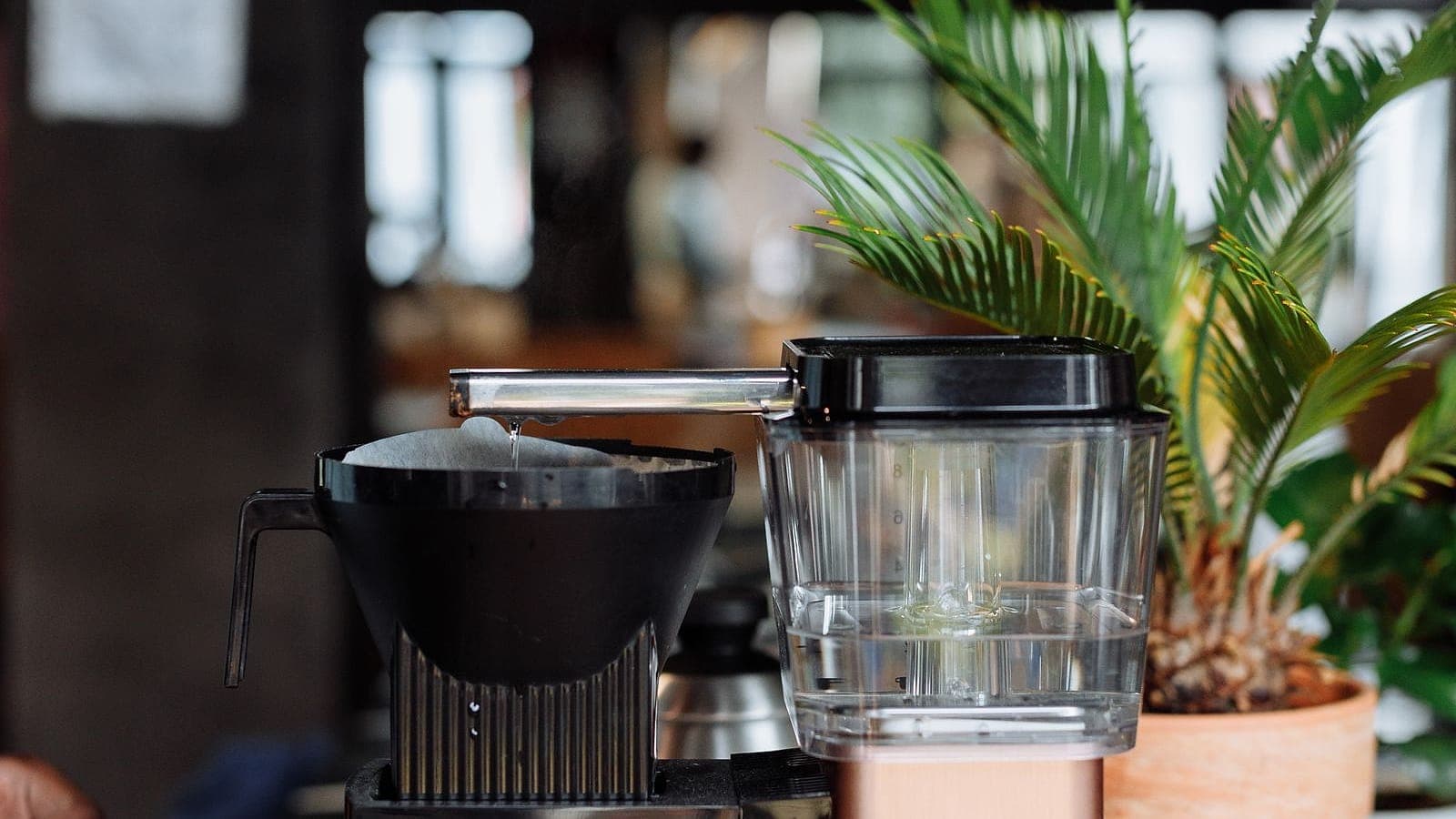
Neither is “better.” Cold brew wins on smoothness and make-ahead convenience; hot-then-iced wins on speed and on the bright, clean clarity that heat extraction brings out. If you want both without a dedicated cold brew maker, some drip machines split the difference: the Breville Precision Brewer, for example, includes an iced/cold-brew mode, which we cover in our best drip coffee makers guide.
How we chose these picks
We have not brewed head-to-head batches on this brand-new site, so these recommendations lean on each maker’s documented design and on established coffee reporting rather than our own tasting notes. We anchor the picks to what the makers publish about filters, capacity, and mechanism, and we frame all brewing numbers — ratio, steep time, grind — as the SCA-adjacent specialty-coffee convention taught across the industry, noting where cold brew deliberately departs from that hot-water standard. For the broader coffee-maker landscape, including which drip machines add cold-brew modes, we cross-reference Wirecutter’s coffee-maker testing.