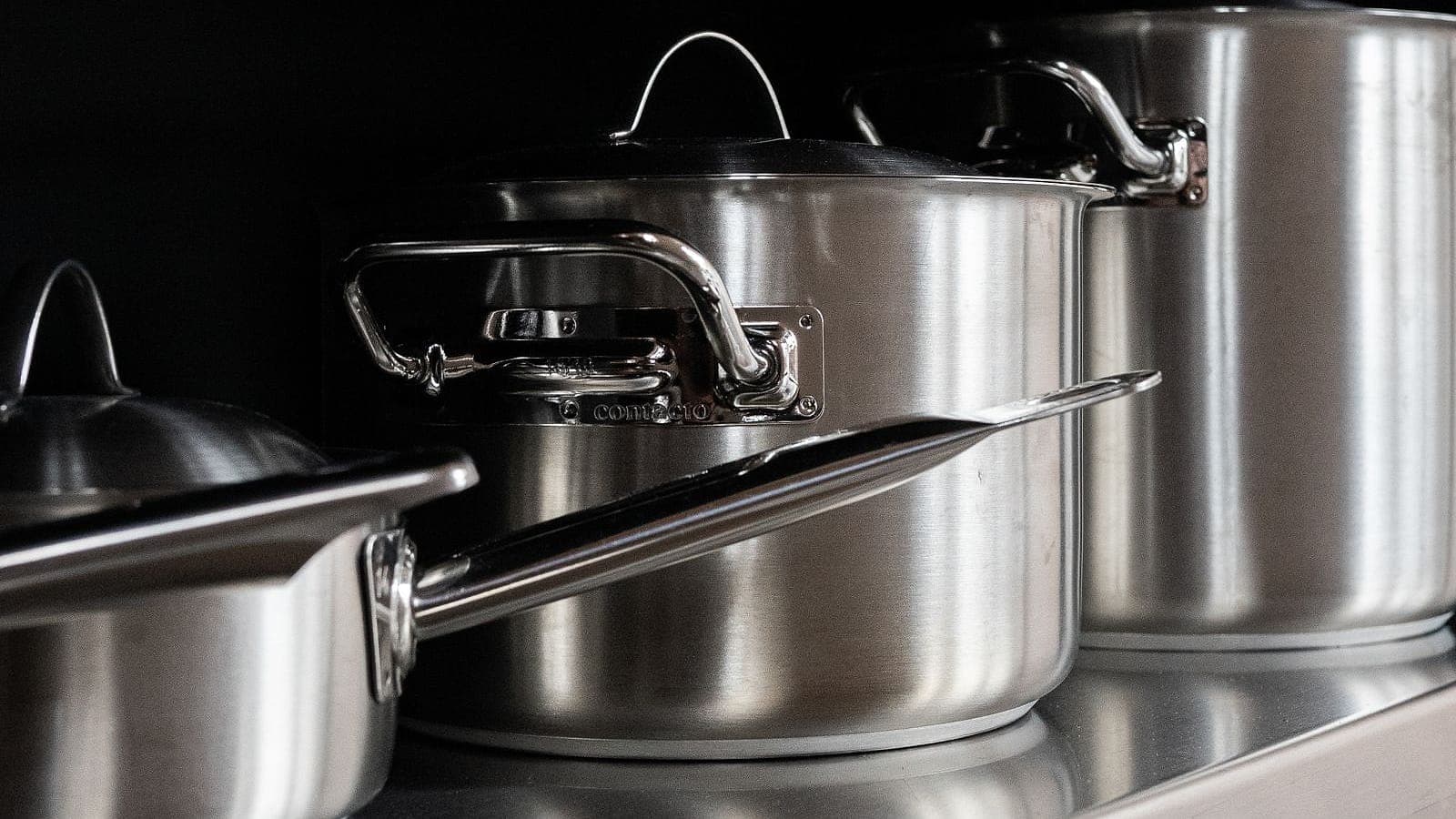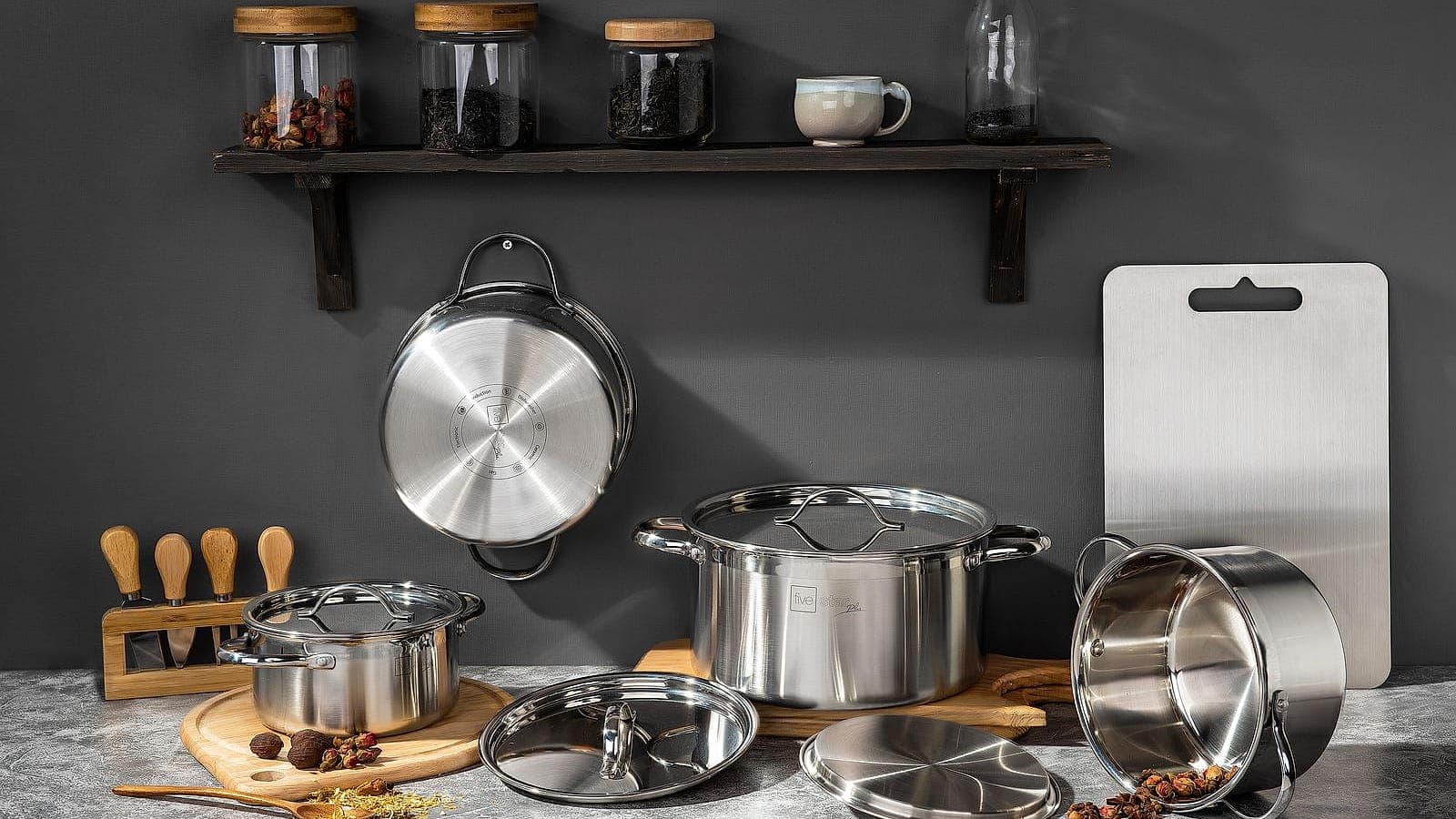
The best cookware set for most people is a fully-clad stainless steel set, and the best value is the Tramontina Tri-Ply Clad 12-Piece Cookware Set — it delivers genuine clad performance for a fraction of what the premium brands charge. If your budget stretches, the All-Clad D3 Stainless 10-Piece Cookware Set is the made-in-USA benchmark most roundups measure against, and the Made In Stainless Clad 10-Piece Set is the direct-to-consumer value-premium alternative. The Cuisinart MultiClad Pro 12-Piece Set (MCP-12N) is the safe mainstream middle, and the Heritage Steel Titanium Series 5-Piece Essentials Set is the US-made specialist for cooks who want no coatings and a hardier surface. Before you spend a cent, though, check one thing: is the set fully clad — steel and aluminum bonded through the entire pan — or just a disc-base? Fully clad heats evenly everywhere; disc-base heats unevenly up the sides. Every set below is fully clad.
At a glance
| Set | Best for | Construction | Made in | Price |
|---|---|---|---|---|
| Tramontina Tri-Ply Clad 12-Piece | Best value | Tri-ply fully clad | Brazil | $$ |
| All-Clad D3 10-Piece | Premium benchmark | Tri-ply fully clad | USA | $$$$ |
| Made In Stainless Clad 10-Piece | D2C value-premium | 5-ply fully clad | Italy | $$$$ |
| Cuisinart MultiClad Pro 12-Piece | Mainstream default | Tri-ply fully clad | Imported | $$ |
| Heritage Steel 5-Piece Essentials | US-made specialist | 5-ply 316Ti | USA | $$$ |
How we chose
Cookloom is a new site, so here is the honest version of what sits behind these picks: we have not run our own lab tests on these sets, and we are not going to pretend otherwise. Instead, we leaned on two things a careful buyer can verify. The first is the broad testing consensus that has built up around these lines over years of published reviews — which sets reviewers keep recommending, and which pan the rest of the field is measured against. The second is manufacturer specification: ply construction, oven-safe ceiling, country of origin, and certifications, taken straight from the makers. All-Clad publishes the D3’s tri-ply build and 600°F ceiling; Made In documents its 5-ply Italian construction; and Tramontina lists the Tri-Ply Clad line’s NSF certification. Prices appear only as bands ($ to $$$$) because real prices move constantly, and inventing a number would be worse than useless.
The one thing that matters most: fully-clad vs disc-base
If you remember nothing else, remember this. Good stainless cookware is fully clad: alternating layers of stainless steel and aluminum are bonded through the entire body of the pan, walls included. Because the conductive aluminum core runs everywhere, heat spreads evenly across the base and up the sides, so there is no hot ring in the middle and no cool dead zone at the edges. That even heat is the whole reason to buy stainless at all.
Cheap stainless is usually disc-base (sometimes called impact-bonded): a slug of aluminum is pressed onto the bottom of an otherwise single-ply steel pot, and nothing conductive climbs the walls. The base may heat acceptably, but the sides lag and scorch unevenly, and sauces reduce in rings. From across a store the two look identical — same shine, same weight in the hand — which is exactly why so many buyers overpay for construction that underperforms.
Every set in this guide is genuinely fully clad, and that is the single most important box to tick before you compare anything else. If you want the longer version of this argument, with the material tradeoffs laid out, our guide to the best stainless steel cookware goes deeper. From there the only real variable is ply count. Tri-ply means three layers — steel, aluminum, steel — and it is plenty for most home cooking; All-Clad D3, Tramontina, and the Cuisinart MultiClad Pro are all tri-ply. Five-ply adds more aluminum (and sometimes a second metal) for slightly more even heat and better retention, usually at a higher price; Made In and Heritage Steel are 5-ply. Both build quality stainless. Ply count is a refinement, not a pass-fail line.
Set vs open-stock — should you even buy a set?
A set is not automatically the right buy. Its advantages are real: you pay less per piece than buying the same items individually, and everything matches, stacks, and shares lids. If you are outfitting a kitchen from scratch, that value is hard to beat.
The catch is that most sets pad the piece count with things you may rarely touch — an 8-inch skillet that never comes out once you own a 12-inch, a tiny saucepan, or a pair of lids you already have. Open-stock buying — purchasing exactly the pieces you cook with — often makes more sense for people who already own some cookware or cook a narrow range. For a lot of home cooks, three pieces cover nearly everything: one 12-inch skillet, a 3-quart saucepan, and a stockpot. If that is you, and especially if you only want a single great pan, start with our best stainless steel skillet guide instead and build from there. Buy the set for value and coverage; buy open-stock for precision.
The picks
Tramontina Tri-Ply Clad 12-Piece Cookware Set — best value
This is the set we would hand most people. The Tramontina Tri-Ply Clad 12-Piece Cookware Set is genuinely fully clad — real tri-ply steel-aluminum-steel through the whole pan, not a disc-base shortcut — and it is NSF-certified and oven-safe to 500°F. It is the set reviewers have quietly recommended as the value champion for years, precisely because it performs a great deal like cookware costing several times as much. At a $$ band for a full 12-piece kit, nothing else here matches its cost-to-performance ratio. If your only priority is stretching the budget, also see our best budget cookware set roundup, where this set anchors the field.
All-Clad D3 Stainless 10-Piece Cookware Set — premium benchmark
The All-Clad D3 Stainless 10-Piece Cookware Set is the standard the rest of the category is measured against. Fully-clad tri-ply, made in the USA since 1971, and oven- and broiler-safe to 600°F, it is the “buy it for life” set that shows up as the reference point in most serious roundups. The build is heavier and more refined than the value tier, the handles are famously (and, to some, stubbornly) squared-off, and the price sits at the top $$$$ band. You are paying for USA manufacturing, longevity, and feel — not for a fundamentally better sear, which a good value set will nearly match. Torn between this and the direct-to-consumer challenger below? Our All-Clad vs Made In comparison settles it.
Made In Stainless Clad 10-Piece Set — best D2C value-premium
The Made In Stainless Clad 10-Piece Set is the direct-to-consumer answer to All-Clad: 5-ply construction crafted in Italy, oven-safe to a high 800°F, sold mostly straight to you (the set is also on Amazon). By cutting out the retail middle, Made In offers All-Clad-grade build — arguably with a more comfortable handle and an extra ply — at a price that, while still premium ($$$$), tends to undercut the benchmark. If you want the premium experience and like the idea of buying from a modern kitchenware brand, this is the one to weigh against the D3.
Cuisinart MultiClad Pro 12-Piece Set (MCP-12N) — mainstream default
The Cuisinart MultiClad Pro 12-Piece Set (MCP-12N) is the safe, sensible middle. It is triple-ply fully clad, oven-safe to 500°F, fitted with cool-grip handles, and — crucially — available almost everywhere, which makes it the default a lot of people land on without regret. It sits between the Tramontina and the premium tier on both price ($$) and polish: a touch more finished than the value champion, well short of All-Clad money. If you want name-brand clad cookware from a shelf you can walk up to today, this is a solid, unflashy choice.
Heritage Steel Titanium Series 5-Piece Essentials Set — US-made specialist
The Heritage Steel Titanium Series 5-Piece Essentials Set is for the cook with a specific set of priorities: American manufacturing, no coatings of any kind, and a surface built to last. It is 5-ply with a titanium-strengthened 316Ti cooking surface that is more corrosion-resistant than standard stainless, and it is oven-safe to 800°F. The 5-piece Essentials configuration is a curated starter rather than a maximal kit, and it lands at a $$$ band. If made-in-USA and an especially hardy, coating-free surface matter to you more than piece count, it earns its place.
Do you even need stainless?
Stainless is the right default for searing, browning, building fond, oven work, and sheer durability — it takes metal utensils, has no coating to wear out, and lasts for decades. But it is not the easiest surface for every job, and a smart kitchen mixes materials rather than forcing one to do everything.
For eggs, fish, pancakes, and anything delicate, a nonstick pan is simply easier; pair your stainless set with one good pan from our best nonstick cookware guide (and if the safety question is on your mind, we cover it honestly in is nonstick cookware safe). If you would rather have a coating without PTFE, ceramic is the alternative — see best ceramic cookware and our ceramic vs nonstick breakdown. For unmatched heat retention and a naturally slick seasoned surface, cast iron is worth owning; start with our best cast iron skillets. And for braises, stews, soups, and bread, reach for a dutch oven. For most people the ideal kitchen is a fully-clad stainless set plus a single nonstick pan — that combination covers nearly everything.
Using stainless without food sticking
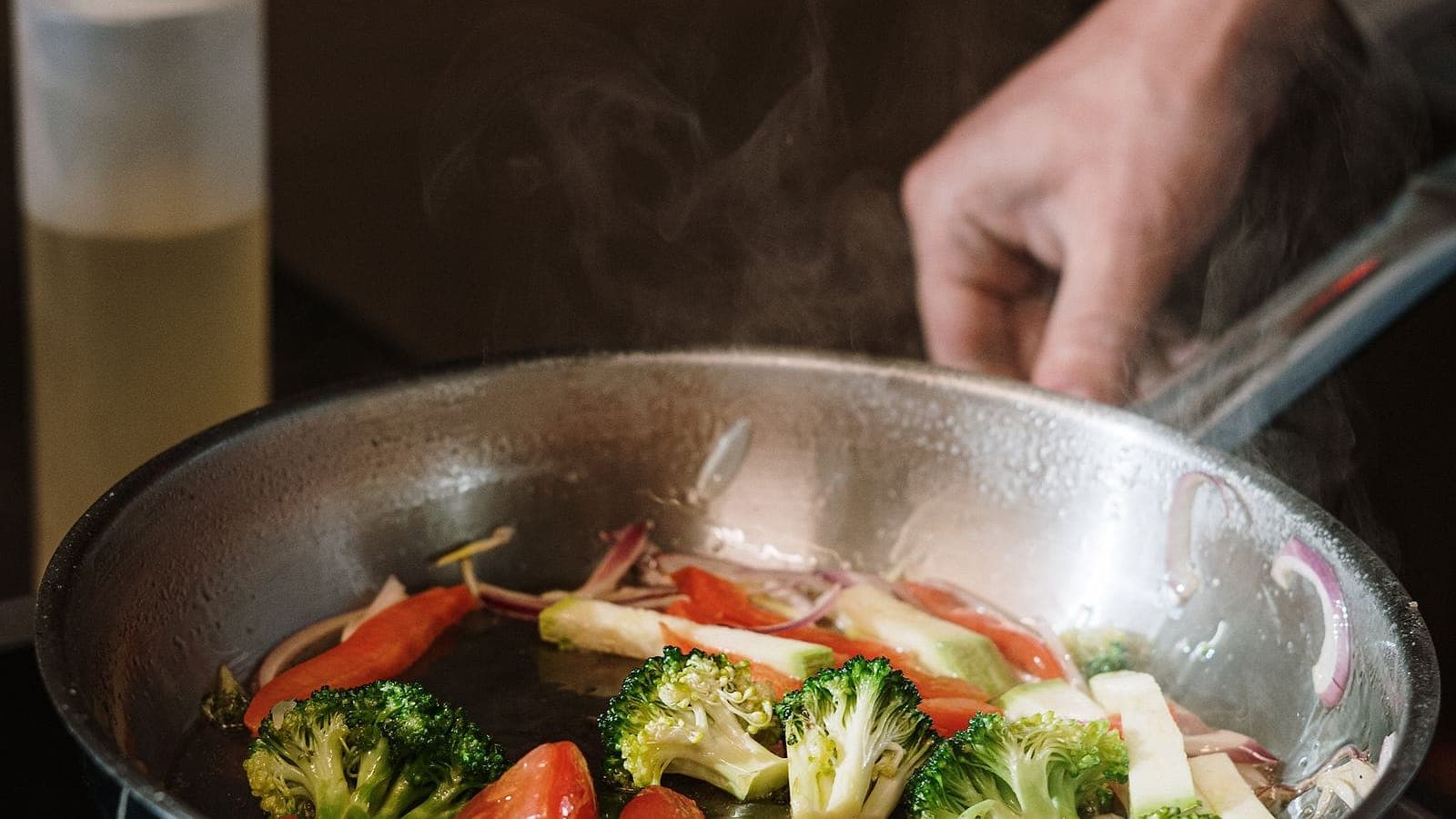
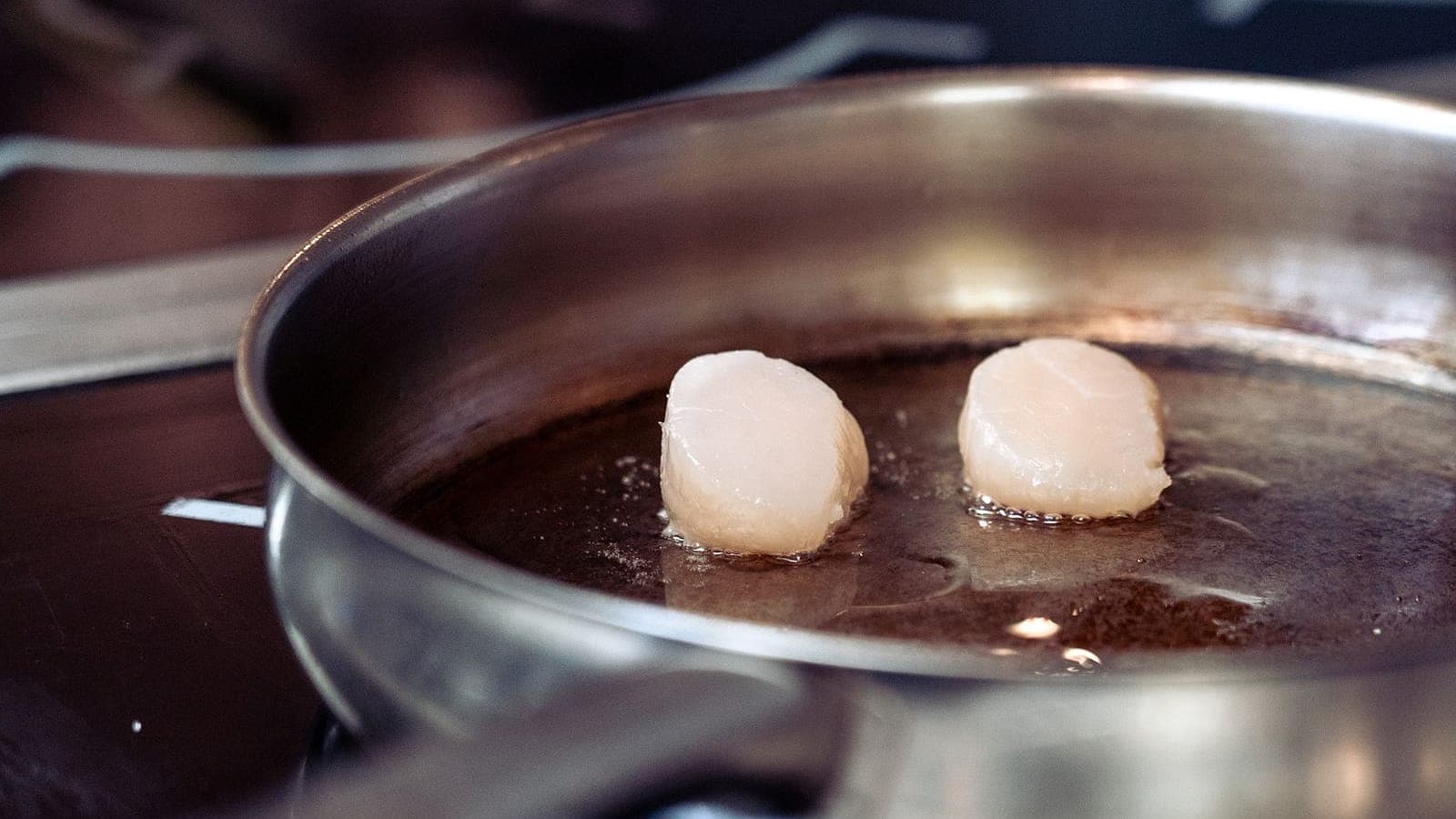
Stainless is not nonstick, and the number-one complaint from new owners — everything sticks — is almost always a heat problem, not a defect. Both All-Clad and Food Network describe the same fix: preheat the dry pan for about two minutes over medium, then run the water-drop (Leidenfrost) test — a droplet flicked into the pan should bead up and skate across the surface like mercury rather than sizzle and evaporate. Add oil once the pan is there (it should shimmer, not smoke), then add your food. It will grip at first and release on its own once a sear forms, so resist the urge to pry it up; if it fights the spatula, give it another minute. The browned bits left behind — the fond — deglaze into a pan sauce, and that is a stainless superpower no nonstick pan can give you. For the full method, step by step, read our guide to cooking on stainless steel without sticking.
Sources
- All-Clad — D3 Stainless 3-Ply Bonded Fry Pan (specifications)
- Made In — Stainless Clad collection (specifications)
- Tramontina — Tri-Ply Clad Stainless Steel Cookware Set (specifications)
- All-Clad — Cooking on Stainless Steel for Beginners
- Food Network — How to Keep Food From Sticking to Stainless Steel