If you buy a single stainless pan, make it a 12-inch fully-clad skillet — it is the searing, browning, fond-building workhorse a nonstick pan simply cannot replace. The pick most cooks should default to is the All-Clad D3 Stainless 12-Inch Fry Pan: it is the benchmark nearly every roundup measures against, and it is built to outlast the kitchen it lives in. The honest catch is the price. If that stretches your budget, the Tramontina Tri-Ply Clad 12-Inch Fry Pan gets you genuine fully-clad performance for a fraction of the cost — and fully clad is the one spec that separates a great stainless skillet from a cheap, hot-spotty one. Whichever you choose, a stainless pan asks something of you that nonstick does not: a little technique. More on that below.
At a glance
| Pick | Best for | Ply | Oven-safe | Price |
|---|---|---|---|---|
| All-Clad D3 Stainless 12-Inch Fry Pan | Best overall (the benchmark) | Tri-ply | 600°F | $$$ |
| Tramontina Tri-Ply Clad 12-Inch Fry Pan | Best value | Tri-ply | 500°F | $ |
| Made In Stainless Clad 12-Inch Frying Pan | Best direct-to-consumer upgrade | 5-ply | 800°F | $$ |
| Misen 5-Ply Stainless Steel Frying Pan | Best heat retention | 5-ply | 800°F | $$ |
Prices are shown as bands ($ = least expensive, $$$ = most). Every pan here is fully clad — none uses a stuck-on aluminum disc.
What to look for in a stainless skillet
Fully clad, not disc-base. This is the single most important thing to check, and it is easy to miss. A good stainless skillet is fully clad: layers of stainless steel and aluminum bonded through the entire pan — the walls as well as the base — so heat spreads evenly everywhere. Cheap stainless is disc-base (impact-bonded): an aluminum disc slapped onto the bottom only, which leaves the sides heating unevenly and creates a hot ring. Every pick on this list is fully clad. If a pan does not clearly say so, treat it as disc-base.
Ply count. Tri-ply means three bonded layers (steel–aluminum–steel) and is plenty for almost everyone. 5-ply adds more aluminum for even heat and better retention, usually at a higher price. All-Clad D3 is tri-ply; Made In and Misen are 5-ply. Neither is “wrong” — 5-ply mostly buys you thermal mass, which matters more for searing than for everyday cooking.
Size. A 12-inch is the versatile default: room to sear a couple of chicken thighs or a steak without crowding, plus space to deglaze into a sauce. A 10-inch is a fine second pan for smaller jobs and one or two portions, but if you own only one stainless skillet, make it the 12-inch.
Handle and oven-safe temperature. Look for a riveted or welded handle that feels balanced and an oven ceiling that suits how you cook — anything from 500°F to 800°F here covers roasting, finishing a seared steak, and broiling. A stay-cool handle is a nice bonus but not essential.
Weight. Heavier pans hold heat better and recover faster when cold food hits them, but they also tire your wrist during tossing and flipping. This is a genuine trade-off, not a flaw — it is why we call out Misen as the heavy option below.
How we researched this
This is a new site, so we will be straight about what stands behind these picks. Rather than claim a testing history we have not earned, we anchored the field to the broad consensus of the reviewers and test kitchens who have measured these pans for years, then matched each recommendation to a real spec you can verify. For the fully-clad-versus-disc-base distinction and the anti-stick technique below, we leaned on manufacturer and editorial technique guides, including All-Clad’s own beginner guide to cooking on stainless steel and Food Network’s guide to keeping food from sticking. Construction details — ply count, oven-safe temperature, and country of manufacture — come from each maker’s published specifications, such as the All-Clad D3, Made In Stainless Clad, and Tramontina Tri-Ply Clad pages. Prices appear only as bands — we invent no numbers.
Best overall: All-Clad D3 Stainless 12-Inch Fry Pan
The All-Clad D3 Stainless 12-Inch Fry Pan is the pan the rest of the category is measured against, and it earns that status. It is fully-clad tri-ply, made in the USA (All-Clad has bonded cookware in Pennsylvania since 1971), and oven- and broiler-safe to 600°F. In practice that means even browning edge to edge, a body that will not warp, and a surface with no coating to wear out — the kind of pan you buy once and hand down.
The flared low walls make it easy to slide a fish spatula under a sear and to reduce a sauce quickly, and the riveted handle stays put through oven work. The honest notes are two: the classic D3 handle is angular and divides opinion in reviews, and the price sits at the top of this list. If you want one stainless skillet for life and the budget allows, this is it.
Best value: Tramontina Tri-Ply Clad 12-Inch Fry Pan
The Tramontina Tri-Ply Clad 12-Inch Fry Pan is the value champion, and the reason it works is the same reason the All-Clad does: it is genuinely fully-clad tri-ply, not disc-base. It is NSF-certified (a commercial-kitchen sanitation standard) and oven-safe to 500°F, and it is the budget pick reviewers have kept recommending for years because it delivers most of the premium experience for a fraction of the price.
You give up a little to get there — the fit and finish are not as refined as All-Clad’s, and the 500°F oven ceiling is lower — but the cooking performance is remarkably close. If you are buying your first serious stainless skillet, or outfitting a kitchen without spending like a professional, this is the smart default. For how it stacks up against premium pans overall, our head-to-head on All-Clad vs. Made In covers the premium end in detail.
Best direct-to-consumer upgrade: Made In Stainless Clad 12-Inch Frying Pan
The Made In Stainless Clad 12-Inch Frying Pan is the direct-to-consumer route to All-Clad-grade build for less. It is 5-ply, crafted in Italy, oven-safe to a high 800°F, and finished with a stay-cool handle that many cooks prefer to the classic riveted style. The extra aluminum in the 5-ply construction gives it slightly more even, forgiving heat than tri-ply.
One practical thing to know before you shop: the Made In skillet is sold direct only — you order it from Made In rather than a marketplace — so plan for that rather than expecting to add it to an existing cart. If you like the idea of premium construction, a higher oven ceiling, and a cooler handle without All-Clad’s price, this is the pick.
Best for heat retention: Misen 5-Ply Stainless Steel Frying Pan
The Misen 5-Ply Stainless Steel Frying Pan is the heavy challenger. It is 5-ply with notably thick 3mm walls, which give it strong heat retention — the pan holds its temperature when cold food hits it, which is exactly what you want for a deep, even sear. It is oven-safe to 800°F and available both direct and on Amazon.
That thermal mass comes at a cost: this is a heavier pan than most 12-inch skillets, and the weight can tire your wrist during tossing, flipping, or one-handed maneuvers. If you sear a lot and value retention over nimbleness — and do not mind a substantial pan — the Misen rewards you. If you like a lighter pan in hand, the All-Clad or Made In will feel more agile.
Using a stainless skillet without sticking
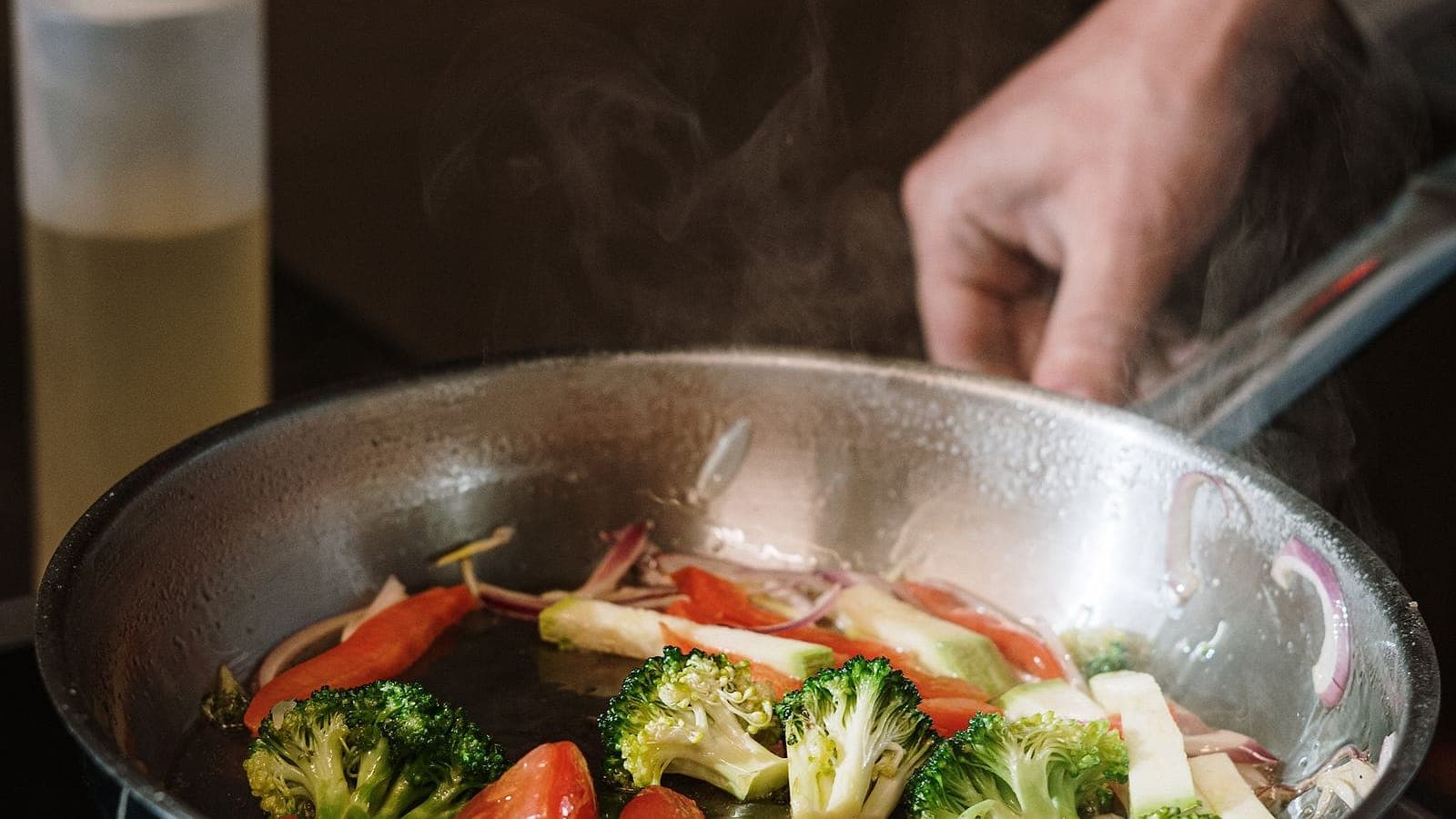
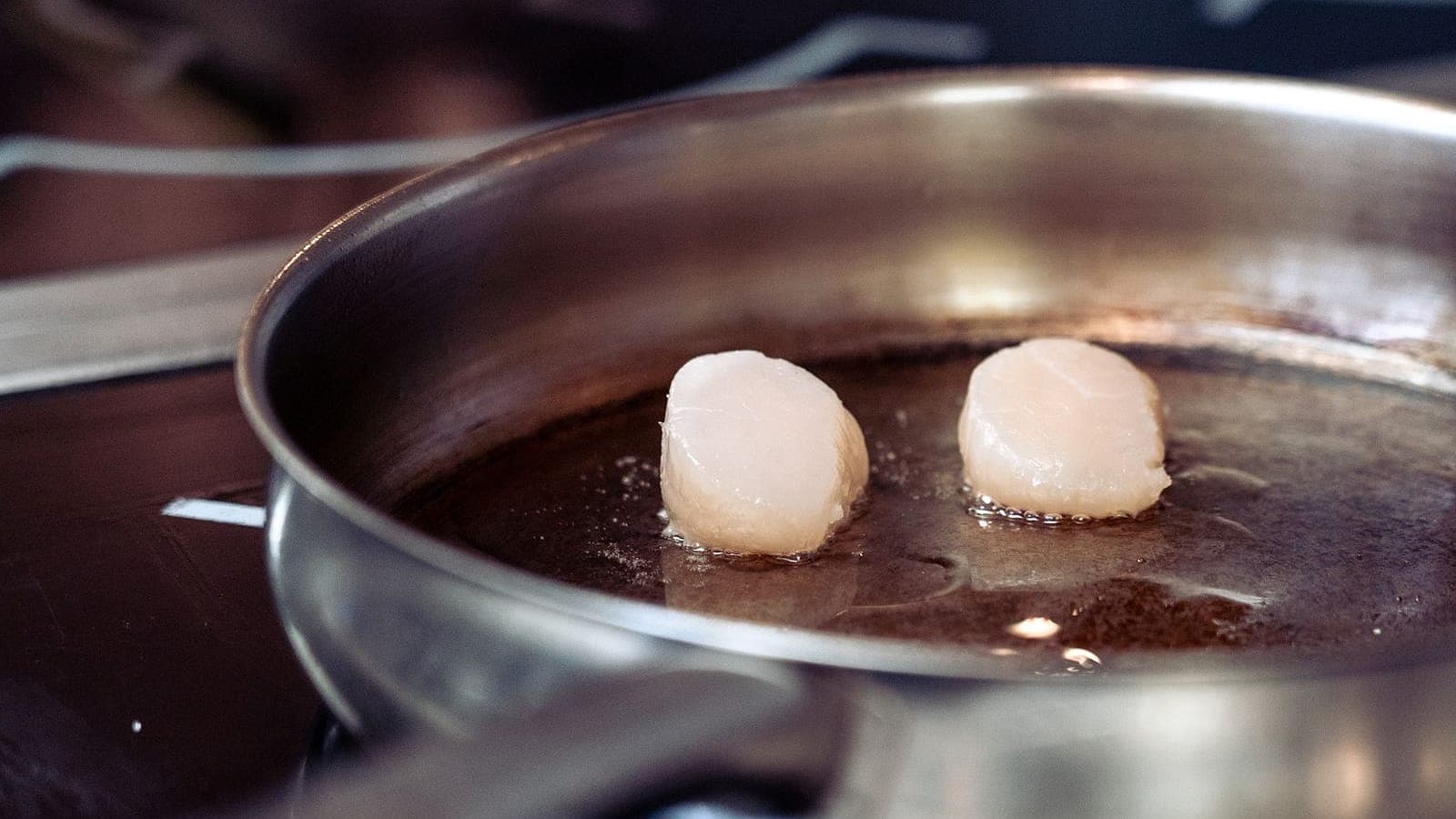
Here is the skill that makes or breaks stainless: food sticks when the pan is too cool, not too hot. Preheat the dry pan for about two minutes over medium heat, then do the water-drop (Leidenfrost) test — flick in a few drops of water. When the pan is ready, they will bead up and skate across the surface like mercury rather than sizzling and instantly evaporating. Then add oil (it should shimmer, not smoke), then the food. Protein will grip at first and release on its own once a sear forms — if it resists the spatula, give it another minute rather than forcing it. High heat and cold-from-the-fridge food are the usual culprits behind sticking.
The payoff nonstick cannot match: those browned bits left behind, the fond, deglaze into a fast pan sauce. That is a stainless superpower. This technique is the whole game, and it is worth learning properly — see our full walkthrough on how to cook on stainless steel without sticking. For eggs and delicate food, though, keep one nonstick pan in the drawer — it is simply the easier tool for that job. For maximum heat retention and a naturally slick seasoned surface, a cast iron skillet is a worthy companion, and for braises and soups a Dutch oven does what no skillet can.
One skillet, or a whole set?
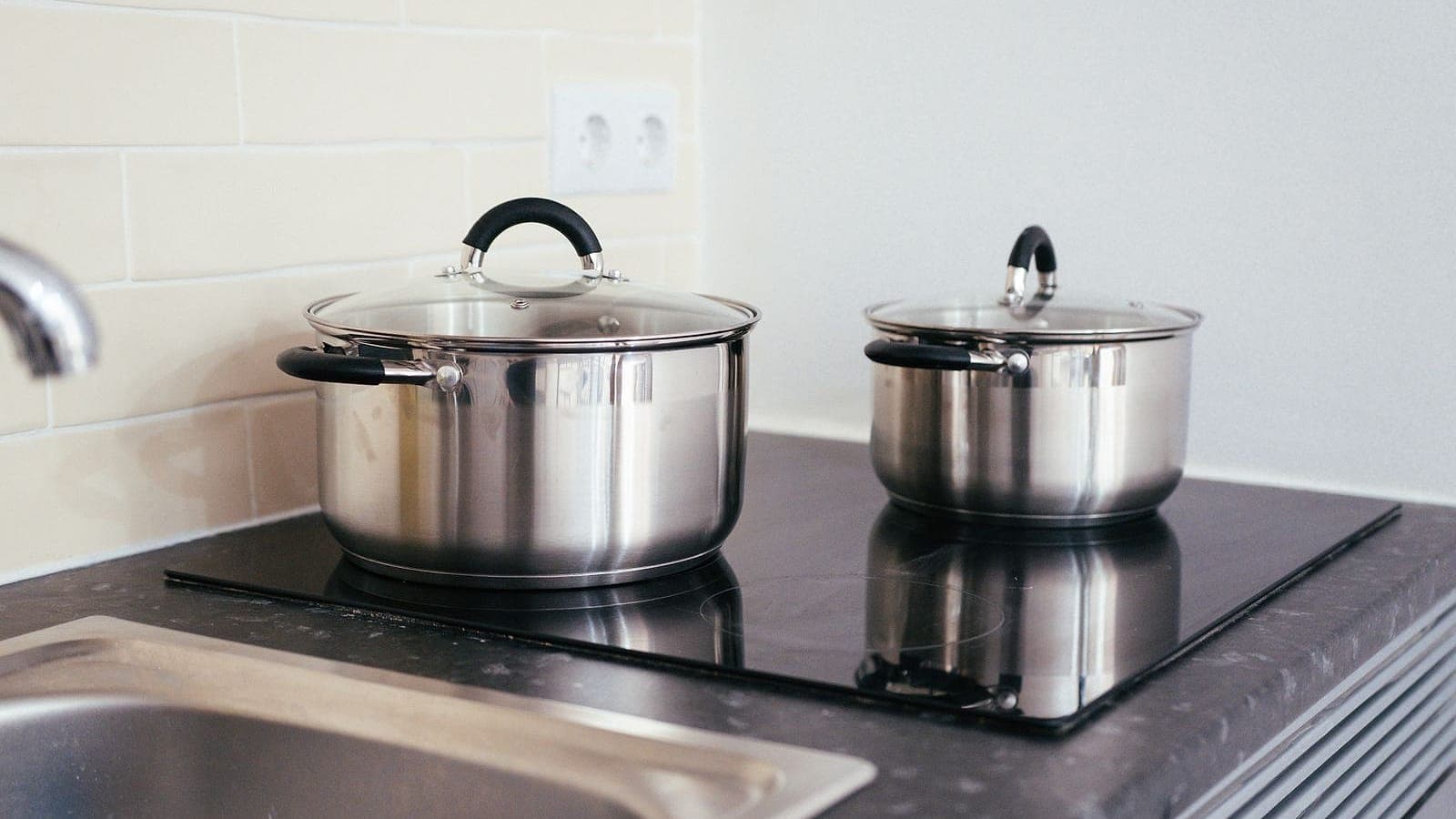
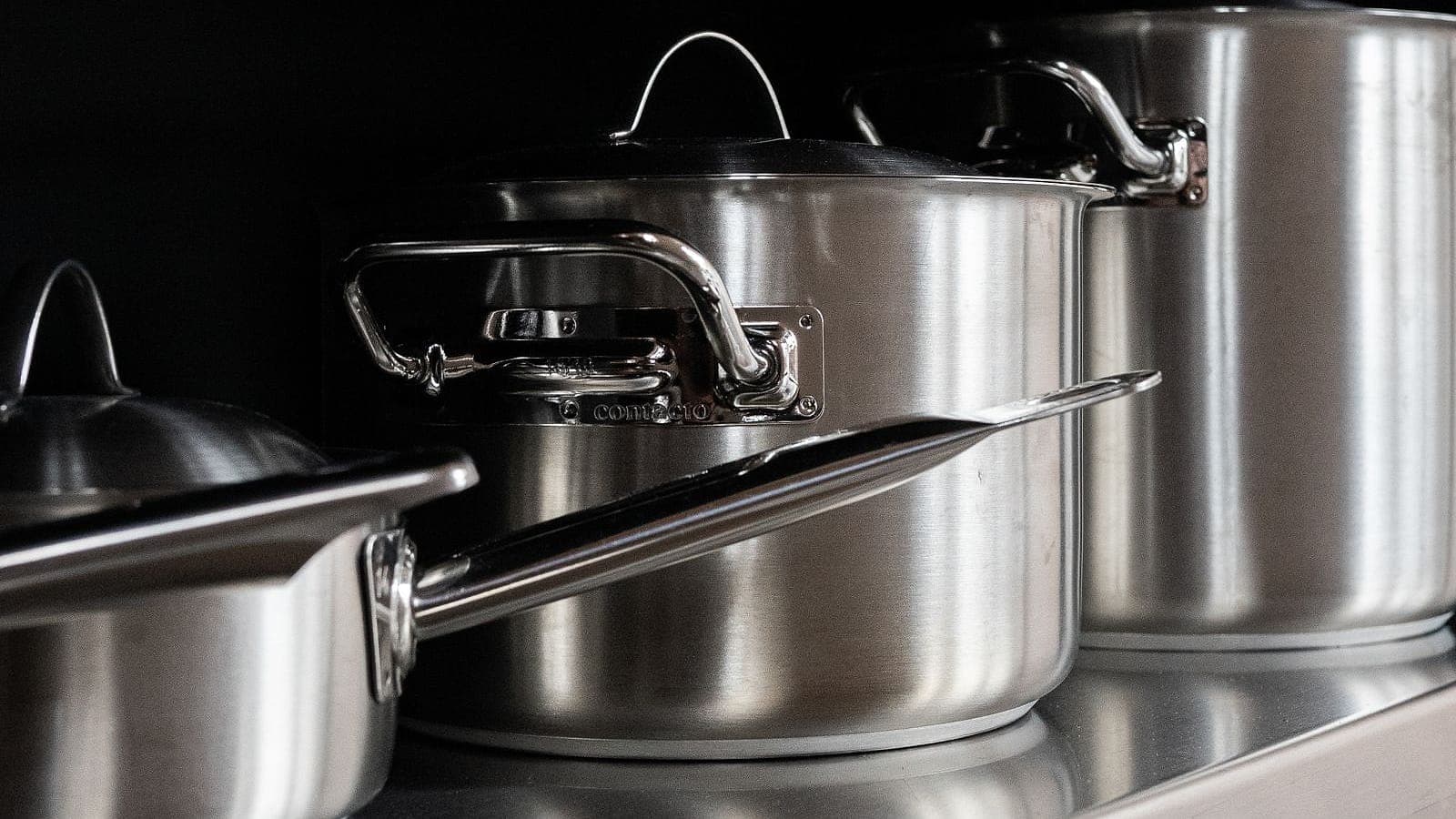
If you cook mostly proteins and vegetables, a single 12-inch skillet plus a couple of open-stock pieces (a 3-quart saucepan, a stockpot) may serve you better than a boxed set — you buy exactly what you use, and nothing you do not. A set costs less per piece and everything matches, but it usually includes pans you will rarely reach for.
If you would rather buy once and be done, start with our guide to the best stainless steel cookware for the material-specific picks, or the broader best cookware sets roundup if you are open to mixing materials. Either way, the same rule holds: check that any stainless piece is fully clad before you buy.