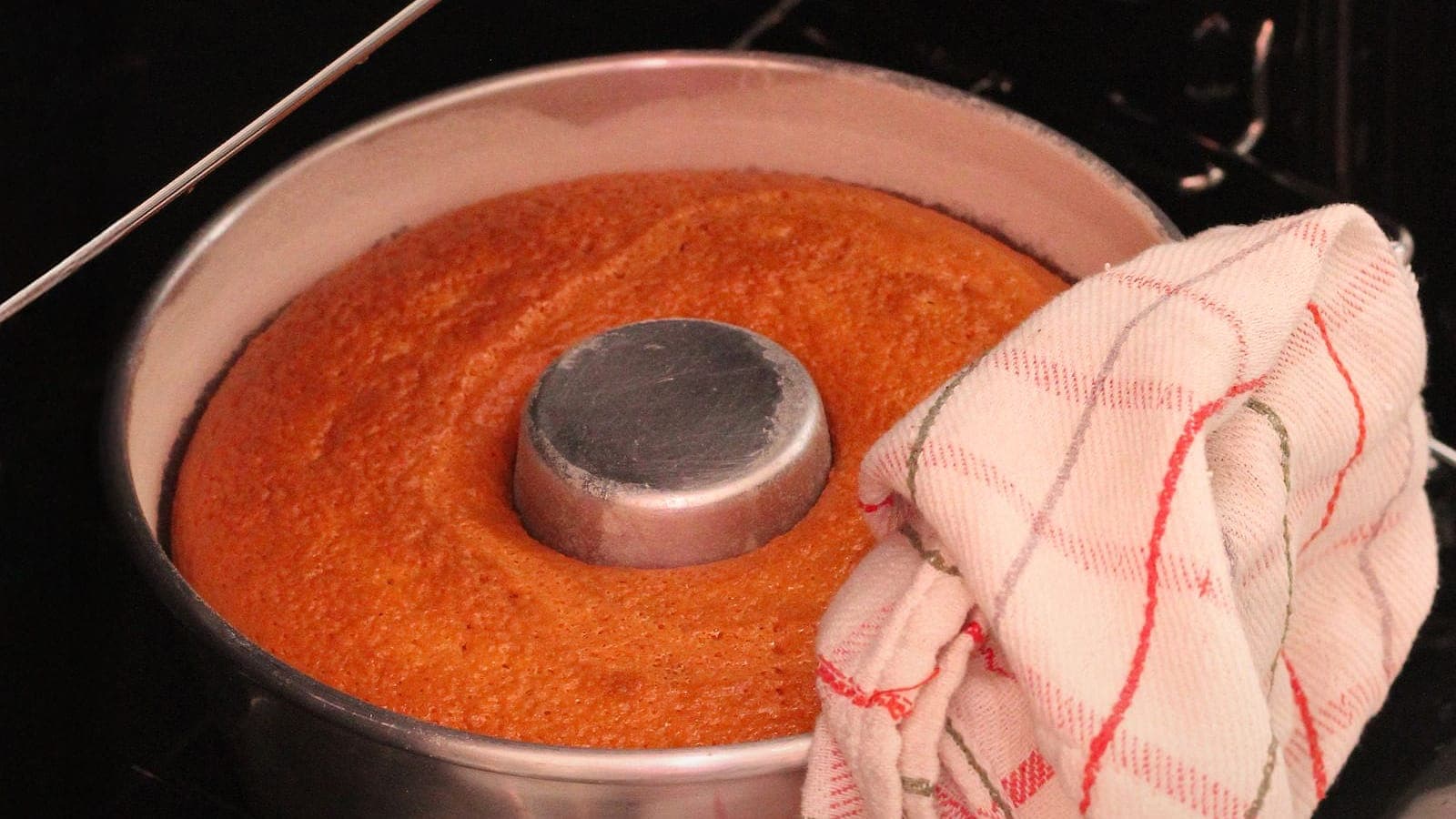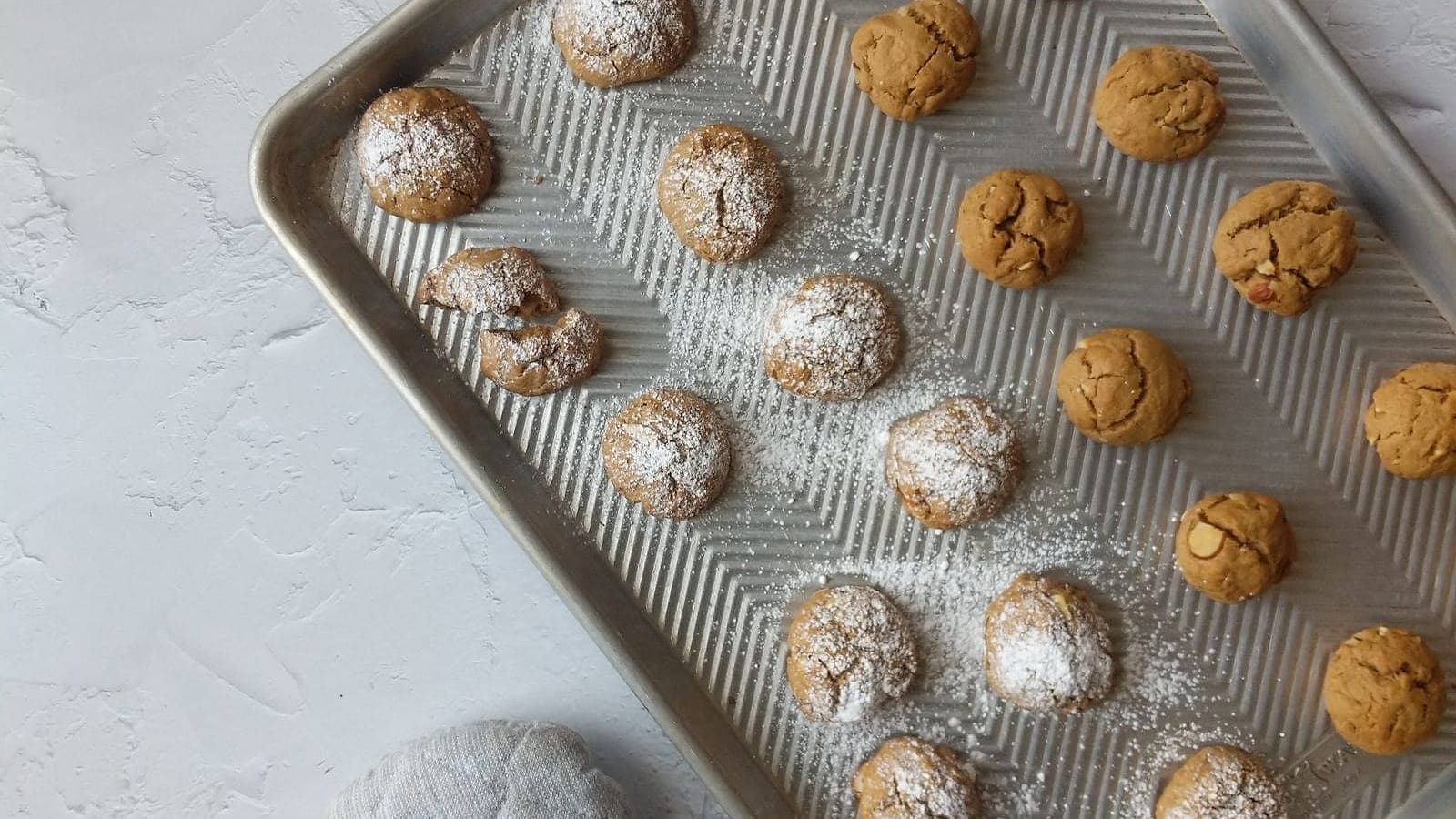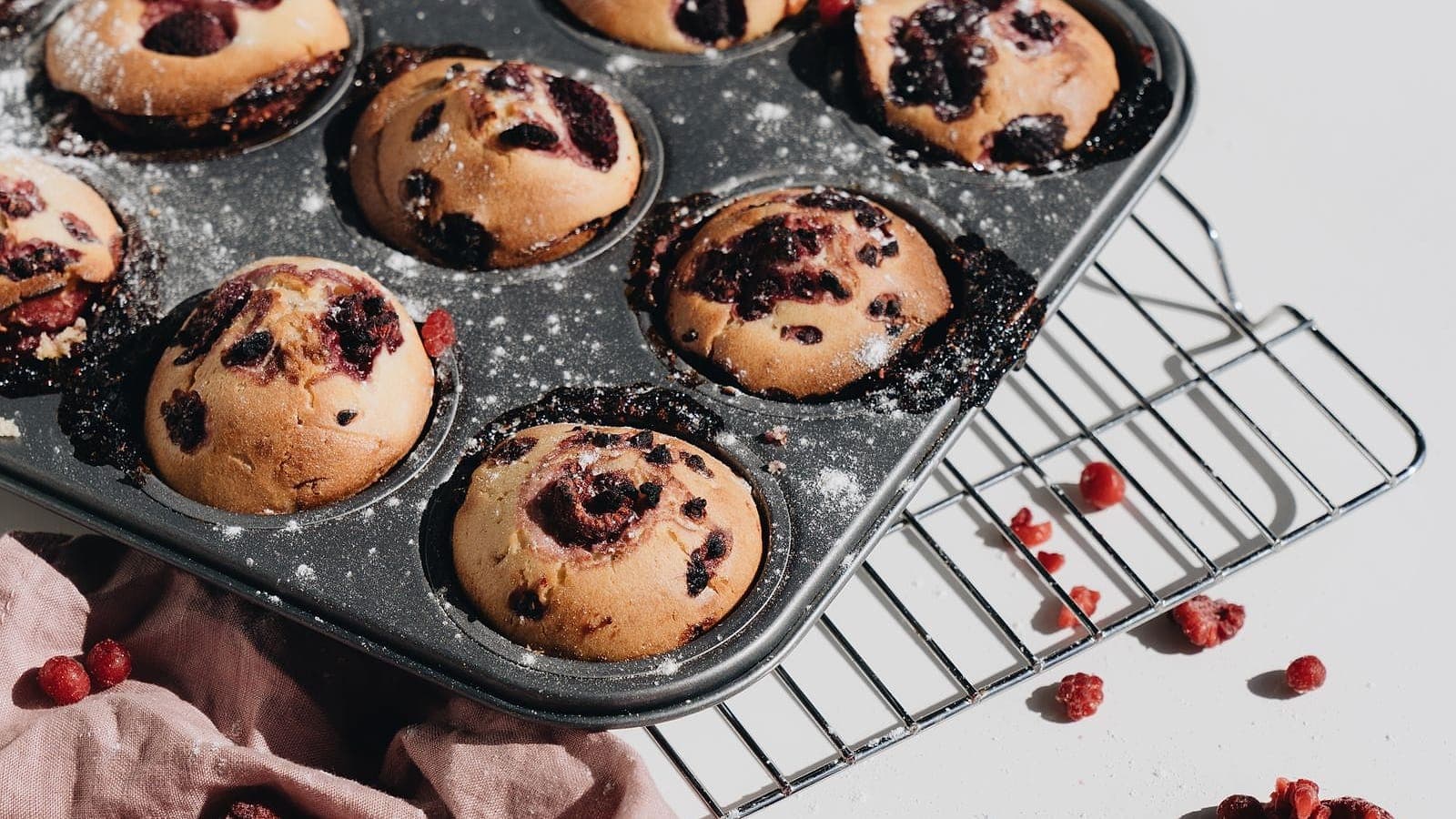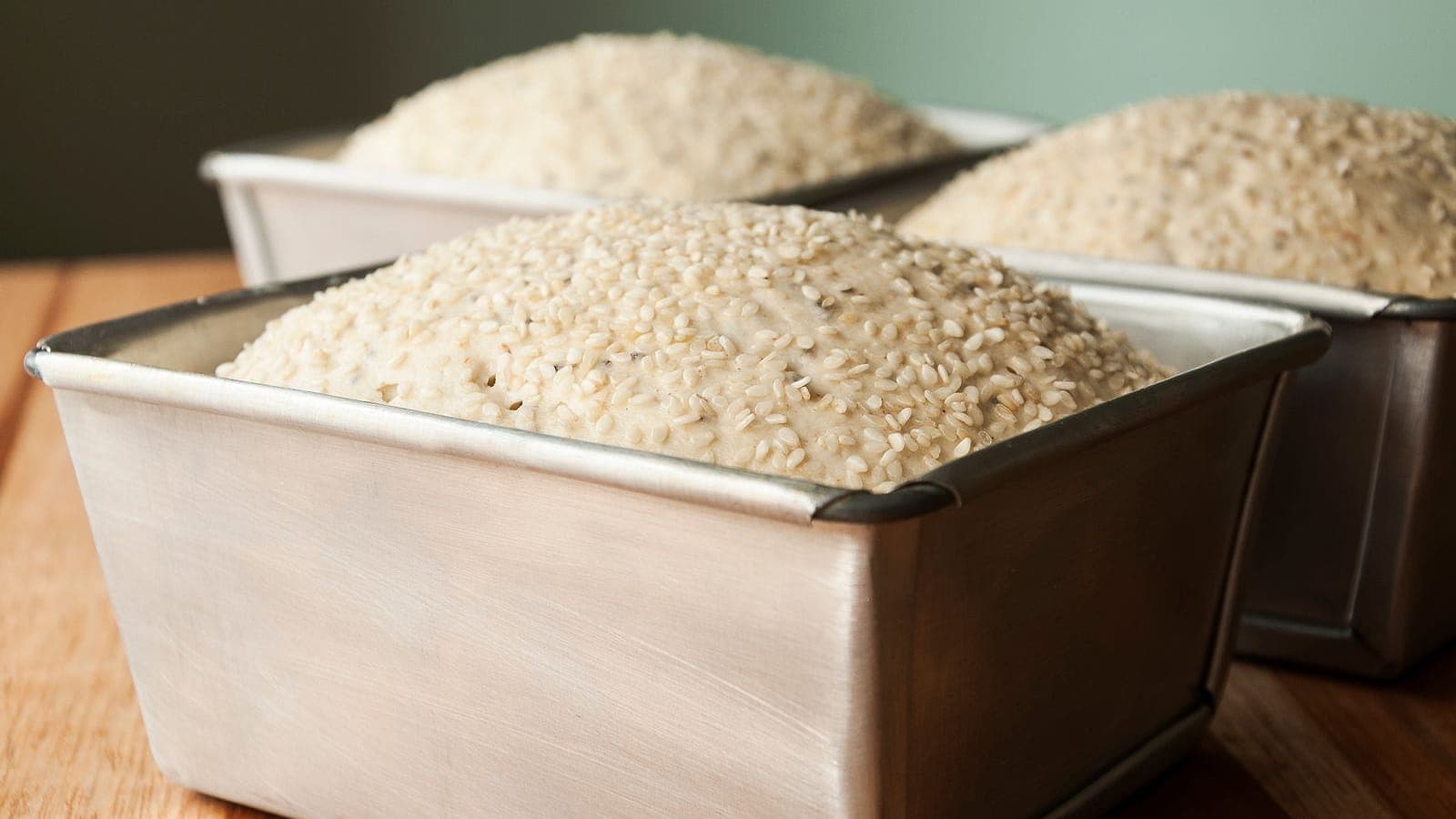
The best “bakeware set” for most people isn’t a boxed set at all — it’s a handful of essential pieces bought open-stock, so every pan is one you’ll actually use. Start with the five that cover almost everything: a Nordic Ware Naturals Baker’s Half Sheet (the benchmark sheet pan), a pair of Fat Daddio’s Anodized Aluminum Round Cake Pans (9x2, 2-Pack), a USA Pan Nonstick 12-Cup Muffin Pan, a USA Pan 1-Pound Loaf Pan, and a Pyrex Easy Grab 9x13 Glass Baking Dish (3-Quart) for casseroles and bars. Together they handle cookies, cakes, muffins, quick breads, and everyday bakes for well under the price of a padded set — and they’ll outlast the flimsy pans those sets are usually built from.
At a glance
| Piece | What it’s for | Material | Price |
|---|---|---|---|
| Nordic Ware Naturals Baker’s Half Sheet | Cookies, roasting, sheet bakes | Aluminum | $ |
| Fat Daddio’s Anodized Aluminum Round Cake Pans (9x2, 2-Pack) | Layer cakes | Anodized aluminum | $$ |
| USA Pan Nonstick 12-Cup Muffin Pan | Muffins & cupcakes | Aluminized steel, nonstick | $$ |
| USA Pan 1-Pound Loaf Pan | Quick breads & loaves | Aluminized steel | $ |
| Pyrex Easy Grab 9x13 Glass Baking Dish (3-Quart) | Casseroles & bars | Glass | $ |
How we chose
Cookloom is a new site, so here’s the honest version of what sits behind these picks: we haven’t run our own lab tests on this bakeware, and we’re not going to pretend otherwise. Instead, we leaned on two things any careful buyer can verify. The first is the broad testing consensus that’s built up around these pieces over years of published reviews — which pans reviewers keep naming, and which one the rest of the field is measured against. For sheet pans, that consensus is unusually tidy: Wirecutter, Epicurious, and The Strategist all land on the same aluminum half sheet. The second is manufacturer specification — material, coating, and dimensions — taken straight from the makers, like Nordic Ware’s own listing for the half sheet’s pure-aluminum build and encapsulated steel rim. For the how-and-why of baking pans and materials, we lean on King Arthur Baking, whose test kitchen is about as authoritative as home-baking guidance gets. Prices appear only as bands ($ to $$$$) because real prices move constantly, and inventing a number would be worse than useless — though the good news with bakeware is that almost everything worth owning sits at the $ or $$ end.
Skip the boxed set — build your own
Here’s the honest spine of this whole guide: for most people, a boxed “bakeware set” is the wrong buy. The pitch is seductive — ten, twelve, sixteen pieces in one carton at one price — but that piece count is exactly the problem. Sets pad the number with things you’ll rarely reach for: a pizza crisper, a second muffin tin, a set of nesting mixing bowls you already own, a tiny tart pan that lives in a drawer forever. You pay for the count, not for the pans.
Worse, the pieces that matter are often thinner than the standalone versions of the same items, because the maker has a fixed price to hit across a dozen pieces. Thin pans warp in a hot oven and brown unevenly — the two things you least want from bakeware.
The alternative is open-stock: buy the four or five pieces you’ll actually use, individually, each chosen on its own merits. You spend about the same money, you get genuinely better pans, and every piece earns its shelf space. That’s the “set” we recommend — assembled by you, from the essentials below.
The five essentials
Nordic Ware Naturals Baker’s Half Sheet — buy this first
If you own one piece of bakeware, make it a half sheet (13x18”), and make it this one. The Nordic Ware Naturals Baker’s Half Sheet is the near-universal top pick — Wirecutter’s, Epicurious’s, and The Strategist’s benchmark — because it does the fundamentals right: pure aluminum that heats fast and browns evenly, wrapped in an encapsulated steel rim that keeps it from warping and “popping” in a hot oven the way cheap thin pans do. It’s the most-used piece in most kitchens, roasting vegetables, baking cookies, toasting nuts, and doubling as a tray. Because it’s bare aluminum, use parchment or a silicone mat for sticky or delicate bakes. At a $ band, it’s the rare best-in-class pick that’s also the cheapest. For the full field, including the nonstick alternative, see our best baking sheets guide.
Fat Daddio’s Anodized Aluminum Round Cake Pans (9x2, 2-Pack) — for layer cakes
The Fat Daddio’s Anodized Aluminum Round Cake Pans (9x2, 2-Pack) are the pastry-kitchen standard, and they come as a pair — which is exactly what you want, because layer cakes bake in two pans at once. The anodized aluminum heats evenly for flat, level tops (less doming to trim off), and because the surface is uncoated, it’s non-reactive with acidic batters and has no coating to scratch or wear away. Grease and line them with a parchment round anyway; even the best pan releases a cake more cleanly with that small insurance. At a $$ band for two pans, they’re an easy call. Prefer a nonstick round for the simplest release? Our best cake pans roundup covers that pick too.
USA Pan Nonstick 12-Cup Muffin Pan — for muffins & cupcakes
For muffins and cupcakes, the USA Pan Nonstick 12-Cup Muffin Pan is the heavy, durable benchmark: aluminized steel with a coating that releases cleanly, corrugated for airflow and strength. It’s the pan you buy once and stop thinking about. Nonstick runs a little darker and browns bottoms a touch faster, so keep an eye on the first batch in a new oven — but for casual and serious bakers alike, it’s the sensible default. It sits at a $$ band. If you want the budget-versus-benchmark breakdown, our best muffin pans guide has it.
USA Pan 1-Pound Loaf Pan — for quick breads
Banana bread, zucchini bread, pound cake, a small sandwich loaf — the USA Pan 1-Pound Loaf Pan handles the quick-bread half of most baking repertoires. It’s the standard 8.5x4.5” size, in aluminized steel that browns crusts evenly, and it’s built heavy enough to resist the warping that plagues flimsy loaf tins. Like the muffin pan, its darker surface gives you a deeper crust, which is usually a plus for a loaf. A $ band, and a piece you’ll use more than you’d expect.
Pyrex Easy Grab 9x13 Glass Baking Dish (3-Quart) — for casseroles & bars
The one non-metal piece in the kit earns its place. A Pyrex Easy Grab 9x13 Glass Baking Dish (3-Quart) is what you want for casseroles, gratins, cobblers, and bar cookies — anywhere gentle, even, retained heat matters more than fast browning. It’s non-reactive, see-through so you can watch the bottom brown, and goes straight from oven to table. Two cautions: glass is a heat sink, so it can over-bake brownie and bar centers — if a recipe was written for metal, lower the oven about 25°F. And never move glass between temperature extremes (a cold dish into a hot oven, or a hot dish onto a wet counter), which risks thermal shock. It’s a $ band, and it rounds out the five.
Bakeware materials, briefly
You don’t need to memorize metallurgy, but three material facts explain every pick above. Light aluminum and aluminized steel are the all-round gold standard: they heat fast and brown evenly, which is why they’re the pro and test-kitchen default — that’s the half sheet, the muffin pan, and the loaf pan. Anodized aluminum (the Fat Daddio’s cake pans) is uncoated, even-heating, and safe with acidic batters, with nothing to scratch off. Nonstick (a coating over aluminized steel) trades a little browning speed for easy release and, eventually, some coating wear — a fair deal for muffins. Glass heats slowly, holds heat, and is non-reactive and oven-to-table, but browns less, which is why it’s the casserole dish and not the cookie sheet. For the full metal-versus-glass decision, laid out job by job, read our glass vs metal bakeware guide.
Nice-to-haves beyond the five
Once the essentials are covered, three add-ons are worth considering as your baking grows. A quarter sheet (about 9x13”) fits a toaster oven and small jobs — see the best baking sheets roundup. A 9x13 metal cake pan browns better and cools faster than a glass dish for sheet cakes and brownies, if you bake those often; our best cake pans guide includes it. And a wire cooling rack lets air reach every side of cookies and cakes so bottoms don’t steam soggy. None is a day-one purchase, but each earns its keep over time.
Caring for your bakeware
Good bakeware lasts decades if you treat it right, and the rules are simple. Hand-wash everything — the dishwasher dulls and darkens aluminum and shortens nonstick life. Use parchment or a silicone mat to protect the surface and make cleanup easy, and never drag metal utensils or a knife across a nonstick coating. For baked-on grease or discoloration on bare or anodized aluminum, a baking-soda paste restores it (skip abrasive cleansers on nonstick). One thing that isn’t a defect: bare aluminum darkens to a patina over time — that’s normal and harmless, and it needs no seasoning like cast iron. For the full routine, including how to prevent warping, see how to care for baking sheets.
The baker’s companion
Bakeware is only half the setup. Once you’re baking regularly, the piece of equipment that changes the most — creaming butter, whipping meringue, kneading bread dough — is a stand mixer. If you’re weighing one, start with our best stand mixers guide, and if you’ve settled on the obvious brand, which KitchenAid mixer to buy sorts the confusingly similar models. And if you’re assembling this kit as a present rather than for yourself, our gifts for bakers guide turns these same essentials into a giftable lineup.