Good bakeware lasts decades if you treat it right, and the rules are refreshingly simple: hand-wash instead of running it through the dishwasher, line pans with parchment or a silicone mat, keep metal utensils and knives off any nonstick coating, and don’t shock a thin pan with sudden high heat. Do that and a $20 sheet pan will outlive most of your kitchen. This guide covers washing, removing baked-on grease and discoloration, why pans warp and how to stop it, how long a nonstick coating really lasts, and the one thing that surprises new bakers most: a darkening aluminum pan isn’t dying — that patina is normal and harmless.
Everyday care that actually matters
Four habits do almost all the work. None of them cost anything, and together they’re the difference between a pan you replace every couple of years and one you hand down.
- Hand-wash, always. The dishwasher’s heat and harsh detergent dull and darken bare aluminum over time and shorten the life of nonstick coatings. Warm water, a squirt of dish soap, and a non-abrasive sponge are all you need. It takes an extra minute and buys you years.
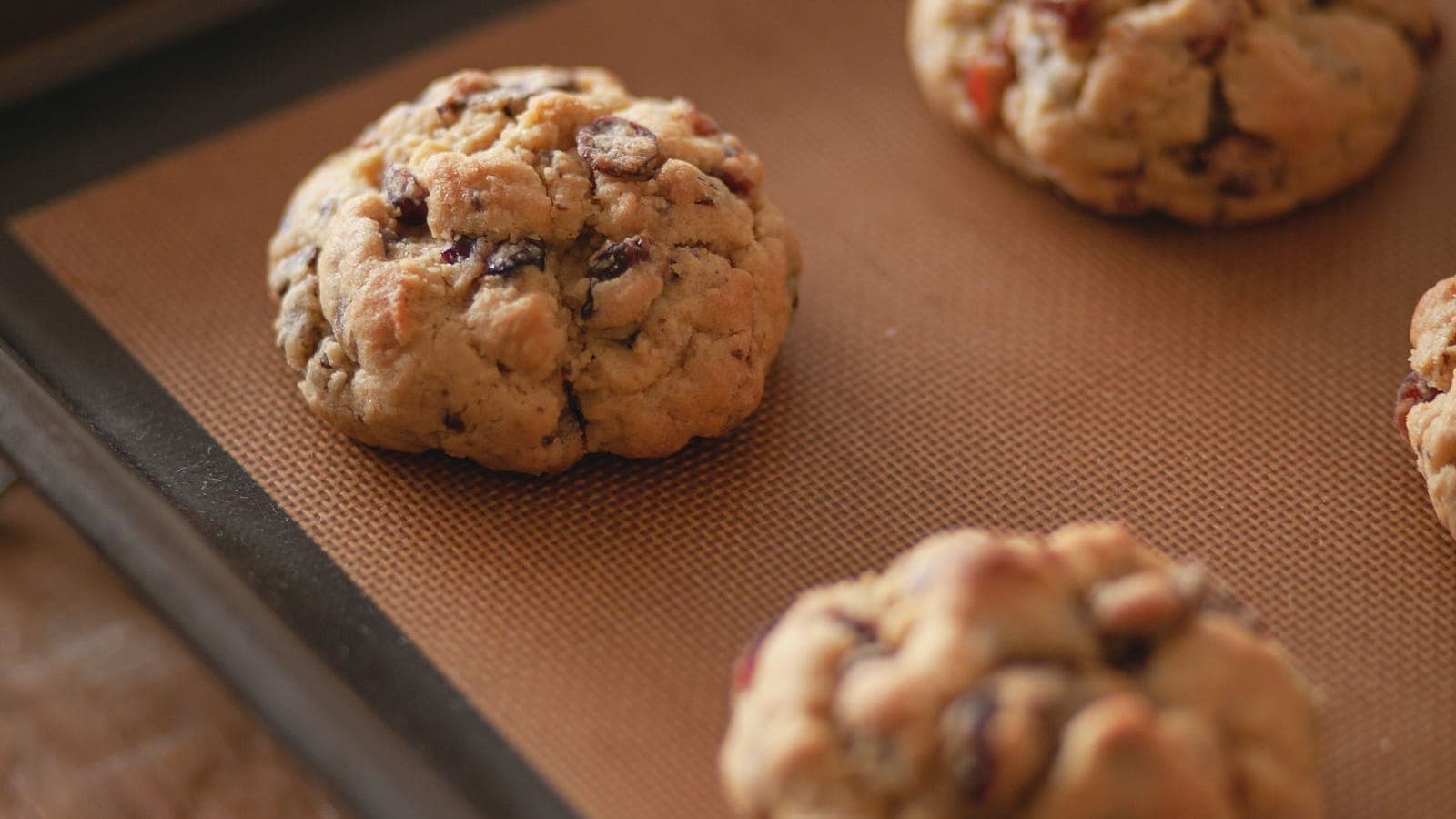
- Line your pans. A sheet of parchment paper or a reusable silicone mat protects the surface, keeps food from sticking, and turns most cleanup into a single wipe. If you adopt only one habit from this guide, make it this one — lining is the single best thing you can do for pan longevity.
- No metal on nonstick. Metal spatulas, whisks, and especially knives scratch coatings, and once a coating is scratched it starts to fail. Reach for silicone, wood, or nylon instead, and never cut anything directly in a nonstick pan.
- Let pans cool before washing. A hot pan dropped into a cold sink can warp a thin metal pan and can outright shatter hot glass. Give it a few minutes on the stovetop or a rack first.
How to remove baked-on grease and discoloration
Sooner or later something bakes on. The right fix depends entirely on what the pan is made of — using the wrong one is how coatings get wrecked.
- Bare or anodized aluminum and stainless steel: Mix a paste of baking soda and a little water, spread it over the baked-on grease, and let it sit before scrubbing with a non-abrasive pad. For stubborn stains on non-coated metal only, Bar Keepers Friend restores the surface — but never use it, or any abrasive, on a nonstick pan.
- Nonstick: Soak in warm, soapy water and wipe clean. Skip abrasives, steel wool, and scouring powders entirely; they’re what turns a good coating into a flaking one.
- Glass: A baking-soda paste or a long soak lifts most residue. Avoid metal scrapers, which leave scratches that weaken the glass.
- Sticky sugar or caramel: Soak in hot water first and let it dissolve. Don’t chisel at hardened sugar with a knife — you’ll gouge the pan and the caramel will come off far more easily once it’s had a soak.
Why baking sheets warp — and how to prevent it
That startling bang from the oven is a thin pan warping. Lightweight metal expands unevenly when it heats too fast or meets a temperature extreme, and it pops out of shape. It’s the single most common complaint about cheap sheet pans, and it’s almost entirely preventable.
To stop it before it starts:
- Buy heavy-gauge pans with a reinforced, encapsulated rim. Weight and a rolled steel rim are what keep a pan flat. Testing outlets like Wirecutter specifically praise the encapsulated steel rim on the Nordic Ware Naturals half sheet for resisting the warping that plagues thin, flimsy pans.
- Don’t shock a cold pan with sudden heat. Skip putting a cold pan straight under a blazing broiler or into a screaming-hot oven — that fast, uneven expansion is exactly what triggers a warp.
- Don’t run cold water over a hot pan. The same thermal shock that warps metal in the oven happens at the sink.
A pan that warps in the oven will often relax back flat as it cools. But repeated shocking permanently bends thin metal, so once you’ve felt one pop, treat it gently — or upgrade to something with more heft.
The patina question: your dark aluminum pan is fine
Here’s the reassurance most people never get. Bare aluminum sheet pans darken and mottle with use, developing a brown-gray patina that looks, to a nervous new baker, like something has gone wrong. It hasn’t. That patina is completely normal, it doesn’t affect how the pan bakes, and it is not a coating wearing off or the pan “going bad.” Bare aluminum has no coating to lose — the color is just oxidation and baked-on trace oils, and it’s harmless.
Unlike cast iron, aluminum does not need seasoning. There’s nothing to build up and nothing to protect; the “how to season an aluminum pan” question has a one-word answer, which is: don’t. Just keep the pan clean and keep lining it. And resist the urge to scrub it back to bright, showroom-shiny metal with harsh abrasives after every bake — that only removes surface and does nothing for performance. A little character is a sign of a well-used pan, not a neglected one.
How long does nonstick actually last?
Even a good nonstick coating wears out eventually — that’s the trade you make for effortless release, and no coating is forever. You can stretch its life considerably by treating it well: hand-wash it, keep all metal tools off it, avoid high broiler heat, and line it with parchment so food rarely touches the coating directly.
Know when it’s genuinely done, though. When the coating starts to flake, or when food that used to slide right off begins sticking badly no matter what you do, the pan has reached the end of its useful life and it’s time to replace it. A failing nonstick pan is a frustrating pan, not a frugal one.
Storing pans so they don’t scratch
Storage does quiet damage that people rarely connect back to the stack in the cupboard. When pans nest directly on top of each other, the rim of one grinds against the surface of the next every time you pull one out.
- Slip a paper towel or a thin cloth between any two nonstick surfaces you stack, so the coatings can’t rub.
- Better still, store sheet pans upright — filed vertically in a rack or cabinet divider — so nothing rests on the baking surface at all.
Common mistakes and quick fixes
| Problem | Fix |
|---|---|
| Pan warped or “popped” in the oven | Switch to a heavy-gauge pan with a reinforced rim; never put a cold pan under the broiler, and don’t shock it with cold water |
| Nonstick coating scratched | Use silicone, wood, or nylon tools; never cut in the pan; store with a cloth between surfaces |
| Aluminum turned dark or dull | Usually normal patina (harmless) — or from the dishwasher; hand-wash going forward and leave the patina be |
| Baked-on grease that won’t budge | Baking-soda paste, left to sit, then a non-abrasive pad (Bar Keepers Friend on non-coated metal only) |
| Glass dish cracked or shattered | Thermal shock — avoid moving glass between temperature extremes; never a cold dish into a hot oven or a hot dish onto a cold, wet counter |
| Rust spots on a pan | Only steel or tin pans rust; dry them fully after washing. Pure aluminum won’t rust at all |
What good bakeware looks like
Care can only do so much for a pan that was flimsy to begin with. If yours are thin, already warped, or flaking past the point of rescue, the fix isn’t more scrubbing — it’s heavier metal. Start with our picks for the best baking sheets and the best cake pans, or build the handful of essentials that actually earn their space in our guide to the best bakeware sets. And if you’re deciding what material a particular bake calls for, our breakdown of glass vs. metal bakeware walks through when each one wins.
Sources
- King Arthur Baking, Your complete guide to baking pans
- King Arthur Baking, Glass or metal or stoneware?
- Wirecutter (The New York Times), The Best Baking Sheets
- Nordic Ware, Naturals Baker’s Half Sheet