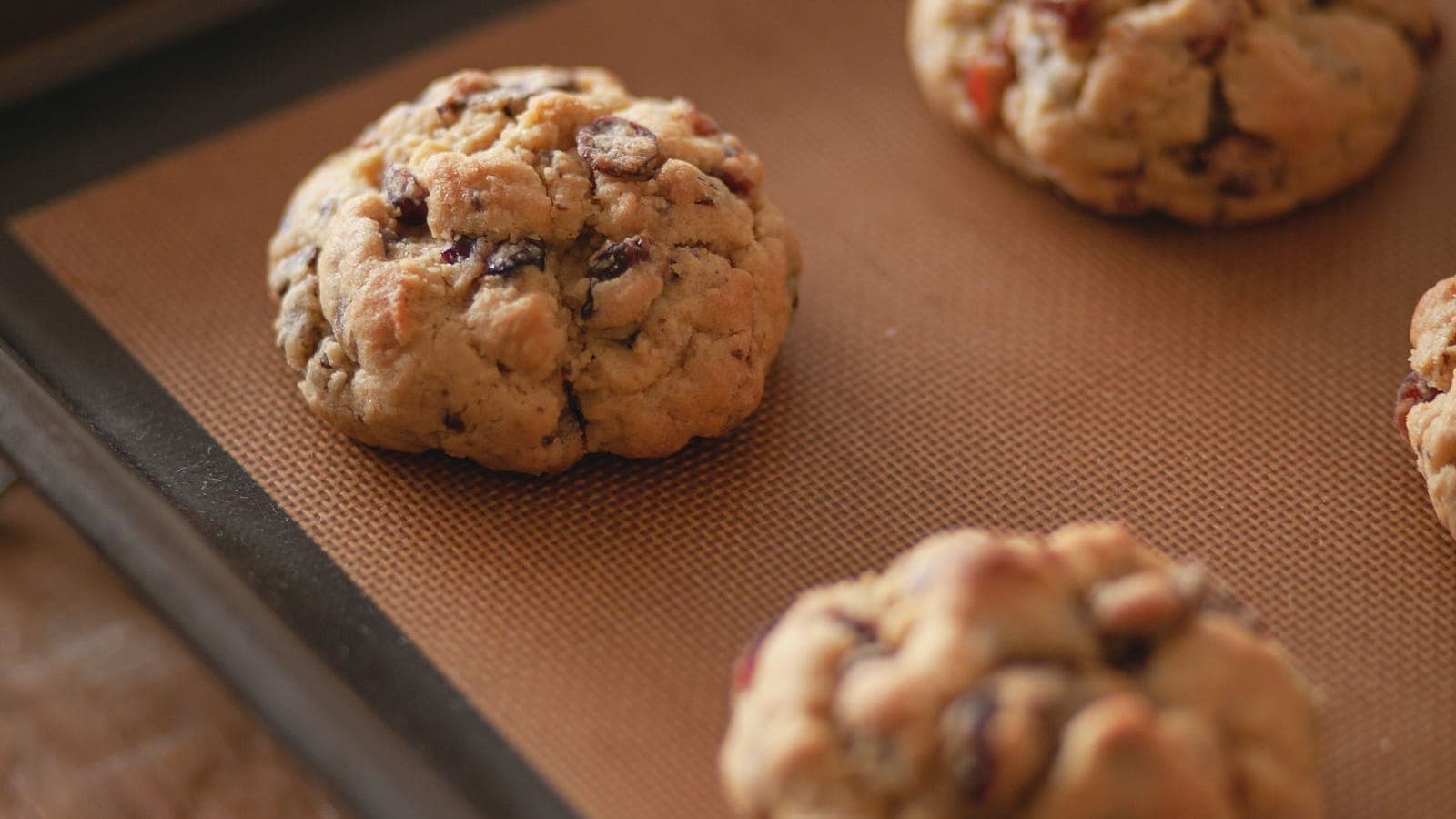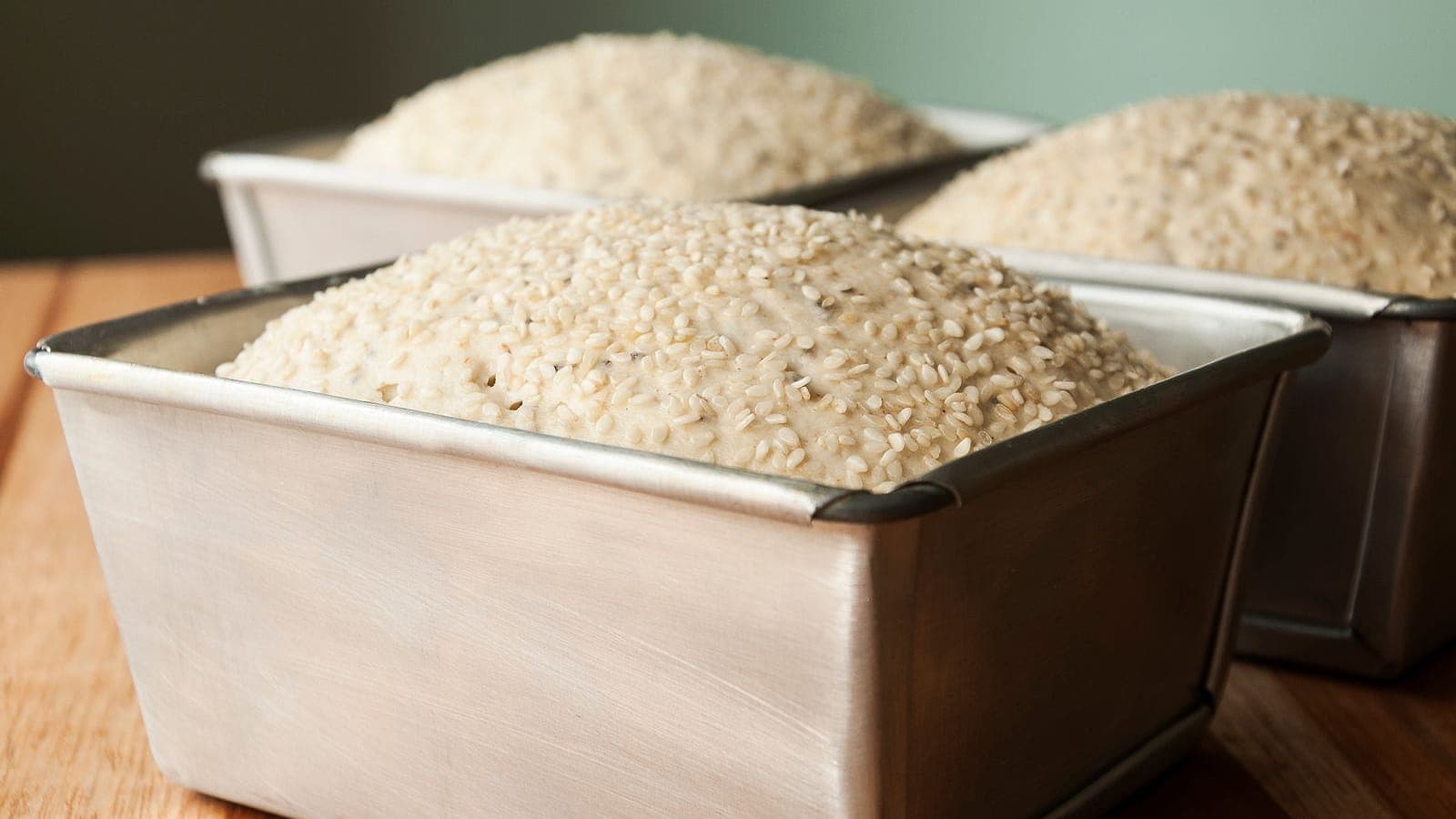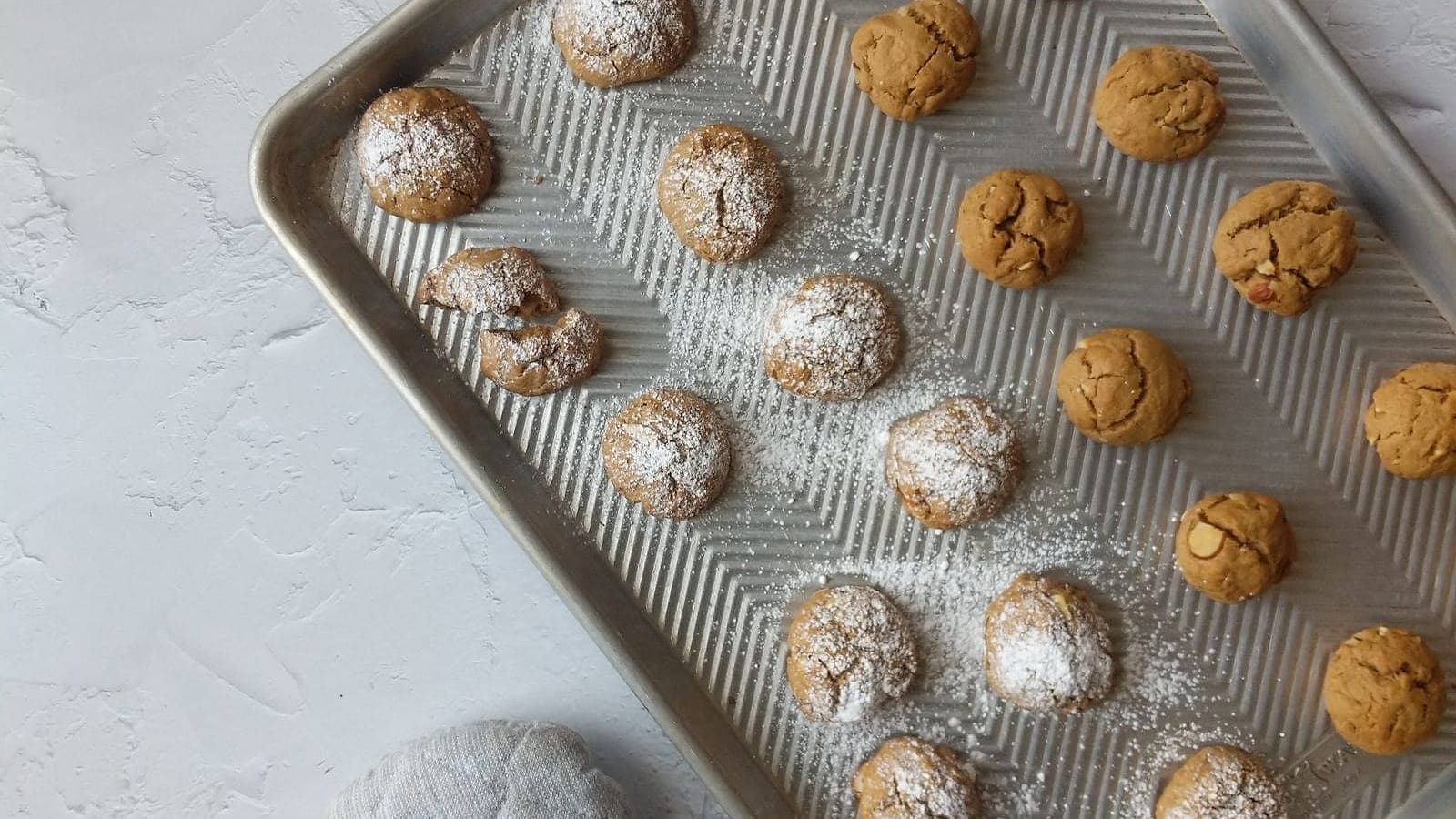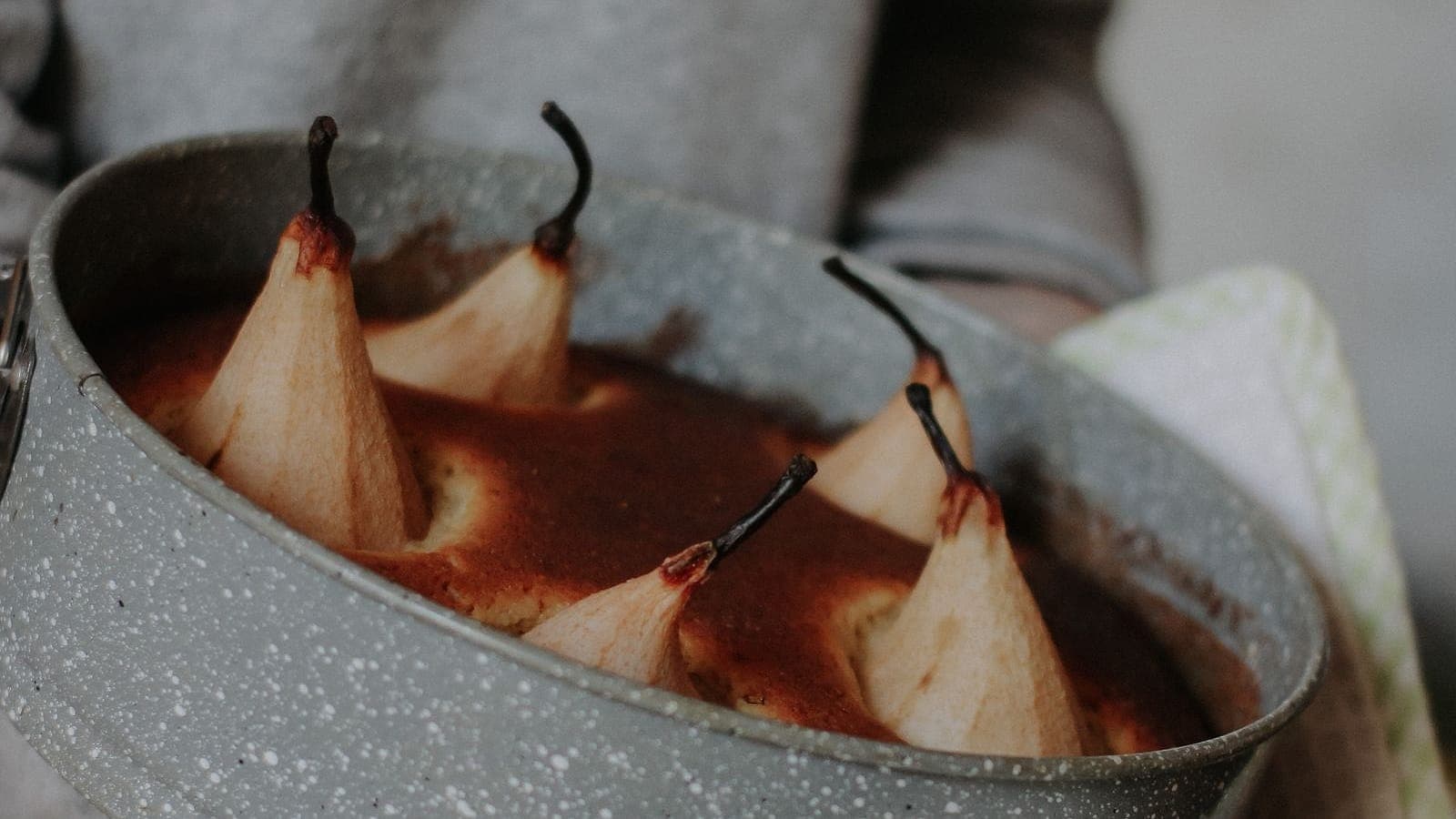
Reach for metal when you want browning and crisp edges — cookies, cakes, breads, roasting — and reach for glass when you want gentle, even heat and a dish you can serve from: casseroles, custards, and bars. That’s the whole rule in one line. Metal heats fast and cools fast, so it browns better and lets a cake rise before its center sets; glass heats slowly and holds heat like a sink, so it bakes gently but browns less and can over-bake the edges of brownies. Most test kitchens, King Arthur Baking among them, develop recipes in metal — so if a recipe calls for metal and all you own is glass, lower your oven about 25°F to compensate. Neither material is “better.” They’re different tools, and the whole skill is matching the pan to the bake.
The short version
- Browning, crisping, and an even rise — cookies, layer and sheet cakes, quick breads and yeast breads, roasted vegetables and sheet-pan dinners → metal.
- Gentle, even heat you can serve straight from — casseroles and lasagna, custards and bread pudding, long-baking bars and cobblers → glass (or ceramic).
- Only have glass but the recipe specifies metal? Lower the oven about 25°F and pull bars and brownies a touch early.
- Anything acidic — lemon bars, a tomato-heavy bake → glass or anodized aluminum, never bare aluminum.
Everything below is the why, so you can make the call yourself the next time a recipe and your cupboard disagree.
How glass and metal actually differ
The difference comes down to physics, not marketing. King Arthur Baking frames it in mechanical terms: metal is a fast conductor that heats and cools quickly, while glass is slow to warm and stubborn to let go of heat once it’s hot. That single property — how fast each material moves heat — drives everything else, from how a crust browns to whether a brownie’s center ever catches up with its edges.
| Property | Metal (aluminum / aluminized steel) | Glass (and ceramic) |
|---|---|---|
| Heat transfer | Fast — heats and cools quickly | Slow — heats gradually, retains heat |
| Browning | Better; crisp edges and bottoms | Gentler; less browning |
| Rise / set | Edges set fast, center rises well | Slower center; edges can over-bake |
| Reactivity | Bare aluminum reacts with acidic foods | Non-reactive; safe with lemon, tomato |
| See-through | No | Yes — great for checking pie crusts |
| Best for | Cookies, cakes, breads, roasting | Casseroles, custards, bars, oven-to-table |
Read the table as a set of trade-offs rather than a scoreboard. Metal wins on browning and speed; glass wins on gentleness, non-reactivity, and the simple luxury of seeing what’s happening on the bottom of a pie. There’s no pan that does both jobs equally well, which is exactly why most serious bakers keep some of each.
When to use metal
Metal is the default for a reason, and the reason is browning. Cookies get crisp edges instead of pale, cakey ones. Layer and sheet cakes rise evenly and take on color while the crumb stays tender. Quick breads and yeast breads build a real crust. And for roasting vegetables or a full sheet-pan dinner, nothing beats a light aluminum pan that shrugs off high heat and encourages the deep, caramelized edges you’re after.
If your recipe was written by a test kitchen — and most published recipes are — it was almost certainly developed in metal, so metal is the safest way to hit the intended result without adjusting anything. When it’s time to actually buy the pans, our roundups of the best baking sheets and the best cake pans cover the light-aluminum and aluminized-steel workhorses worth owning. A heavy half sheet and a pair of round cake pans are the two pieces you’ll reach for most.
When to use glass (or ceramic)
Glass shines whenever gentle, even heat matters more than a crisp bottom — and whenever you want to carry the dish straight from oven to table. Casseroles and lasagna cook through without scorching at the edges and look good enough to serve from. Custards and bread pudding bake without a harsh, direct sear against the pan. Long-baking bars and cobblers get a patient, even heat that suits their extended time in the oven.
Glass is also the honest choice for anything acidic. Because it’s non-reactive, a lemon filling or a tomato-forward bake won’t pick up any metallic tang the way it can from bare aluminum over long contact. And glass has one genuinely useful party trick: you can see the bottom. For pie crusts especially, being able to check that the underside has actually browned — instead of guessing — is worth the slower bake. Ceramic and stoneware behave the same way, with the same oven-to-table appeal.
The rules that prevent disasters
A few guardrails do most of the work here. These are the ones worth memorizing:
- Lower the oven about 25°F when you swap metal for glass. Glass keeps radiating heat even after the oven cycles off, so the same temperature that’s right for metal will run a glass bake hotter and longer than you intended.
- Watch bars and brownies in glass. The center lags while the edges over-bake, because glass holds heat like a sink. Pull them a touch early — and if you want fudgier, more even bars, a metal pan is the better tool.
- Never move glass between temperature extremes. This is the safety rule, not a preference. Don’t put a cold, fridge-chilled glass dish into a hot oven, don’t set a hot dish on a cold or wet counter, and don’t add cold liquid to a hot glass pan. Sudden swings can shatter even tempered glass. A room-temperature dish going into a preheated oven is fine; it’s the shock that’s dangerous.
- Dark metal browns faster than shiny metal. If bottoms are scorching before the top is done, lower the temperature a bit or slide a second light sheet pan underneath to buffer the heat.
- Keep very acidic batters off bare aluminum. Over long contact, acid can react with uncoated aluminum. Use anodized aluminum, a nonstick pan, or glass for lemon and tomato.
What about nonstick, anodized, and stoneware?
Three in-betweens are worth knowing. Nonstick is coated metal: it releases food easily and browns a little more than bare aluminum because its darker surface runs hotter, but the coating wears down over years of use. Anodized aluminum (the uncoated, hard-surfaced kind pastry cooks favor) browns evenly and is non-reactive, which makes it a genuinely good middle ground for cakes — nothing to scratch off, and safe with acidic batters. Stoneware and ceramic behave essentially like glass: slow, gentle, oven-to-table, and just as sensitive to thermal shock, so the same don’t-shock-it rules apply.
How we researched this
We don’t run our own bench tests behind these claims, and we won’t pretend to. The mechanics above — why metal browns, why glass holds heat, and the roughly 25°F adjustment when you substitute one for the other — follow the guidance published by King Arthur Baking on glass, metal, and stoneware and its broader complete guide to baking pans, which is where the “recipes are developed in metal” convention comes from. Both are linked in full under Sources.
If you’re assembling a first set of pans rather than adjusting recipes, our take on building a bakeware set open-stock — a half sheet, a pair of cake pans, a muffin pan, a loaf pan, and a 9x13 — will serve you better than most boxed kits. Keep them lasting with our baking-sheet care guide, and if you’re shopping for someone who bakes, our gifts for bakers has ideas beyond the pans themselves.