Green Goddess Salad (the Viral Chopped One)
Some viral salads are all styling and no substance. This is not one of them. The green goddess chopped salad is finely diced crunchy vegetables drenched in a blended, electric-green herb dressing — and you eat it with a chip, like a dip. It’s genuinely addictive, and it’s one of the trends that fully earns its reputation.
TL;DR: Chop everything small, blend a bright herb-and-cashew (or yogurt) dressing, toss, and scoop with chips. The tiny chop is the trick — every bite gets crunch and dressing. Worth the hype.
What it is
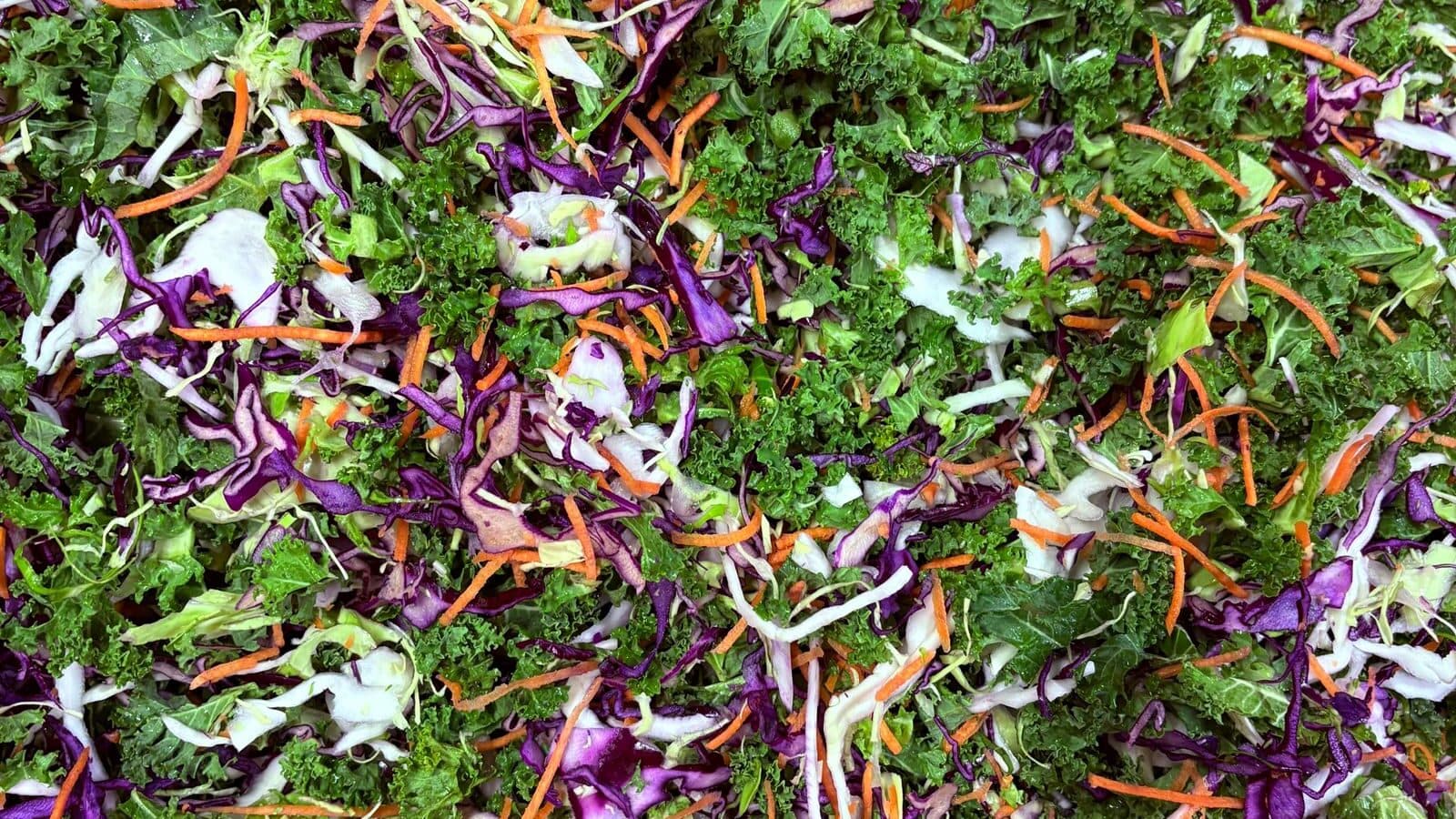
At its core this is a texture trick. You chop cabbage, cucumber, and green onion very small — closer to a coarse confetti than salad-sized pieces — and toss it in a smooth, pourable herb dressing that’s blended until it’s the color of a golf course in spring. Because everything is roughly the same tiny size, the dressing coats all of it evenly, and a scoop holds together on a chip. It eats less like a bowl of greens and more like a fresh, crunchy dip, which is exactly why people can’t stop going back to it.
Where it came from
The chopped green goddess salad was popularized on TikTok by Melissa Ben-Ishay of Baked by Melissa, whose version spread widely and launched a thousand copies. The name “green goddess” is older than the trend — it’s a classic herb-forward dressing — but the modern viral incarnation is specifically the finely chopped, scoop-with-a-chip format. I don’t have a verified view count worth quoting, so I won’t put a number on it; the demand is real regardless, and you’ll find countless riffs across the viral food trends that followed.
Does it actually work?
Yes — and unlike a lot of hyped food, the appeal here is mechanical, not just marketing. The fine chop guarantees that every forkful (or chipful) delivers the same ratio of crunch, herb, and acid. The dressing does the heavy lifting: soft herbs blended with a creamy base go bright, garlicky, and craveable, and nutritional yeast or parmesan adds the savory hum that keeps you eating.
The honest caveat is that the fine chop is the entire point, and doing it well by hand is genuinely tedious — you’re looking at a solid 20 minutes of knife work to get cabbage small enough. This is the rare salad where a food processor isn’t a lazy shortcut but the thing that makes the recipe practical: a few pulses and you’re done. The one rule is don’t over-process. Pulse, check, pulse again. Blitz too long and the cabbage weeps water and turns to slaw mush, and you lose the crunch that makes the whole thing work. The dressing, by contrast, wants the opposite — blend it fully smooth so it pours.
Tips & common fails
- Cashew vs. yogurt. Raw cashews (soaked if your blender isn’t powerful) give a rich, vegan, slightly nutty dressing; Greek yogurt is faster, tangier, and high in protein. Both work — a strong blender gets either one silky.
- Add avocado to the dressing or the bowl for extra creaminess; it’s the most popular upgrade and it belongs here.
- Chips go on last. The dressed salad keeps about a day, but chips added early turn to sad cardboard. Store the salad and the chips separately and combine at the table.
- Season the dressing, not just the salad. Taste and adjust lemon and salt before you toss — a flat dressing makes a flat salad, and it’s much harder to fix once it’s coating everything.
- Don’t drown it. Start with less dressing, toss, then add more. Cabbage releases liquid as it sits, so an over-dressed bowl gets watery fast.
If you like the eat-it-with-your-hands appeal, it’s cousin to other snackable trends — the same crunch-and-dip logic that makes something like tanghulu so satisfying, just savory instead of sweet.
Sources
- Widely reported coverage of the chopped green goddess salad’s origin and its popularization on TikTok by Melissa Ben-Ishay of Baked by Melissa.
- General culinary references on the classic green goddess dressing (herb-and-creamy-base sauces) that predate the viral chopped format.
- General food-science references on how uniform knife/processor cuts affect dressing coverage and perceived texture in salads.
- Practical equipment guidance from Cookloom’s own testing notes on food processors and high-power blenders for fine chopping and smooth emulsified dressings.