Baked Feta Pasta (the Viral TikTok One)
Every so often a viral recipe actually earns the hype, and this is one of them. A block of feta, a couple of pints of tomatoes, some olive oil, and forty mostly hands-off minutes give you a creamy, tangy tomato sauce with almost no technique required.
TL;DR Roast a whole block of brined feta in oil with cherry tomatoes until both collapse, smash it into a sauce, and toss with pasta. Two main ingredients, one dish, genuinely good.
What it is
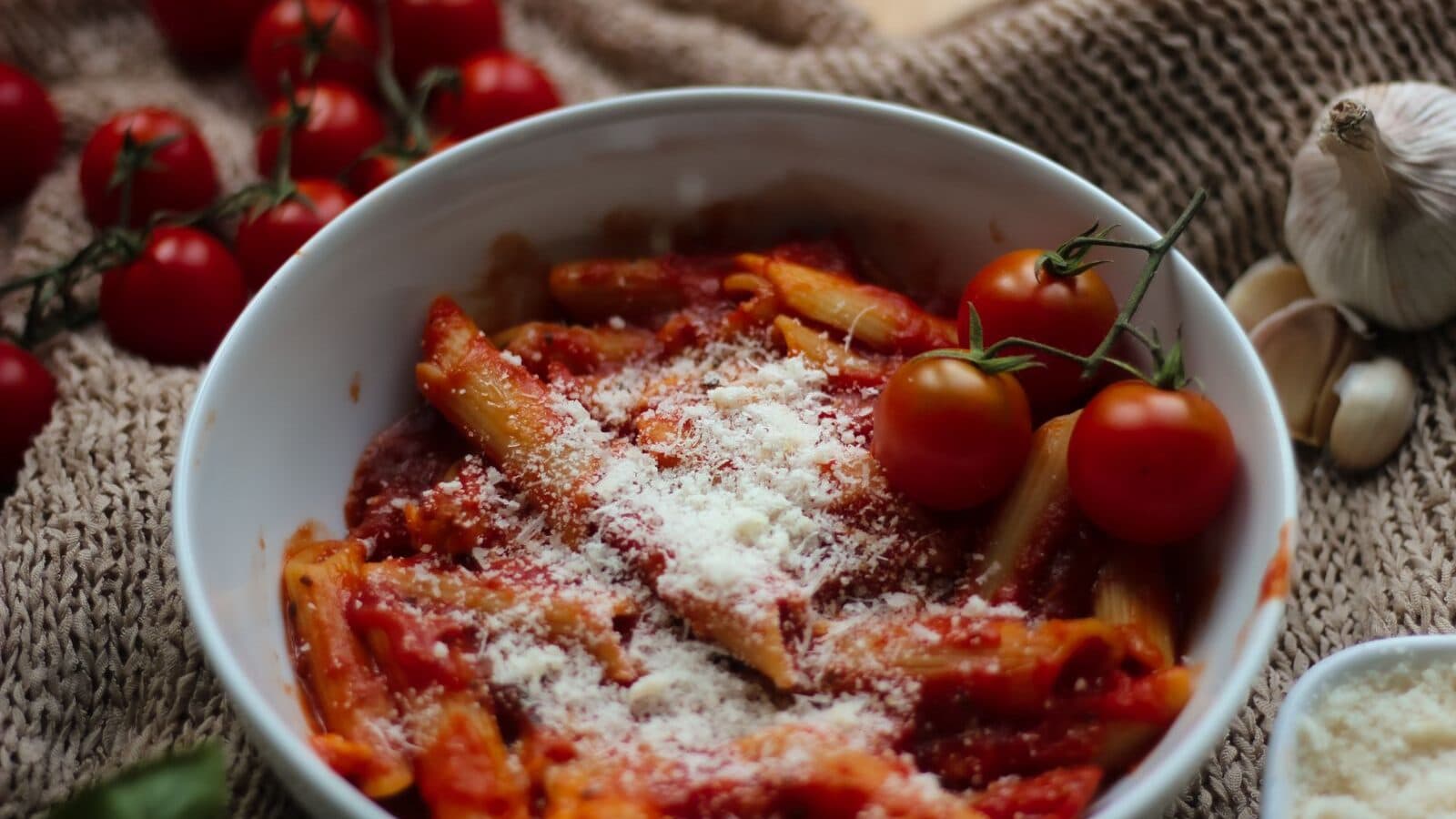
Baked feta pasta is exactly what it sounds like: a block of feta baked in olive oil, surrounded by cherry tomatoes, until the cheese goes soft and the tomatoes burst. You mash the two together into a sauce, thin it with a little starchy pasta water, and fold in cooked pasta. The whole thing happens in one baking dish and a pasta pot — no separate sauce-making, no roux, no babysitting.
Where it came from
This didn’t start on TikTok, even though that’s where most people met it. It began in Finland as uunifetapasta — “oven feta pasta” — and is widely credited to Finnish food blogger Jenni Häyrinen, whose version circulated for years before it broke out. It exploded on TikTok in 2021, and the surge was widely reported to have caused feta shortages in Finland as home cooks cleared the shelves. I don’t have a verified view count worth quoting, so I won’t put a number on it — but the demand was real enough to empty grocery stores, which tells you plenty. If you want the bigger picture on how dishes like this travel, our viral food trends hub tracks the ones that stick.
Does it actually work?
Yes, and the reason is simple food science. Feta in brine holds a lot of moisture, so when you bake it the proteins loosen and the cheese slumps instead of just going oily. At the same time, the tomatoes blister and release their juice, which carries acid and sugar. That juice, the rendered olive oil, and the melted cheese come together into a loose emulsion — glossy, creamy, and sharp all at once. It reads far richer than its short ingredient list should allow.
The honest caveats are all about the cheese and the seasoning:
- Use feta in brine, in a block. Low-moisture “Mediterranean-style” bricks and pre-crumbled tubs won’t melt into anything creamy — they stay grainy. This is the single biggest failure point.
- Don’t skip salting and oiling the tomatoes. Bare tomatoes roast dry and taste flat. The salt draws out juice and the oil is half the sauce.
- Reserve pasta water. The sauce tightens fast off the heat; a splash of starchy water brings it right back.
Get those three right and it’s hard to make this badly. Get the cheese wrong and no amount of stirring will save it.
Tips & variations
Once you’ve made the base once, it’s an easy platform to riff on. Fold a couple of handfuls of spinach into the hot sauce so it wilts, or add jarred roasted red pepper for smoky sweetness. Swap the feta for a log of goat cheese or a wheel of Boursin — the “baked Boursin pasta” spinoff is the same idea with a milder, herbier result. A squeeze of lemon at the end lifts everything and keeps it from feeling heavy.
For gear, the only thing that really matters is the dish: use a proper baking dish with enough surface area for the tomatoes to roast in a single layer, like a glass 9×13. Crowd them into something too small and they steam instead of blistering, and you lose the concentrated flavor that makes the sauce work. If you like this kind of low-effort, high-payoff cooking, the same logic drives our marry me chicken — another one-pan trend that leans on a creamy, tomato-adjacent sauce.
Sources
- Widely reported coverage of the trend’s Finnish origin (uunifetapasta) and the 2021 TikTok surge, including reports of feta shortages in Finland.
- General food-science references on cheese melting behavior and oil-and-water emulsification.
- USDA safe minimum internal cooking temperatures (poultry to 165°F / 74°C) for any added protein.
- General culinary references on roasting tomatoes and using starchy pasta water to finish sauces.