You don’t need to spend a lot to get real food-processor help. For the least money in the category, the Hamilton Beach Stack & Snap 12-Cup is the best budget full-size pick: a genuine 12-cup machine with snap-together assembly (no fiddly twist-lock) and a big-mouth feed chute that swallows whole vegetables. Want one-touch presets and more muscle for a little more? Step up to the Ninja Professional Plus Food Processor (BN601). And if your jobs are small — herbs, garlic, a quick vinaigrette — the tiny Cuisinart Mini-Prep Plus (DLC-2A) costs the least of all. The honest trade at this end of the market: weaker motors, fewer discs, and less refinement than premium machines. That’s fine for everyday prep, and less happy with heavy dough day after day.
At a glance
Three value picks, three different jobs. Match the size to what you actually cook — that decision matters more than any spec.
| Pick | Best for | Bowl | Motor | Price band |
|---|---|---|---|---|
| Hamilton Beach Stack & Snap 12-Cup | Best budget full-size | 12 cups | 450W | $ |
| Ninja Professional Plus Food Processor (BN601) | Best value step-up | 9 cups | 1000W peak | $$ |
| Cuisinart Mini-Prep Plus (DLC-2A) | Best cheap mini | 3 cups | Auto-reversing blade | $ |
Best budget full-size: Hamilton Beach Stack & Snap
If you want a real full-size machine for the least money, the Hamilton Beach Stack & Snap 12-Cup is the one. Its headline feature is right there in the name: instead of the twist-lock collars that make many processors a small daily wrestling match, the bowl and lid simply stack and snap into place. It’s genuinely easier, and one less annoyance every time you cook. The 12-cup sealed bowl is large enough for batch prep, and the big-mouth feed chute takes whole or halved vegetables so you spend less time pre-cutting before you even start.
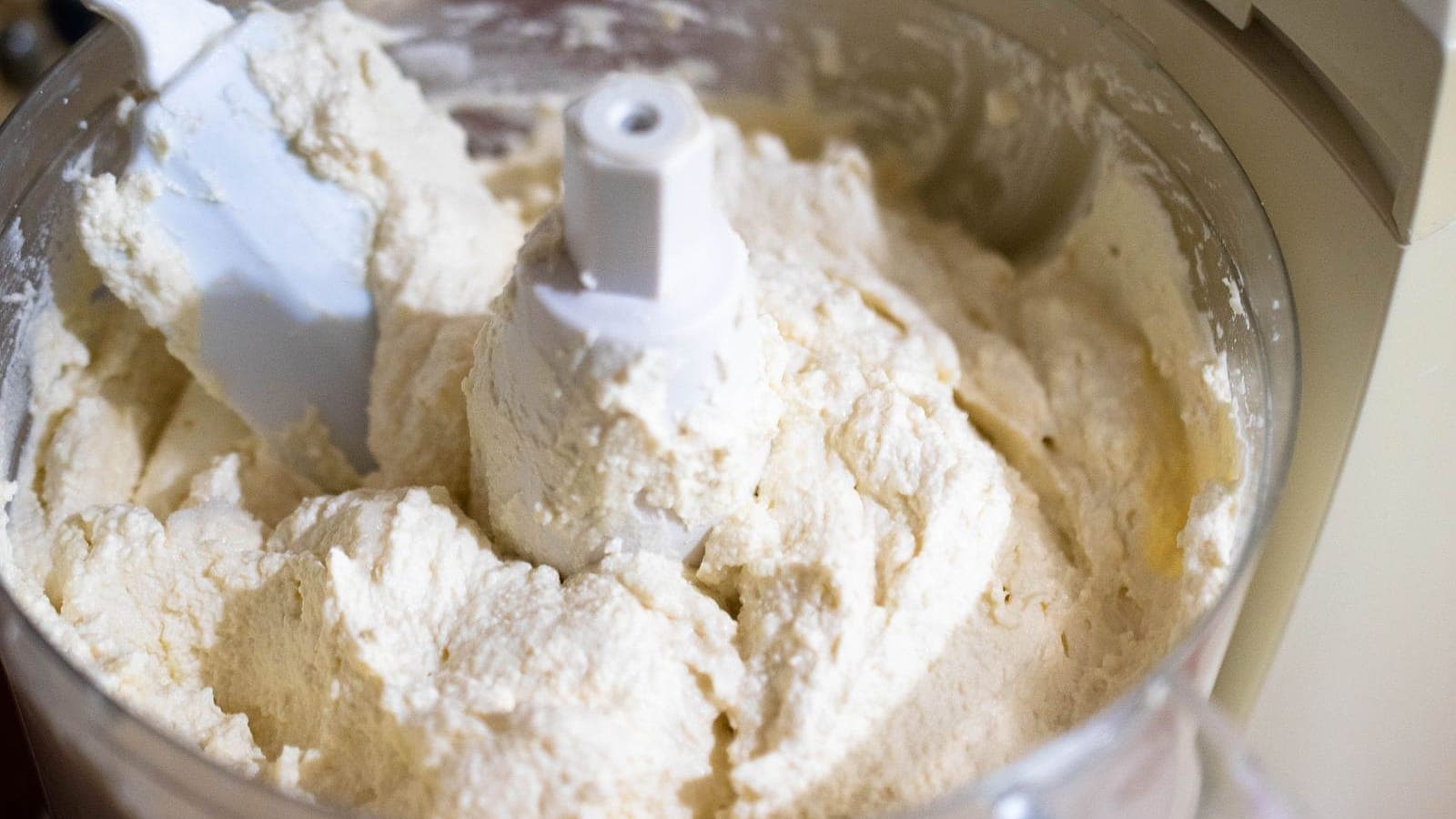
For everyday work — slicing a pile of potatoes, shredding a block of cheese, chopping onions and mirepoix, or making a quick pesto or hummus — it does exactly what a food processor should. The honest limits show up at the edges. The motor is 450W, weaker than the pricier machines, and you get fewer discs than a versatility-focused model. Stiff, repeated dough is where it strains most. If your prep is normal home cooking rather than daily production, that trade is easy to live with, and it’s the reason this machine costs what it does.
Best value step-up: Ninja Professional Plus
Willing to spend a little more? The Ninja Professional Plus Food Processor (BN601) is the value step-up. It brings a 1000-watt peak motor and one-touch Auto-iQ presets for chopping, pureeing, dough, and slicing — press a button and the machine runs a timed program instead of you feathering the pulse yourself. It also kneads dough quickly, handling up to 2 pounds, which is more than most budget full-size machines want to attempt.
The catch is size and control. At 9 cups, the bowl is smaller than the Hamilton Beach, so very large batches mean working in rounds. And the preset-driven design that makes it beginner-friendly also gives you less manual say over exactly when to stop. For most home cooks that’s a fair swap — the presets are genuinely convenient — but if you like to watch the chop and call it yourself, know that going in. As a first “real” processor with more power and dough capability than the cheapest options, it earns its slightly higher band.
Best cheap mini: Cuisinart Mini-Prep Plus
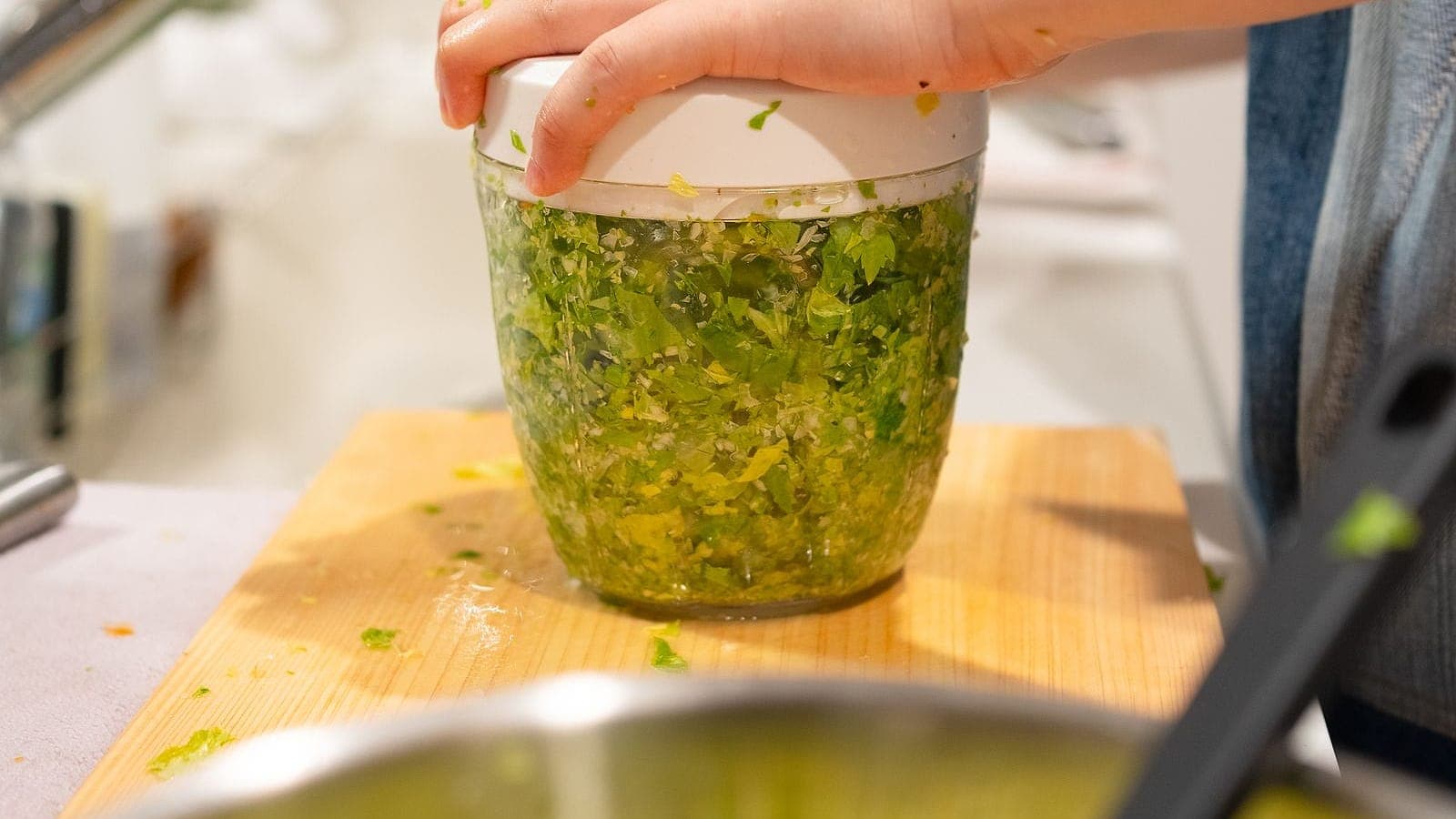
Not every kitchen needs a big machine. If your jobs are small — mincing garlic, chopping a handful of herbs, grinding nuts, or emulsifying a salad dressing — the Cuisinart Mini-Prep Plus (DLC-2A) is the least-expensive way to skip the knife work. Its 3-cup bowl and auto-reversing SmartPower blade give you two edges: one side for chopping, the other for grinding harder ingredients, and the motor flips between them.
What you don’t get is discs — there’s no slicing or shredding here, and no batch capacity. That’s the whole point. A mini isn’t a small full-size processor; it’s a different tool for small, frequent tasks, and it stores in a cabinet corner rather than hogging counter space. If you find yourself wanting a mini but comparing a few options, we round them up in our guide to the best mini food processors. Buy this one when small prep is genuinely most of what you do.
How to buy cheap without regret
Decide size first. This is the choice that saves or wastes your money. A budget full-size like the Hamilton Beach earns its keep if you slice, shred, and batch-prep; a mini like the Cuisinart Mini-Prep makes sense if you only chop small amounts. Don’t buy a big cheap machine you’ll rarely fill — and don’t buy a mini you’ll constantly outgrow. Not sure a processor is the right tool at all? Our do-you-need-a-food-processor guide walks through it, and if you mostly make smoothies and soups you may want a blender instead.
Expect a weaker motor and fewer discs. Around 450W and a basic disc set is the honest trade at this price. It handles everyday tasks well; heavy, repeated dough is where budget machines struggle most.
Snap-together assembly beats twist-lock. The Hamilton Beach’s stack-and-snap design is one less daily friction point — a small thing you’ll appreciate every single use.
Presets are beginner-friendly. The Ninja’s one-touch programs make it easy to start, at the cost of some manual control. For most cooks, that’s a fine bargain.
When it’s worth spending more
A value pick genuinely covers most home prep — but not everything. If you process daily, or you lean hard on stiff dough and nut butter, a sturdier machine with a stronger motor and better discs pays for itself in durability and results. The category benchmark is the Cuisinart Custom 14-Cup, a 720W workhorse that testing consensus has favored for years — Wirecutter’s top pick for over a decade. When you’re ready to compare the machines built for that kind of use, see our best food processors guide and the Cuisinart vs. KitchenAid showdown. For heavy, long, enriched bread doughs specifically, a stand mixer is often the better tool — more on that in our stand mixers guide.
Using it well
A budget machine performs better when you drive it well. Pulse in short one-second bursts rather than just holding the motor on — it gives an even chop and keeps you from turning food to mush. Don’t overfill the bowl, and watch the max-fill line for anything liquid. Use the S-blade for chopping, pureeing, and dough, and the disc for slicing and shredding. And always feed with the pusher, never your fingers, since the blades are very sharp. For the full walkthrough, see how to use a food processor.