The verdict: If you can own only one, buy a Dutch oven. It’s the only one of these three that sears, braises, roasts, fries, and bakes bread, and it moves from stovetop to oven to table without a second dish. Choose an Instant Pot instead when weeknight speed and a hands-off routine matter more than browning and your storage is tight; add a slow cooker only if you want true set-and-forget cooking and already own something that sears. The honest catch: on a long braise, a Dutch oven and an Instant Pot come out roughly even — one wins on flavor, the other on speed and cleanup — which is why plenty of kitchens are happiest owning both.
These three tools get lumped together because they all turn a tough cut and a pot of liquid into dinner. They go about it in very different ways. A Dutch oven is a heavy lidded pot — usually enameled cast iron — that you drive with a burner and an oven. A slow cooker is a low-wattage countertop crock that cooks gently for hours. An Instant Pot is the best-known brand of multicooker: an electric pressure cooker that also slow-cooks, sautés, steams, and makes rice. Here’s how to choose, backed by named testing rather than vibes.
The 60-second verdict table
| Dutch oven | Slow cooker | Instant Pot (multicooker) | |
|---|---|---|---|
| Best at | Versatility: sear, braise, roast, fry, bake | Hands-off saucy braises, stews, soups | Speed and all-in-one cooking |
| Hands-on vs. hands-off | Hands-on; needs monitoring | Fully hands-off | Mostly hands-off once sealed |
| Speed (a braise) | Moderate — about 2.5–4.5 hr in the oven | Slow — about 4.5 hr | Fast — about 1.5 hr in pressure mode |
| Searing & browning | Excellent | None — can’t brown | Limited; small-batch sauté |
| Bread baking | Excellent (to ~500°F, knob permitting) | No | No |
| Price band | $$–$$$ | $–$$ | $$ |
| Footprint | Cabinet; no outlet needed | Countertop; needs an outlet | Countertop; needs an outlet |
Price bands are relative, not current prices: $ is budget, $$ is mid-range, $$$ is premium. Speeds are drawn from Consumer Reports’ timed cook-off, below.
What each one is actually for
The Dutch oven — the versatile workhorse
The Dutch oven is the most versatile pot in this comparison, and it isn’t close. As Made In lays out, one vessel will braise, fry, roast, sear, sauté, simmer, boil, and bake bread, then carry the result from stovetop to oven to table. Its heavy walls hold steady heat, and — unlike the two appliances here — it gets hot enough for real high-heat searing and Maillard browning, the same fond-building chemistry that makes a good cast-iron skillet worth owning. The trade-off is attention: a Dutch oven doesn’t have a timer or an auto-shutoff, so you’re the thermostat. That’s the price of control.
The slow cooker — hands-off, but no browning
A slow cooker’s whole appeal is that you can walk away for the day. Made In is candid about the cost of that convenience: the crock never gets hot enough to sear or brown, so flavor is built only through time, and its sealed lid traps moisture, which keeps sauces thin. It shines at saucy, brothy dishes — stews, chilis, pulled meats, soups — where a loose, wet result is fine. But its low temperature ceiling caps its versatility. If a recipe opens with “brown the meat,” you’ll be doing that in a separate pan on the stove before anything goes in the crock.
The Instant Pot / multicooker — speed and all-in-one, with a moisture caveat
The multicooker’s headline is speed. In pressure mode it collapses an all-day braise into roughly an hour, and one appliance covers pressure-cooking, slow-cooking, sautéing, steaming, rice, and yogurt. Two caveats keep it honest. First, “one hour” excludes the 10–30 minutes it takes to come to pressure plus 5–30 minutes to release, per Taste of Home. Second, its slow-cook mode is not the same as a dedicated slow cooker: the sealed gasket keeps liquid in, and in Consumer Reports’ testing that produced soupier, flatter-tasting results. Its sauté-and-brown function works, but the pot is narrow and deep, so it browns in smaller batches and less effectively than a wide Dutch oven.
Head-to-head: the same dish, three ways
Consumer Reports ran exactly the experiment that settles this — the same chili, cooked three ways, tasted blind. The results split cleanly along the lines you’d predict:
- Dutch oven: scored highest for aroma and flavor, described as “deep and layered,” but the chili looked dry and lumpy and the beans stayed slightly firm.
- Multicooker (slow-cook mode): best texture and appearance — meat falling apart, picture-perfect in the bowl — but flat flavor, with testers asking where the heat went.
- Slow cooker: mediocre overall, flat-tasting with a greasy surface, though the meat came out tender.
The panel’s verdict was a tie between the Dutch oven and the multicooker, with the plain conclusion that neither can fully replace the other. On the clock, the multicooker’s pressure mode finished in about 1.5 hours, versus 2.5–4.5 hours for the Dutch oven and the slow modes, and about 4.5 hours for the slow cooker. The takeaway isn’t that one gadget is best — it’s that the Dutch oven trades hands-off ease for flavor you can’t rush, and the multicooker trades flavor depth for speed and a tidy result. Pick the trade that matches how you actually cook.
Can a Dutch oven replace an Instant Pot?
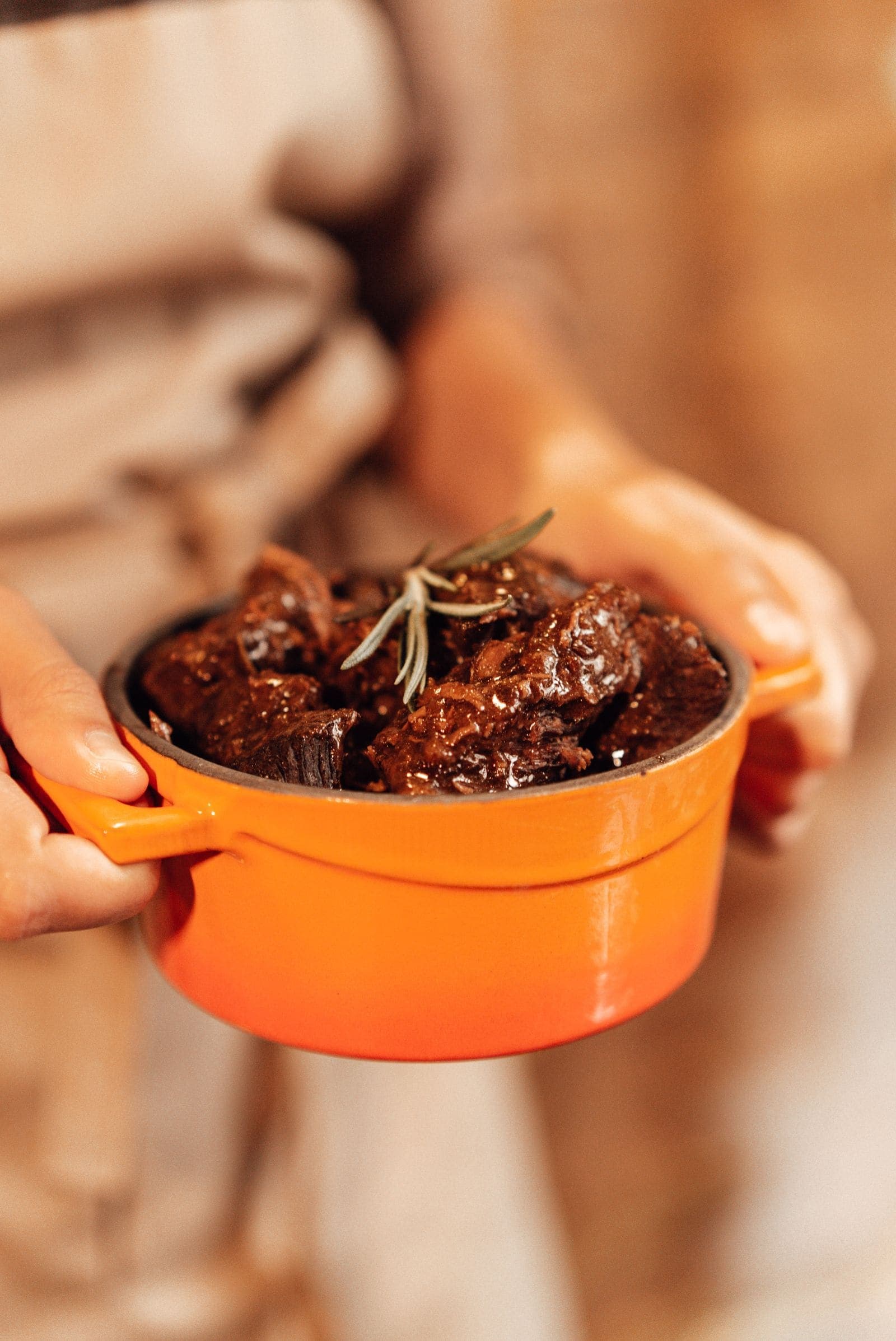
Partly. They overlap on braises and stews, so for a weekend pot of beans or a Sunday ragù, a Dutch oven does everything an Instant Pot does and browns better on the way in. Where it can’t compete is speed: with no pressure, it can’t quarter the cooking time of a tough cut. It does, however, replace a slow cooker more convincingly than it replaces a pressure cooker — a low oven behaves a lot like slow-cook mode, with real searing built in at the start. So if your Instant Pot mostly earns its counter space by making weeknight beans and cheap braising cuts fast, a Dutch oven won’t match that clock. If it mostly makes weekend braises, the Dutch oven arguably does the job better.
Can an Instant Pot replace a Dutch oven?
For weeknight speed, yes. For browning, bread, and roast-to-table cooking, no. The sauté function is small-batch and won’t develop a wide, even fond; the sealed pot can’t hit the 450–500°F a bakery-style crust needs; and an electric appliance doesn’t come to the table the way an enameled pot does. Made In and Instant Pot Eats frame the split the same way this guide does: the multicooker owns speed and set-and-walk-away convenience, and the Dutch oven owns flavor development, searing, high-heat baking, and presentation. An Instant Pot is a genuine time-saver. It is not a Dutch oven with a plug.
If you can only own one
Match the tool to your kitchen and your week:
- You cook to build flavor, bake bread, roast, or entertain → a Dutch oven. It’s the widest-range single purchase, and it’s the money page this guide feeds: see our tested Dutch oven picks, then size it with our Dutch oven size guide. If you’re weighing premium against budget, Le Creuset vs. Staub and Lodge vs. Le Creuset break down what the extra money buys.
- Your week is weeknight-driven, your kitchen is small, and you want it fast and hands-off → an Instant Pot. One appliance, minimal babysitting, dinner in an hour.
- You want literal set-and-forget and already own a skillet or Dutch oven for browning → a slow cooker, as a specialized second tool rather than your only one.
How to convert recipes between them
Recipes don’t port cleanly, and the reason is moisture. Made In’s rule of thumb: converting a slow-cooker recipe to a Dutch oven usually needs more liquid, because an oven braise loses some to evaporation; going the other way — a Dutch oven or stovetop recipe into a sealed appliance — needs less, because pressure cookers and slow cookers trap the steam. For timing, a low oven around 275–325°F roughly approximates slow-cook mode, while pressure mode cuts hands-off braise time by more than half. For a big braised roast or a bread loaf, cook to temperature, not just time — a leave-in probe thermometer and our meat temperature chart take the guesswork out of doneness.
What you can’t cook in a Dutch oven
Its range is wide, but not unlimited:
- No empty, dry, high-heat preheating. Enamel is essentially glass fused to iron, and Tasting Table warns that blasting it dry from cold can craze or crack the coating through thermal shock. Add fat or liquid first and keep the heat medium to low. (The full routine is in our enameled cast iron care guide.)
- Delicate, quick-cooking items. Eggs and fish tend to stick and release poorly in enameled cast iron, per Vancasso — that’s a job for nonstick or a well-seasoned pan, not a braiser.
- Long acidic simmers in bare cast iron. Enameled pots are non-reactive, so tomatoes, wine, and citrus are fine. Uncoated cast iron is a different story: extended acidic cooking can pick up a metallic taste and strip the seasoning, which is one reason bread bakers who prize bare cast iron keep it for dry, high-heat work.
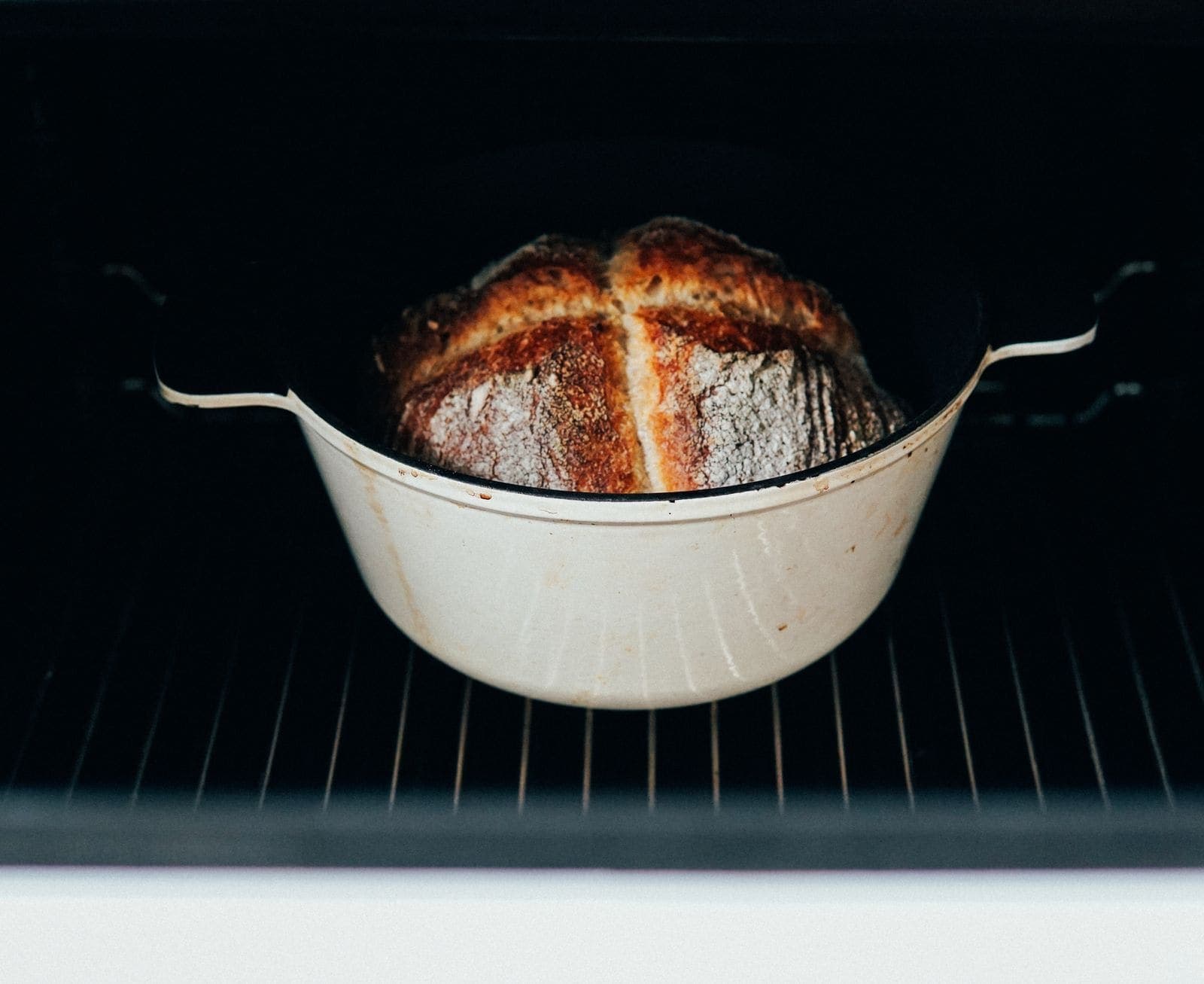
- 500°F bread, if your lid can’t take it. Enameled cast iron is generally oven-safe to about 500°F, but the knob is the limiter — America’s Test Kitchen flagged one 6.5-qt model capped at 400°F by its phenolic knob. And lighter non-cast-iron “Dutch ovens,” like Our Place’s Perfect Pot, top out around 425–450°F per Consumer Reports, too low for a 500°F no-knead loaf. Check your specific knob before you commit to bread.
How we researched this
I’m Ari Marrow, founding editor at Cookloom, and I want to be straight about method: this is an editorial comparison, not a first-hand test kitchen bake-off. Rather than stage our own cook-off, it leans on controlled, published comparisons — most usefully Consumer Reports’ three-way chili cook-off and America’s Test Kitchen’s Dutch oven testing — plus use-case framing from Made In and Taste of Home. Every performance claim above is attributed to its source, prices are given as bands rather than invented figures, and where evidence comes from a single test we’ve said so. Full source list below.
Sources
- Consumer Reports — Chili Cook-Off: Dutch Oven vs. Multicooker vs. Slow Cooker
- Made In — Dutch Oven vs. Slow Cooker
- Taste of Home — Slow Cooker vs. Pressure Cooker vs. Dutch Oven
- Instant Pot Eats — Dutch Oven vs. Instant Pot
- America’s Test Kitchen — Large Dutch Ovens
- Tasting Table — The High-Heat Mistake That Can Ruin Enameled Cast Iron
- Vancasso — Cooking With Enameled Cast Iron: A Guide
- Consumer Reports — Our Place Perfect Pot Review