Buy the Le Creuset if you want the lighter, more manageable pot, a pale interior that lets you watch a sauce brown, the widest range of colors, and the strongest resale value in the category. Buy the Staub if you live for slow braises and hard sears, prefer a black interior that hides every stain and seasons in over time, and don’t mind carrying more weight — usually for a little less money. Both are lifetime-grade, made-in-France enameled cast iron, and no independent test lab crowns one clearly better than the other. This is a tie-breaker, not a mismatch, so the rest of this page is built to help you find your tie-breaker fast.
Le Creuset vs Staub at a glance
| Feature | Le Creuset Signature Round | Staub Round Cocotte |
|---|---|---|
| Interior enamel | Sand/cream, smooth and glossy — easy to watch browning; stains over time | Black matte with a “honeycomb” texture — hides stains, seasons in; harder to read browning |
| Lid | Smooth underside | Self-basting spikes that drip condensation back onto the food |
| Weight (5.5-qt round) | ~11.5 lb | ~12.8 lb (~20% heavier on average) |
| Wall thickness | ~3.6 mm | ~4.2 mm |
| Lid-knob heat rating | Phenolic ~480°F (Signature) / ~380°F (older Classic); metal knob 500°F, swappable | Nickel-plated metal knob, 500°F across the line |
| Side-handle grip | ~1.25 in opening — easy with oven mitts | Under 1 in |
| Colors | 20+, brighter and graduated | ~9, darker and moodier |
| Made in | France (Fresnoy-le-Grand, since 1925) | France (Alsace heritage, now Zwilling-owned) |
| Warranty | Lifetime to the original owner | Reported inconsistently (limited lifetime vs 5 years) — verify current terms |
| Price band | $$$ | $$$ (often a bit less at like sizes) |
| Best for | Everyday visibility, lighter handling, resale | Braising, searing, stain-hiding, self-basting |
Specs are pinned to the round Signature (Le Creuset) and the round Cocotte (Staub); figures shift with exact size and model line. Weights and wall thicknesses as reported by Prudent Reviews and Tasting Table. Price band $$$ = premium; verify live prices before you buy.
The 60-second verdict
If you cook a bit of everything and want a pot that is easy to lift, easy to clean up after, and easy to read while food is on the stove, get the Le Creuset. If your Dutch oven mostly exists to turn out short ribs, coq au vin, and no-knead bread — and you like the idea of a pot that gets more nonstick the more you use it — get the Staub. If you are not sure the premium is worth it at all, hold that thought: there is a real budget case near the bottom of this page. Everything in between is the detail that follows.
Interior enamel: light vs black matte (the decision that matters most)
The single biggest difference between these two pots is the surface you cook on. Everything else — weight, lids, knobs, color — is a tiebreaker on top of this one choice, so start here.
Le Creuset’s sand interior: you can watch it work
Le Creuset lines its pots with a smooth, light sand-to-cream enamel that is almost glass-like. The practical payoff, which Tasting Table, Prudent Reviews, and America’s Test Kitchen all point to, is visibility: you can see a fond building on the bottom of the pot, watch onions move from gold to brown, and catch a sauce the moment it is dark enough. For everyday cooking, that pale background is genuinely useful, and it is a big part of why the light interior reads as more beginner-friendly.
The trade-off is honest and well-documented: that light enamel stains and discolors over time. Tomato, turmeric, browned fond, and long braises all leave their mark, and no amount of gentle scrubbing keeps a well-used Le Creuset interior looking showroom-new. Many owners simply prefer the visibility and accept the patina as the cost of it. Neither of these interiors needs the seasoning ritual that bare cast iron demands — if you are coming from a Lodge skillet, our enameled cast-iron care guide covers what each surface does and doesn’t need, and how to season cast iron explains the bare-metal routine you get to skip here.
Staub’s black honeycomb: hides stains, seasons in, harder to read
Staub goes the other way with a black matte enamel textured with a subtle pattern the brand calls “honeycomb.” Staub says that texture helps the surface take on seasoning and behave more like nonstick as cooking fat builds up — a manufacturer claim that owner reports across Everything Kitchens, Tasting Table, and Top Cookware Brands broadly echo, with cooks describing an interior that gets more nonstick the longer they use it. What is not in dispute is that the dark surface is excellent for developing deep fond and searing, and that it camouflages the stains and scuffs that show plainly on a Le Creuset.
The cost of all that black is that you cannot see into it as easily. It is harder to judge how brown your food is getting, or whether something is starting to scorch, without pulling a piece out to check. If you cook mostly by feel and smell and lean on your Dutch oven for browning meat, that is a fair trade. If you like to watch a caramel or a roux by eye, it works against you.
The lids: Staub’s self-basting spikes vs Le Creuset’s smooth lid
Staub lids have small spikes or bumps on the underside — the brand’s “chistera” self-basting design — meant to collect condensation and rain it back down over the food as it cooks. Le Creuset lids are smooth. On paper, that gives Staub an edge in moisture retention for long, lid-on braises.
In practice the edge is real but modest. In one head-to-head test, Prudent Reviews started both pots with 64 ounces of liquid and found the Staub retained 56 ounces to the Le Creuset’s 52 — about an 8% difference. That is a measurable win for the self-basting lid, not a transformative one: a well-fitted Le Creuset lid still traps plenty of moisture for a braise, and the gap is unlikely to change how a dish turns out. Worth knowing on the other side: Top Cookware Brands and Interior Insider both note the self-basting spikes can trap residue and be marginally fussier to clean. Buy the Staub for its interior and heft if those appeal — treat the lid as a nice bonus, not the reason.
Weight, walls, and handling
Staub is built heavier on purpose. Its walls run about 4.2 mm thick to Le Creuset’s 3.6 mm, and across the line Staub comes in roughly 20% heavier on average. At the popular 5.5-quart round size that is about 12.8 pounds for the Staub versus about 11.5 pounds for the Le Creuset, per Prudent Reviews and Tasting Table. The upside, as Tasting Table notes, is that extra mass holds heat beautifully once the pot is up to temperature; the downside is that it is slower to get there and harder to lift, especially full and especially in and out of a hot oven.
Handling is where Le Creuset pulls ahead for a lot of people. Prudent Reviews measured Le Creuset’s side handles at about a 1.25-inch grip opening versus under an inch on the Staub — a small number that makes a real difference when your hands are inside bulky oven mitts. TechGearLab, for its part, found the Le Creuset Signature Round the lightest Dutch oven it tested. If you move a full pot often, cook for a crowd, or just want the least strenuous option, the lighter, bigger-handled Le Creuset is the easier daily companion. If you are unsure which capacity you actually need before you weigh any of this, our Dutch oven size guide walks through it.
The knob nobody checks: oven-heat ratings
Here is the gotcha that trips up bread bakers. The lid knob is not always rated for the temperatures you might want, and the two brands handle it differently.
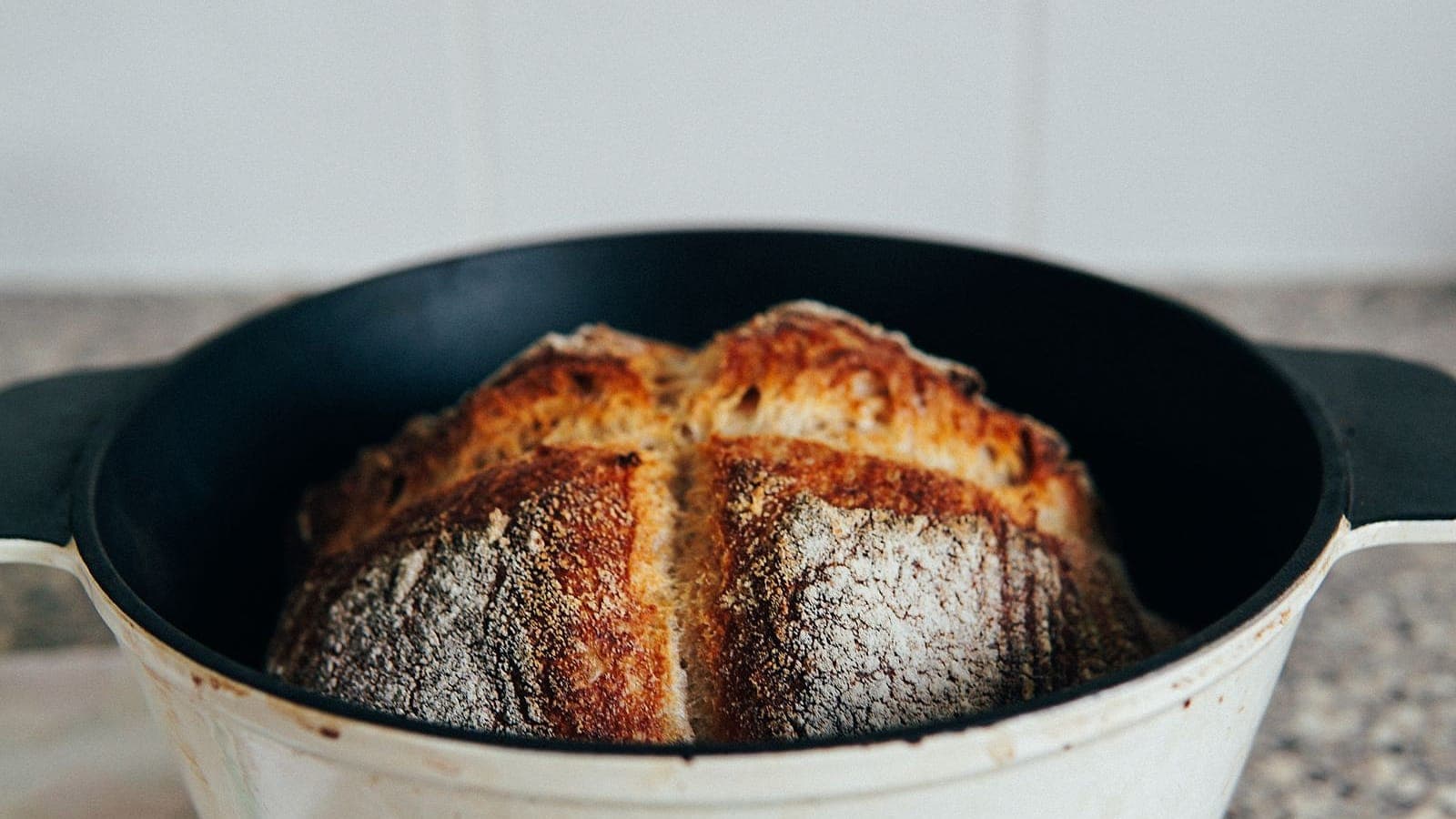
Staub is simple: its nickel-plated metal knob is oven-safe to 500°F across the entire line, according to Prudent Reviews and Reviewed. Le Creuset depends on which knob you have. The older Classic black phenolic knob is rated to roughly 380°F, the current Signature black phenolic knob to about 480°F, and Le Creuset’s stainless-steel knob to 500°F. For most braising and roasting that ceiling never comes up. But high-heat no-knead bread is often baked with the lid on at 450°F to 500°F, which can put a phenolic knob past its rating. The fix is cheap and easy: Le Creuset’s stainless knob is swappable, so bakers who want to run hot can simply fit the metal one. Just know to check before you preheat.
Colors and kitchen aesthetics
If your Dutch oven lives on the stovetop or open shelving, looks are not a trivial tiebreaker. Le Creuset offers the wider palette — 20-plus colors, many of them bright and graduated from light to dark across the pot (Flame being the icon). Staub keeps a tighter, moodier range of around nine, leaning into darker, saturated tones like Grenadine, Graphite, Sage, and matte black, some paired with brass knobs rather than nickel. Neither is “better”; it is genuinely a matter of whether you want a bright statement piece or something more subdued. Le Creuset’s broader and ever-changing color lineup also feeds directly into its resale advantage, which we get to below.
Made in France and brand heritage
Both pots earn the made-in-France credential, and it is real on both sides. Le Creuset has forged and finished its enameled cast iron at Fresnoy-le-Grand since 1925 — though it is worth noting, as Tasting Table does, that only Le Creuset’s cast iron is French; its stainless, stoneware, and nonstick lines are made elsewhere. Staub was founded in Alsace in 1974 and, now under Zwilling ownership, still produces its enameled cast iron in France, per Zwilling’s own materials and Tasting Table. Because sources vary on the exact town for Staub, the safe and accurate claim is simply “made in France.” This is a shared strength, not a differentiator — buy either and you are getting a French-made pot with a long heritage behind it.
Price, warranty, and resale: the long-game cost
On price, the two run close. Both sit firmly in the premium ($$$) band, and Prudent Reviews and Tasting Table both note that Staub tends to come in a little cheaper than a comparable Le Creuset at like sizes. Treat any specific figure as a moving target and check a live retailer the day you buy. One money-saving tip that applies to both: each brand runs outlet and factory-seconds stores, and Le Creuset’s own outlets sell Staub as well, often at steep discounts.
Warranty is where you should read the current fine print rather than trust a blog. Le Creuset markets a lifetime warranty on its enameled cast iron to the original owner. Staub’s coverage is reported inconsistently — Interior Insider and Prudent Reviews between them describe both a limited lifetime warranty and a five-year term — so confirm the exact, current terms on Zwilling’s official site before you buy. Either way, both cover manufacturing defects, not damage from drops, metal-utensil gouging, thermal shock, or overheating an empty pot.
Resale is Le Creuset’s quiet advantage. It has a large collector and secondhand market, and discontinued or rare colors can command striking premiums — Money Digest documented eBay listings including a discontinued piece reportedly near $14,000 and a rare Dutch oven over $1,700. Those are outliers, not what your everyday pot is worth, but the broader point holds: a Le Creuset in a sought-after color tends to hold value better than most cookware. One caveat on both brands — chips that expose bare iron tank resale value and invite rust, so however you use it, protect the enamel.
How we researched this, and what the labs actually crown
Cookloom has not run its own instrumented tests on these two pots, and we will not pretend otherwise. This comparison synthesizes the published, hands-on testing of independent outlets and each brand’s own specifications, and where they disagree we show the split rather than manufacture a consensus.
America’s Test Kitchen named the Le Creuset 7.25-quart its overall winner — “this perfect, pricey pot bested the competition again” — while naming the Cuisinart 7-quart its Best Buy at roughly a quarter of the price, noting it performs nearly as well but runs heavier and less durable, with lid and rim chipping under abuse testing. ATK still recommends Staub, flagging that it is harder to see into but camouflages stains. TechGearLab makes the Le Creuset Signature Round its top pick and the lightest it tested, with the Lodge Enameled as its best value. And in a direct head-to-head, Prudent Reviews recommends Le Creuset for most people — easier to maneuver thanks to thinner walls and bigger handles — calling Staub’s performance edges “negligible” for home cooks. Additional reporting here draws on Tasting Table, Reviewed, Everything Kitchens, and Top Cookware Brands.
Two honesty notes. The 8% moisture-retention figure rests on a single outlet’s test, so we present it as one result, not settled fact. And prices are bands that will drift, so we quote no live numbers. This page contains affiliate links; if you buy through them, Cookloom may earn a commission at no cost to you, and it never changes what we recommend.
The budget question: do you even need either?
Before you spend premium money, know that the testing labs found much cheaper enameled Dutch ovens that perform close. America’s Test Kitchen’s Best Buy, the Cuisinart 7-quart, performed nearly as well as the Le Creuset at roughly a quarter of the cost, and TechGearLab crowned the Lodge Enameled its best value. Both are heavier and less refined, and reviewers flagged the Cuisinart’s lid and rim chipping under hard use — but for a first Dutch oven, or one you will not baby, they turn the premium into a want rather than a need.
If that is you, start with our Lodge vs Le Creuset Dutch oven breakdown of the budget-vs-premium question and our best Dutch ovens guide, which ranks the wider field. And if you are still deciding whether a Dutch oven is even the right tool for how you cook, Dutch oven vs slow cooker vs Instant Pot sorts that out first. Enameled cast iron is also a different animal from a bare Lodge — no seasoning ritual, different care — which we cover in best cast-iron skillets and is premium cast iron worth it.
Buy the Le Creuset if…
…you want the more forgiving everyday pot. It is lighter and easier to lift, its bigger handles are kinder to oven mitts, and its pale interior lets you watch a fond build and a sauce reduce. It comes in the widest range of colors, holds the strongest resale value in the category, and took the top spot in both America’s Test Kitchen’s and TechGearLab’s roundups. Just remember the knob: if you bake bread above 480°F with the lid on, plan to fit the stainless knob.
Buy the Staub if…
…braising and searing are the whole point. The black matte interior develops deep fond, hides every stain and scuff, and seasons in over time, and the self-basting lid drips a little more moisture back onto your food. You pay for it in weight — about 20% heavier — and in a darker surface that is harder to read, but the 500°F metal knob is bread-ready out of the box, and it usually costs a bit less than the comparable Le Creuset.
Buy neither if…
…you want most of the enameled-cast-iron experience for a fraction of the price. America’s Test Kitchen’s Best Buy, the Cuisinart 7-quart, performed nearly as well as the Le Creuset at roughly a quarter of the cost, and TechGearLab named the Lodge Enameled its best value. Both are heavier and less refined, and reviewers flagged the Cuisinart’s lid and rim chipping under abuse — but for a first Dutch oven, or an oven you will not baby, they make the premium a want, not a need. Our best Dutch ovens guide and Lodge vs Le Creuset comparison lay out those picks.
Sources
- America’s Test Kitchen — The Best Large Dutch Ovens
- TechGearLab — Best Dutch Oven
- Prudent Reviews — Staub vs. Le Creuset
- Tasting Table — Staub vs. Le Creuset: The Differences
- Everything Kitchens — Best Enameled Cast Iron: Le Creuset vs Staub
- Top Cookware Brands — Le Creuset vs Staub Dutch Oven
- Reviewed — Are Le Creuset Dutch Oven Lids Oven-Safe?
- Zwilling / STAUB — Made in France
- Le Creuset — Warranty
- Le Creuset — Outlets
- Interior Insider — Staub vs Le Creuset Warranty
- Money Digest — The Unexpected Value of Vintage Le Creuset