The best pressure cooker for most people is the Instant Pot Duo 7-in-1 (6-Quart) — an electric multicooker that testers have ranked the best of its kind since 2016, and about the easiest way to cook beans, stews, and tough cuts in a fraction of the usual time. Step up to the Instant Pot Pro 10-in-1 (6-Quart) for a nicer, quieter machine; get the Ninja Foodi 6.5-Quart Pressure Cooker & Air Fryer if you want one appliance that also air-fries; and if you prefer the faster, hotter old-school approach, a stovetop cooker like the Presto 01362 6-Quart Stainless Steel beats any electric on speed.
The one thing to settle first is electric versus stovetop. And the one safety rule to know up front: if you want to can low-acid food — vegetables, meat, poultry, stock — you need a real pressure canner like the All American 921 Pressure Canner (21.5-Quart), never an electric multicooker. More on why below, because it matters.
At a glance
| Pick | Best for | Type | Capacity | Price band |
|---|---|---|---|---|
| Instant Pot Duo 7-in-1 (6-Quart) | Best overall | Electric | 6 qt | $$ (~$100) |
| Instant Pot Pro 10-in-1 (6-Quart) | Best upgrade | Electric | 6 qt | $$$ |
| Ninja Foodi 6.5-Quart Pressure Cooker & Air Fryer | Best multicooker | Electric | 6.5 qt | $$$ |
| Presto 01362 6-Quart Stainless Steel | Best stovetop | Stovetop | 6 qt | $$ |
| All American 921 Pressure Canner (21.5-Quart) | Best for canning | Stovetop canner | 21.5 qt | $$$$ |
How we chose
Cookloom is a new publication, and we want to be straight about that: we have not run these cookers through our own lab. Instead, we built these picks from the strongest testing consensus available and from the manufacturers’ own published specs. The Wirecutter multicooker guide has named the Instant Pot the best electric pressure cooker since 2016 across repeated rounds of testing, and it calls the Pro the Instant Pot upgrade most worth the jump — that durability of verdict is exactly what we weight most heavily. For the canning question, we defer entirely to the National Center for Home Food Preservation, the USDA-affiliated authority on home food safety. Capacities, wattages, and materials come from each brand’s spec sheets, cited in Sources. Where a number is a marketing claim — like “cooks up to 70% faster” — we say so and don’t present it as our measurement.
Electric vs stovetop — which kind should you buy?
A pressure cooker traps steam so water boils hotter than it can in an open pot, which is what lets it race through the slow stuff: dried beans without an overnight soak, tough braising cuts, risotto, stock. There are two families, and picking the right one matters more than picking a brand.
Electric multicookers (the Instant Pot and Ninja Foodi families) are the convenient choice. You set a program and walk away; they hold pressure automatically, keep food warm afterward, run quietly, and double as slow cookers, rice cookers, and sauté pans. They’re forgiving for beginners. The trade-off is that they reach a lower maximum pressure and temperature than stovetop models, and they take longer to come up to pressure. If that sounds like your kitchen, our electric pressure cooker roundup goes deeper on the field.
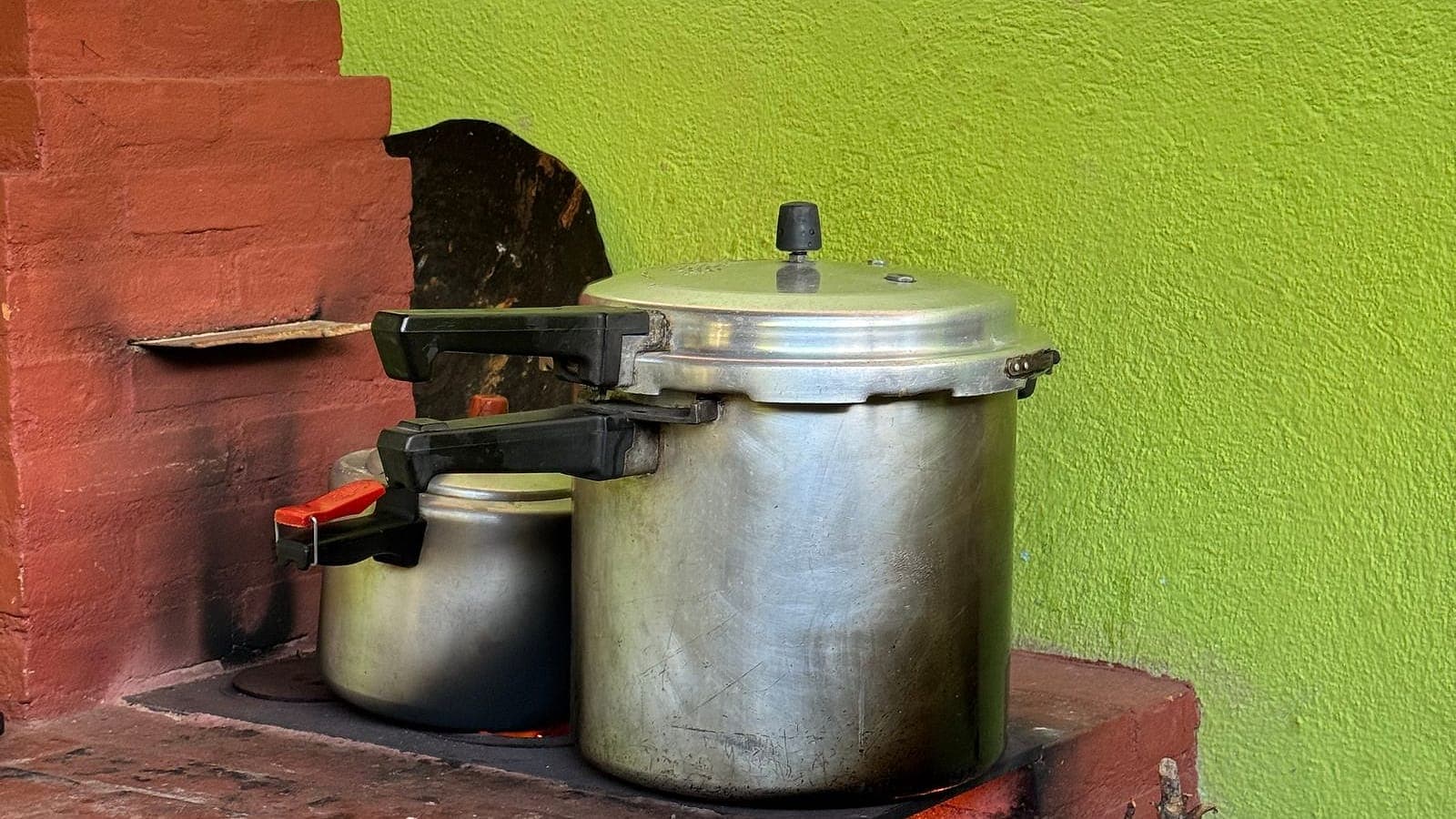
Stovetop pressure cookers are a locking-lid pot you run on your own burner. They hit higher pressure, get hotter, come up to pressure faster, give you a better sear, and double as an everyday pot. They’re also the only kind you can use for canning. The trade-off is that they’re hands-on: you manage the heat, and you need an active burner the whole time. If maximum speed appeals, see the stovetop pressure cooker roundup. And if you’re still not sure pressure cooking is even your method, our pressure cooker vs slow cooker guide lays out the difference.
Best overall: Instant Pot Duo 7-in-1 (6-Quart)
The Instant Pot Duo 7-in-1 (6-Quart) is the machine we’d tell almost anyone to buy first. It’s an electric multicooker that pressure cooks, slow cooks, steams, sautés, makes rice, and cultures yogurt in one 6-quart pot — the benchmark Wirecutter has kept at the top since 2016. Two things make it the default. First, price: at roughly $100 it’s often the cheapest way into capable pressure cooking, and the one anchor number we’re comfortable quoting because it’s so consistent. Second, community: the Duo has the largest recipe ecosystem of any cooker here, so whatever you want to make, someone has already written the timing down. It’s the easy, cheap, do-most-things choice, and nothing below unseats it for the average kitchen.
Best upgrade: Instant Pot Pro 10-in-1 (6-Quart)
If the Duo is the sensible pick, the Instant Pot Pro 10-in-1 (6-Quart) is the nicer one. Same core idea, better daily experience: an auto-sealing lid so you can’t forget to close the valve, a quieter diffused steam release that takes the startle out of venting, a brighter LCD, a 1200-watt heater, and a sous vide setting the Duo lacks. Wirecutter frames it as the Instant Pot upgrade most worth paying for, and that’s how we’d position it too — a real step up in polish rather than a different tool. It sits a band above the Duo in price. Deciding between an Instant Pot and the Ninja? Our Instant Pot vs Ninja Foodi comparison settles it head-to-head.
Best multicooker: Ninja Foodi 6.5-Quart Pressure Cooker & Air Fryer
The Ninja Foodi 6.5-Quart Pressure Cooker & Air Fryer is the pick when you want one appliance to do the work of two. Its SmartLid pressure cooks like the others but also air-fries and “SteamCrisps,” which means it can replace both a pressure cooker and an air fryer on a crowded counter — pressure-cook a stew, then crisp the top without switching machines. The trade-offs are real: it’s bulkier, it costs a band more than the Duo, and there are more parts to store and clean. But for a small kitchen consolidating gadgets, that’s a fair deal. If it’s mainly the crisping you’re after, compare it against dedicated units in our air fryer roundup before you commit.
Best stovetop: Presto 01362 6-Quart Stainless Steel
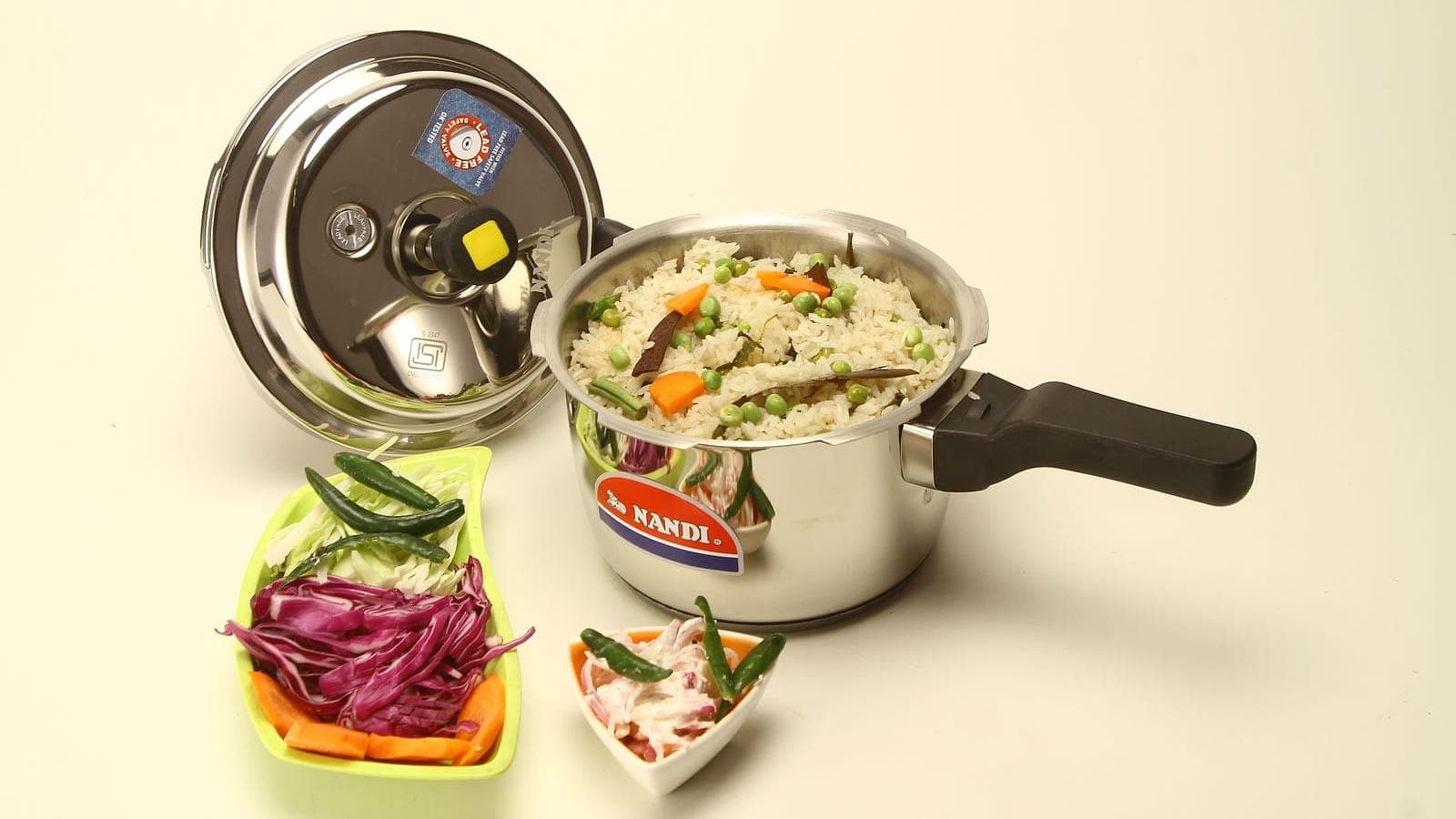
The Presto 01362 6-Quart Stainless Steel is the value stovetop cooker, and the pick for people who want speed over programs. Because it runs on your burner, it comes up to pressure faster and cooks hotter than any electric here, and it gives you a proper high-heat sear before you seal the lid. The tri-clad stainless body is induction-ready and doubles as a regular pot when you’re not cooking under pressure, so it earns its cabinet space. It’s genuinely hands-on — no timers, no keep-warm, no walking away — but it sits only a band above the Duo while beating every electric on raw speed. It’s not a canner, though; for that, read on.
Best for canning: All American 921 Pressure Canner (21.5-Quart)
The All American 921 Pressure Canner (21.5-Quart) is a different animal from everything above, and the only pick here suitable for pressure canning low-acid foods. It’s a large, heavy 21.5-quart stovetop canner with a gasket-free, metal-to-metal seal — nothing to perish or replace — and it’s made in the USA. If your goal is putting up jars of green beans, meat, poultry, or stock for the shelf, this is the category of tool you need, and it’s the priciest item on the list for good reason. It’s overkill if you only want weeknight dinners, and essential if you actually want to can. Which brings us to the rule that matters most.
A word on canning safety
Here’s the load-bearing point, stated plainly and without drama: to pressure can low-acid foods — vegetables, meat, poultry, stock — you must use a tested stovetop pressure canner with a dial or weighted gauge, like the All American 921. The National Center for Home Food Preservation does not recommend pressure canning in electric multicookers such as the Instant Pot or Ninja Foodi. Their research found these appliances may not reliably reach or hold the temperatures needed to destroy Clostridium botulinum (botulism) spores in canned low-acid food.
This isn’t a brand preference or a knock on multicookers, which are excellent at what they’re built for. It’s an equipment-safety fact about a specific process. So: don’t can low-acid food in an Instant Pot or Ninja Foodi, even if a setting or a stray recipe suggests you can. (High-acid foods like jams and pickles use water-bath canning, which is a separate method and a separate conversation.) If canning is your goal, buy a real canner and follow tested, up-to-date instructions.
Not sure pressure is your method?
Pressure isn’t the answer to everything. If you love a long, low braise — short ribs, a Sunday ragù, a big pot of soup — a heavy pot over gentle heat often gives you deeper flavor and more control than a sealed cooker, and it’s hard to beat a good Dutch oven for that. And if you’re genuinely torn between appliances, we walk through the whole decision in our Dutch oven vs slow cooker vs Instant Pot guide. Sometimes the right pressure cooker is no pressure cooker.
Getting started
Two habits make pressure cooking safe and predictable. First, releases: use a natural release — letting pressure fall on its own — for meats, stocks, and foaming foods like beans, so nothing sputters out the valve; use a quick release — venting manually — for vegetables you want to stop cooking right away. Second, don’t overfill: keep the pot to two-thirds full at most, and only half full for foaming foods like beans, grains, and pasta. Add enough thin liquid (electric cookers generally need about a cup), thicken sauces only after cooking, keep the sealing ring and vent clean, and never force the lid. For the full walkthrough, see our guide on how to use a pressure cooker.