Most home cooks need exactly three knives: a chef’s knife, a paring knife, and a serrated (bread) knife. That’s it. Those three cover something close to every everyday cutting job, they can be bought individually for under $100 total, and — this is the part the marketing works hard to obscure — a 15-piece block set hands you a fistful of blades you’ll never touch plus a wooden block, all for several times the money. Add a fourth knife only if your particular cooking asks for it, which most of the time it won’t. This guide lays out what each of the three does, why the block set is a bad deal, how to buy à la carte instead, and the honest, preference-driven case for a fourth.
The verdict: You need three knives — a chef’s knife, a paring knife, and a serrated bread knife. America’s Test Kitchen puts all three together at under $100, and they handle roughly 95% of home cutting. Skip the 15-piece block set: you’re paying for filler blades and the block itself. Buy the three individually, spend your money on the chef’s knife, and go cheap on the other two. Our best chef’s knives guide covers where that money actually earns its keep.
The 30-second answer: the three knives that do most of the work
If you read nothing else: buy a chef’s knife, a paring knife, and a serrated bread knife, and stop there until you have a specific reason not to. This isn’t one outlet’s hot take — it’s the rare point where the major independent kitchen testers agree almost word for word. America’s Test Kitchen states flatly that “most cooks only need three knives,” and names those three. Serious Eats, in its 2026 essentials guide, puts them in order of priority: “If you only want one knife, make it a chef’s knife… Beyond that, a good serrated knife and a sharp paring knife will take you very far.” Wirecutter’s editors, on their podcast, land in the same place — at the very least, have three: chef’s, paring, and serrated. Three publishers, three methodologies, one answer. That kind of cross-outlet agreement is about as close to settled as kitchen advice gets.
What each of the three actually does
Three knives, three jobs. Here’s what each is for, and — just as important — how much to spend on it.
The chef’s knife: the one worth spending on
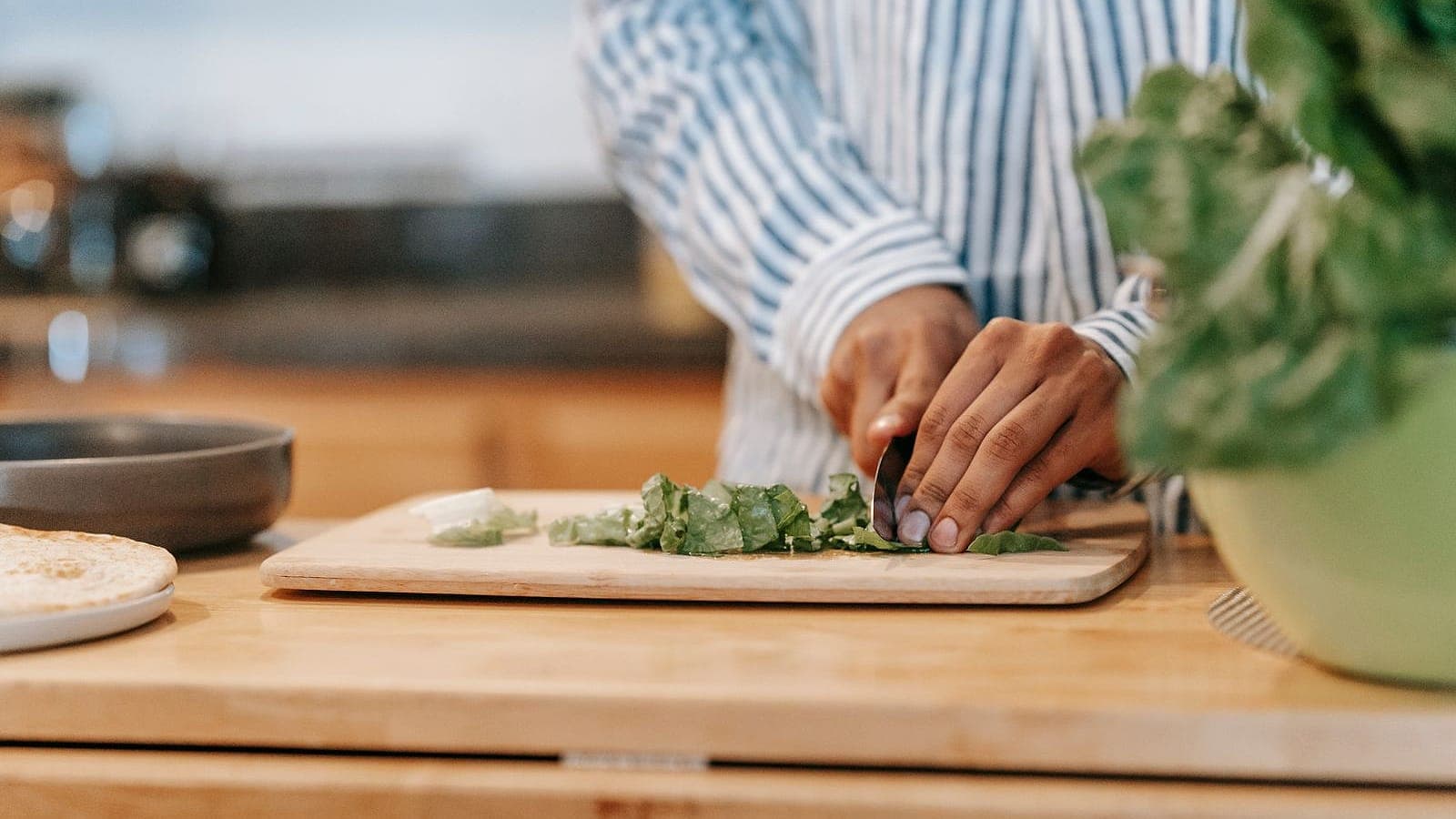
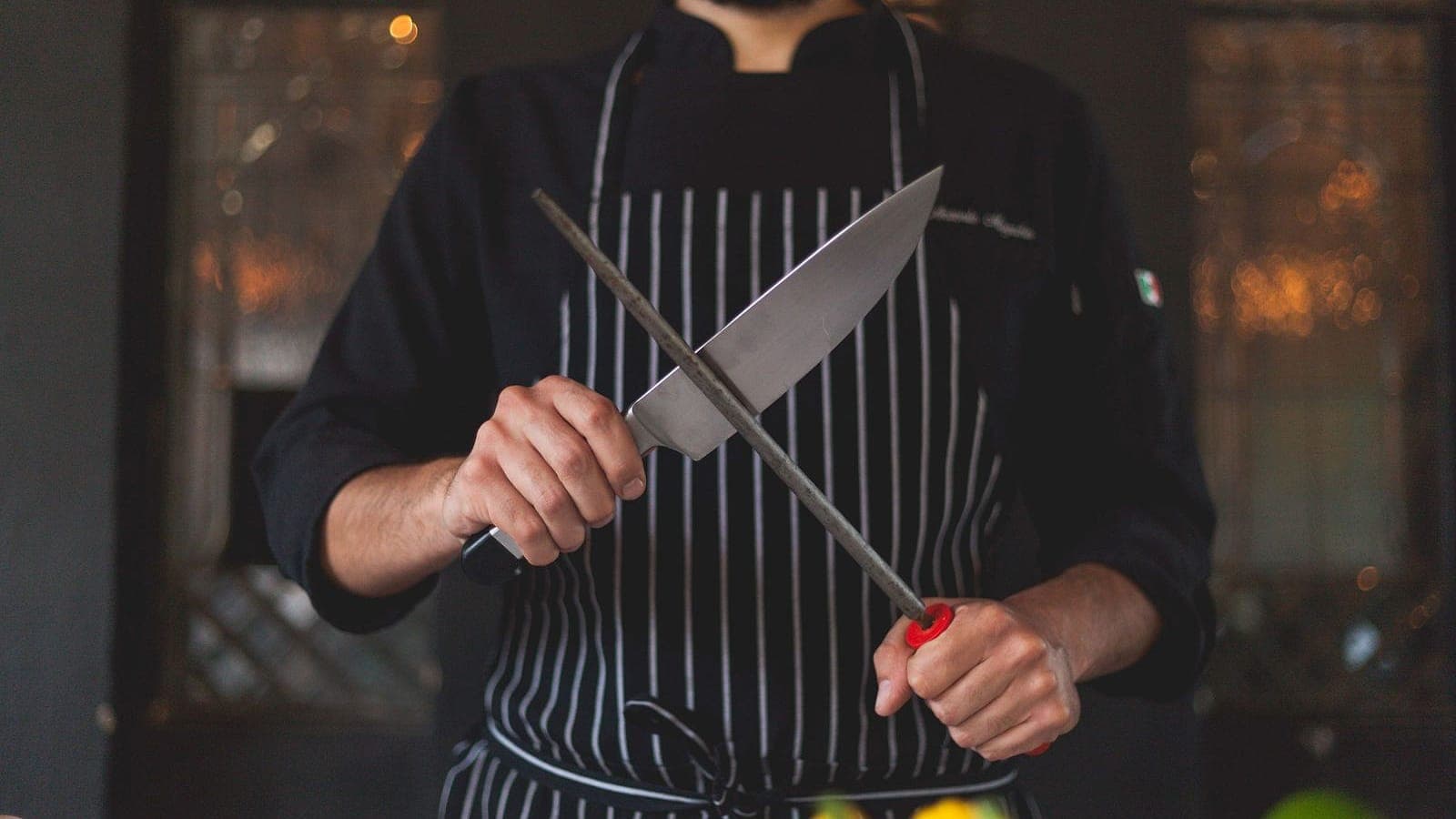
The chef’s knife is the workhorse, and the single knife worth spending real money on. The Kitchn calls it “the foundation” of any set and says plainly that “if you have only one knife it should be a chef’s knife.” America’s Test Kitchen describes its range as handling “any task, large or small, on a cutting board” — chopping onions, mincing garlic, slicing meat, breaking down squash, portioning almost anything. A good one runs around $50: ATK’s long-standing budget champion, the Victorinox Fibrox, sits right there, and Wirecutter has described it as a “really good knife for around $50.” Premium chef’s knives climb into roughly the $100–$155 range and buy you better steel, balance, and edge retention — a genuine upgrade, but not a requirement. This is the knife where the money is well spent; our best chef’s knives guide walks the picks, and if budget is tight, the best budget chef’s knives guide shows how little you can spend and still cut well.
The paring knife: small, cheap, genuinely useful
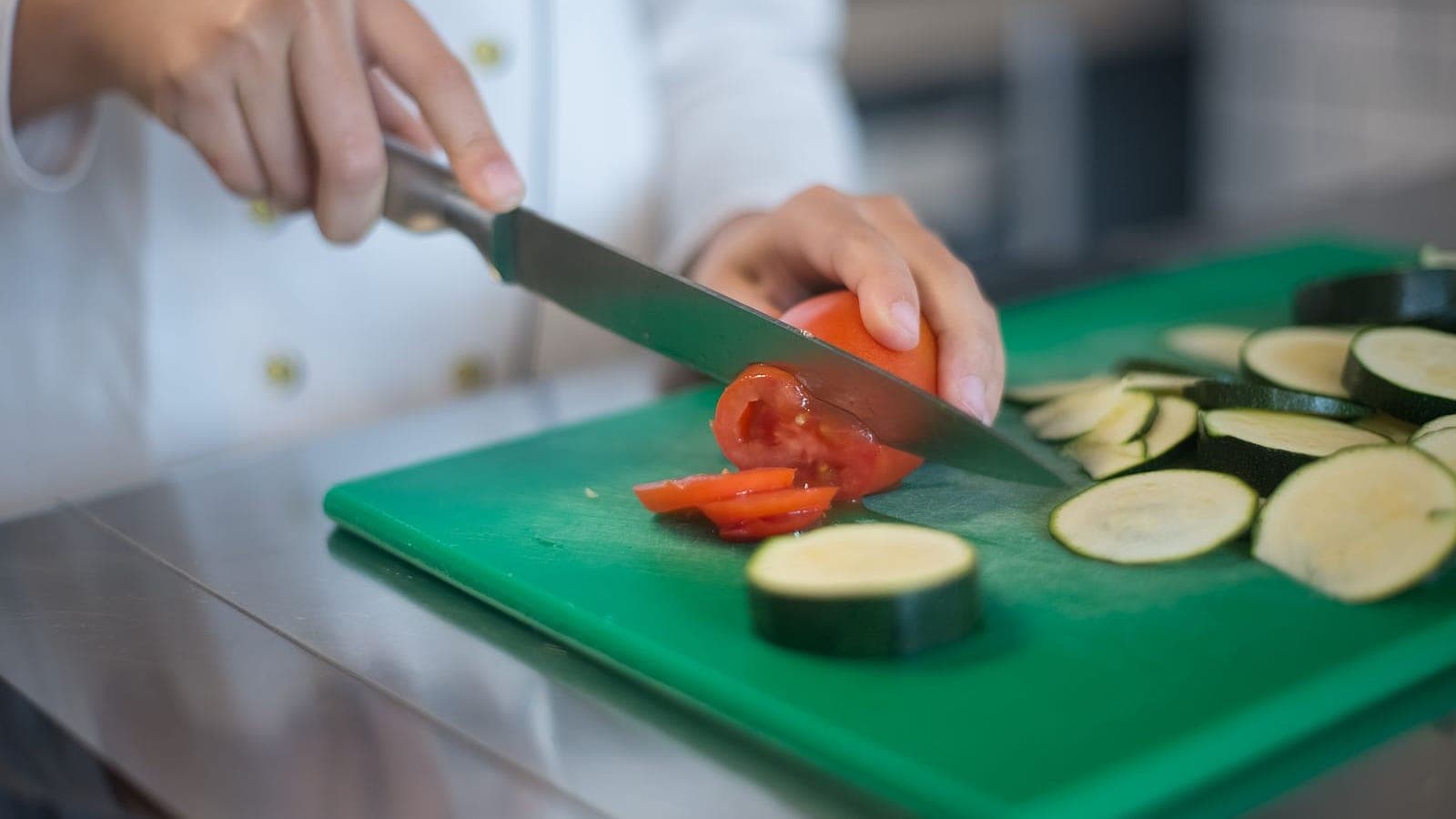
The paring knife is, as The Kitchn puts it, “small but mighty” — the knife for delicate work your chef’s knife is too big for: peeling apples, hulling strawberries, deveining shrimp, trimming fat, coring tomatoes, segmenting citrus in your hand. ATK calls it the “best option for any small task.” The good news for your wallet is that this is not a knife to agonize over. A perfectly good paring knife costs somewhere in the $10–$15 neighborhood, and spending more rarely buys much. Get a comfortable one, keep it sharp, and replace it when it wears out.
The serrated bread knife: cheap on purpose
The serrated knife earns its keep on anything a smooth blade would crush or skid off. Serious Eats frames the range well — “crusty sourdough or soft heirloom tomatoes.” Its saw-tooth edge grips and slices through a hard crust without compacting the crumb, and glides through a ripe tomato’s skin, a cooked steak, a layer cake, or a soft roll. Here’s the practical wrinkle that shapes how you buy one: a serrated edge can’t be honed or easily sharpened at home the way a straight edge can. That makes it a buy-cheap-and-replace tool rather than an heirloom — a solid serrated knife lives in roughly the $20–$30 band, and when it finally dulls, you swap it rather than restore it. (The care details for all three edges live in our knife-care guide, linked further down.)
Add it up and ATK’s math holds: all three together, under $100 — a real bargain for tools that cover nearly everything you’ll do on a cutting board.
Why you should skip the 15-piece block set
Walk into any store and the knife aisle is dominated by big wooden blocks bristling with blades. They look like the serious, grown-up choice. They are, for most people, the worst value in the aisle. America’s Test Kitchen is blunt about why: a set’s selling point is “the number of pieces… not the usefulness or quality of the blades,” and most collections are “loaded not only with superfluous pieces but also with ones that are impractical or even useless.” Some sets, ATK notes, carry price tags as high as $700 — “filled with several knives you won’t ever use.”
Look at what’s actually in a typical 15-piece block and the math falls apart. You get your three useful knives, and then: a second utility knife you already have a chef’s knife for, a run of middling steak knives, a honing steel most owners never learn to use, sometimes a pair of shears, and — a real line item in the price — the wooden block itself. Wirecutter’s editors put the trade-off about as honestly as it can be put: “If it’s very important to you that all of your knives match, get the set. I wouldn’t though.” You are, in effect, paying premium money for two or three knives you’ll use and a dozen you won’t.
Buy individually (or a curated three-piece), not a block
The fix is simple: buy your knives à la carte. Choose a chef’s knife you love, add an inexpensive paring knife and a serrated knife, and you have a kit that costs less than most blocks and contains nothing you won’t use. ATK makes exactly this case — an assembled selection of individual knives comes out “less expensive than the higher end sets, and made up of knives you’ll actually use.”
If you genuinely want matching handles on the counter, that’s a real aesthetic preference — just buy a curated three-piece set (chef’s, paring, serrated) rather than a fifteen-piece one. The distinction that matters isn’t “set versus no set,” it’s “three useful knives versus a dozen filler blades.” And if you ever do want to grow beyond three, do it the same way: one knife at a time, chosen for a job you actually have. ATK’s own list of genuinely useful additions beyond the three is short — a boning knife, a slicing or carving knife, and a pair of kitchen shears — and it says the quiet part out loud: “anything other than these six pieces is filler.”
The honest case for a fourth knife
Here’s where a lot of buying guides quietly cheat, by telling you “the fourth knife you need is X.” The truth is that there is no universal fourth knife. Whether you’d benefit from one — and which one — depends entirely on how you cook. For most home cooks, the honest answer is that three is genuinely enough and a fourth would sit in the drawer. But two situations make a real case.
A santoku, if you dislike rocking
The santoku is the most common “fourth knife,” and it’s less an addition than an alternative flavor of chef’s knife. America’s Test Kitchen is clear that a santoku is “similar to a chef’s knife” and can “tackle almost all the same tasks” — choosing between them, ATK says, “comes down to personal preference.” The differences are real but small: a santoku is usually shorter (around 5 to 7 inches versus a chef’s 8 to 10), with a straighter edge and little of the chef’s knife’s curved belly. That straight edge favors a brisk up-and-down push cut — chop, chop, chop over the board — while a chef’s curved profile is built for rocking the tip and heel. Serious Eats pegs santokus as “everyday choppers” well suited to lean meats and produce, not bone-in work. So a santoku makes sense as a fourth knife (or even a chef’s-knife substitute) if you’re a veg-forward cook who finds the rocking motion awkward and prefers to chop. It does not make sense as a must-have — it overlaps your chef’s knife almost entirely.
A utility or boning knife, if you break down a lot of protein
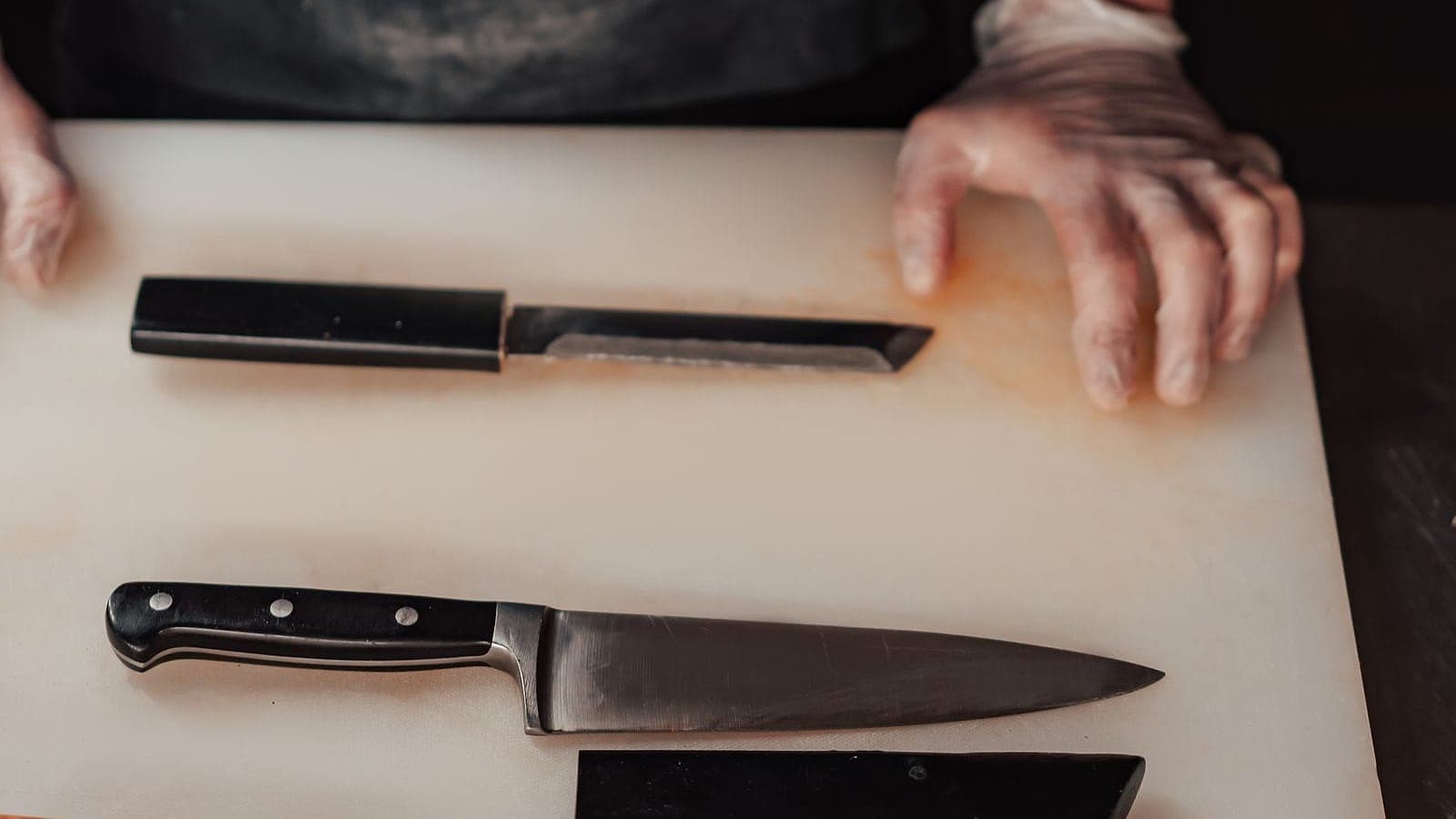
The other honest fourth knife is task-specific. A utility knife splits the difference between chef’s and paring — a mid-size blade for jobs like slicing fruit, prepping garlic and herbs, or trimming fat, where a chef’s knife feels oversized and a paring knife too small. A boning knife is more specialized still: ATK describes the type as a “long narrow pointed blade” made for working around bones. If you regularly break down whole chickens, trim large cuts, or fillet fish, a boning knife does what neither a chef’s nor a paring knife does well. If you don’t, you’ll never miss it.
The framing that keeps you honest: a santoku is a preference alternative to your chef’s knife; a utility or boning knife is a task tool for protein-heavy cooking. Both are legitimate — and most home cooks will never actually need either.
| If you… | Consider | Why |
|---|---|---|
| Prefer chopping to rocking and cook lots of vegetables | A santoku | Straighter edge, push-cut friendly; overlaps the chef’s knife |
| Break down poultry, meat, or fish often | A boning knife | Narrow pointed blade made to work around bones |
| Want an in-between size for fruit, herbs, and trimming | A utility knife | Bridges the chef’s and paring for small-to-medium jobs |
| Already cook everyday meals from three knives | Nothing | Three knives genuinely cover it |
Add a fourth knife when a specific, recurring job asks for it — not because a boxed set told you a proper kitchen should own one.
Once you own a few knives, store them right
One clarification, because it’s easy to draw the wrong lesson from all this: skipping the block set is an argument about value, not about blade damage. A knife block doesn’t harm your knives — you’re simply not obligated to buy fifteen slots when you own three or four knives. Once you have your small, deliberate set, storage actually gets simpler.
The one thing worth getting right is what you don’t do: toss loose knives into a drawer. Tasting Table warns that bare blades knocking against each other and other utensils in a drawer is the storage method most likely to dull and chip your edges — the opposite of what you want after spending on a good chef’s knife. Serious Eats’ cheeky line is that “the best knife block is no block at all,” and the setups pros tend to favor are a wall-mounted magnetic strip or an in-drawer knife holder, plus blade guards (edge sheaths) if knives share space with anything else. Which method suits your kitchen — and how to keep those edges sharp once they’re stored right — is the subject of our guide to caring for kitchen knives.
The bottom line
You need three knives. A chef’s knife you’ll spend a little on and use every day, a cheap paring knife for small work, and an inexpensive serrated knife for bread and tomatoes — under $100 for the set, per America’s Test Kitchen, with nearly every cutting job covered. The 15-piece block is a marketing artifact: filler blades, a honing steel you won’t use, and a wooden block, sold at a premium because the piece count looks impressive. Buy your three individually, put the savings toward a chef’s knife that’s a genuine pleasure to hold, and add a fourth only when your own cooking — not a boxed set — makes the case for it.
How we researched this
This guide synthesizes the published testing and buying advice of independent kitchen-equipment editors rather than in-house testing, and every recommendation above is attributed to its source. The three-knife consensus and the block-set critique draw on America’s Test Kitchen, Serious Eats, and The Wirecutter Show; the role of each knife and the santoku comparison lean on ATK and The Kitchn; and the storage guidance comes from Serious Eats and Tasting Table. Prices are reported as approximate ranges from those sources and move with sales — verify current pricing before you buy.
Sources
- America’s Test Kitchen — Three Essential Knives
- America’s Test Kitchen — How to Build the Best Knife Set
- America’s Test Kitchen — The Best Knife Block Sets
- America’s Test Kitchen — Chef’s Knife vs. Santoku
- Serious Eats — The Best Essential Knives
- The Wirecutter Show — The Only 3 Knives You Actually Need in Your Kitchen
- The Kitchn — Types of Knives
- The Kitchn — Chef’s Knife vs. Santoku
- Tasting Table — Storing Your Knives in a Drawer Is Not Worth the Risk