How to Descale an Electric Kettle
That chalky white film on the bottom and those little flakes floating in your tea are limescale — mineral deposits left behind by hard water. They’re harmless to drink, but they slow your kettle down, dull the taste of whatever you’re brewing, and shorten the appliance’s life. The good news: descaling takes a few minutes, costs almost nothing, and uses something you probably already have in the cupboard.
Here’s exactly how to do it, how often to bother, and how to keep the buildup from coming back so fast.
What limescale is and why it matters
Hard water carries dissolved minerals, mostly calcium carbonate. Every time you boil, some of those minerals drop out of the water and bake onto the heating element and the interior walls. Over weeks and months they harden into that crusty, off-white scale.
It builds up faster the harder your water is and the more often you boil. Left alone, a scaled-up element has to work harder to heat the same amount of water, so boils take longer and the kettle uses more energy. You may also notice a faintly metallic or chalky edge to the taste, and flecks landing in your cup.
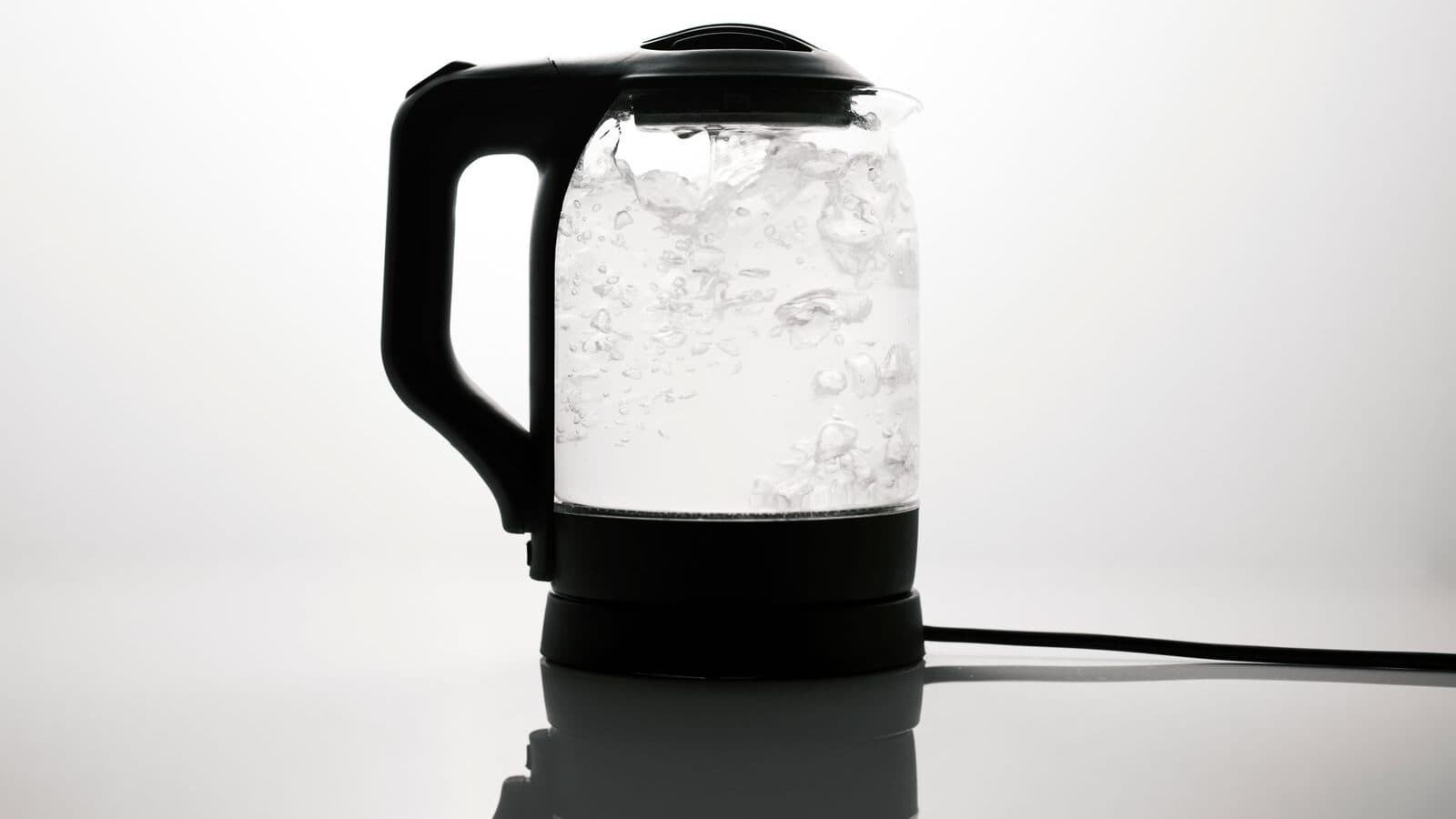
A glass kettle makes the problem easy to spot early. If you run something like the OXO Brew Adjustable Temperature Glass Kettle, you can watch the borosilicate walls cloud over and know at a glance when it’s time — one reason a see-through body is handy, as we note in our temperature-control kettle guide. Stainless and plastic kettles hide the scale, so you have to peek inside or go by feel.
Before you start: safety first
- Unplug the kettle and let it cool completely. Never descale a hot or powered kettle.
- Never submerge the base or electrical contacts in water. Only the inner vessel gets wet.
- Skip abrasive pads and metal scourers — they scratch the interior and can damage a nonstick or glass surface.
Step-by-step: how to descale a kettle
1. The white vinegar method
This is the standard fix and it works on almost any kettle. Fill the kettle about halfway with a 1:1 mix of white vinegar and water. Bring it to a full boil, switch it off, then let the hot solution sit for 20–30 minutes. The acid loosens and dissolves the calcium deposits while it soaks. For a heavily scaled kettle, you can leave it a little longer or repeat the boil once.
2. The citric acid method (less smell)
If the vinegar odor bothers you, citric acid powder is a great swap and just as effective. Dissolve 1–2 tablespoons of citric acid in a kettle of water, bring it to a boil, then let it stand for 15–20 minutes. Citric acid rinses away cleaner and leaves virtually no smell, which is why a lot of people keep a bag of it around specifically for descaling.
3. Scrub gently if anything’s left
After the soak, most scale wipes away on its own. For any stubborn spots, use a soft sponge or a soft-bristled brush — nothing abrasive, nothing metal. Work gently around the element and the base. If a little scale clings on, don’t force it; a second short soak is safer than scrubbing hard.
4. Rinse thoroughly, then boil-and-discard
This step matters as much as the descaling. Empty the kettle and rinse it several times with clean water. Then fill it with plain fresh water, boil it, and pour it out — do this once or twice to clear any lingering vinegar or citric taste before you brew anything you actually plan to drink. A rushed rinse is the most common reason a first cup of tea tastes faintly of vinegar afterward.
How often should you descale?
It depends almost entirely on your water and how much you use the kettle:
| Water hardness | Typical descaling interval |
|---|---|
| Hard water, daily use | Every few weeks to monthly |
| Moderate water | Every 1–2 months |
| Soft or filtered water | Every couple of months, or as needed |
The real answer is: descale when you see it. A quick look inside tells you more than any schedule. Once there’s visible film on the walls or flakes in the pour, it’s time.
How to prevent buildup coming back
You can’t stop limescale entirely with hard water, but a few habits stretch the gap between cleanings a long way:
- Empty the kettle after use instead of leaving standing water to evaporate and deposit minerals.
- Use filtered water if your supply is very hard — fewer minerals in means less scale out.
- Wipe the inside dry occasionally, especially around the element and waterline.
- Keep the spout scale filter clean. Most variable-temperature and gooseneck kettles have a small mesh filter that catches flakes; rinse it under the tap so it keeps doing its job.
A kettle with a concealed heating element and a good scale filter resists buildup better than a bare-coil design, which is worth keeping in mind when you’re shopping. We break down those features across the range in our guide to the best electric kettles, and a well-maintained kettle is also the quiet workhorse behind good coffee — see our best coffee makers roundup for where it fits in the wider setup.
One last note if you’re weighing your options: electric kettles concentrate heat on the water inside an enclosed vessel, so scale lands in one predictable place that’s easy to treat. Stovetop kettles scatter the same minerals across a wider surface and can be fussier to clean — a small point in the electric vs. stovetop comparison, but a real one over years of daily use.
Sources
- Manufacturer care and cleaning guidance for electric kettles (OXO, Cuisinart, Breville, Hamilton Beach)
- Serious Eats and Wirecutter coverage of kettle care and descaling methods
- General water-chemistry references on hard water and calcium carbonate (limescale) formation
- Common household guidance on white-vinegar and citric-acid descaling solutions