Burr vs Blade Coffee Grinder: Which Should You Buy?
Cookloom is reader-supported. If you buy through links on this page we may earn a commission, at no extra cost to you. We recommend gear on the merits — see our editorial policy.
If you’ve ever made coffee with a blade grinder — the kind with a spinning propeller blade at the bottom of a bowl — and then tasted the same beans ground on a proper burr grinder, the difference is hard to un-taste. It’s not subtle. One cup tends to taste bright and clear; the other tastes a little muddy, a little bitter up front, a little thin underneath. That’s not your brewing technique. It’s the grind.
This guide explains the actual mechanical difference between burr and blade grinders, why that difference shows up in your cup, and when — if ever — a blade grinder is a reasonable choice.
How each one actually works
A blade grinder is, mechanically, closer to a mini blender than a grinder. A flat metal blade spins at high speed at the bottom of a chamber, and the beans tumble around and get struck, repeatedly, until you stop the motor. There’s no set target particle size — you’re chopping beans by time, not by geometry. The beans nearest the blade get pulverized into dust. The beans that happen to be resting against the wall of the chamber, out of the blade’s path, may barely get touched on a given pass. Shake the grinder, pulse it, whatever — you’re still relying on chaotic collisions to eventually break everything down to roughly (not precisely) the texture you want.
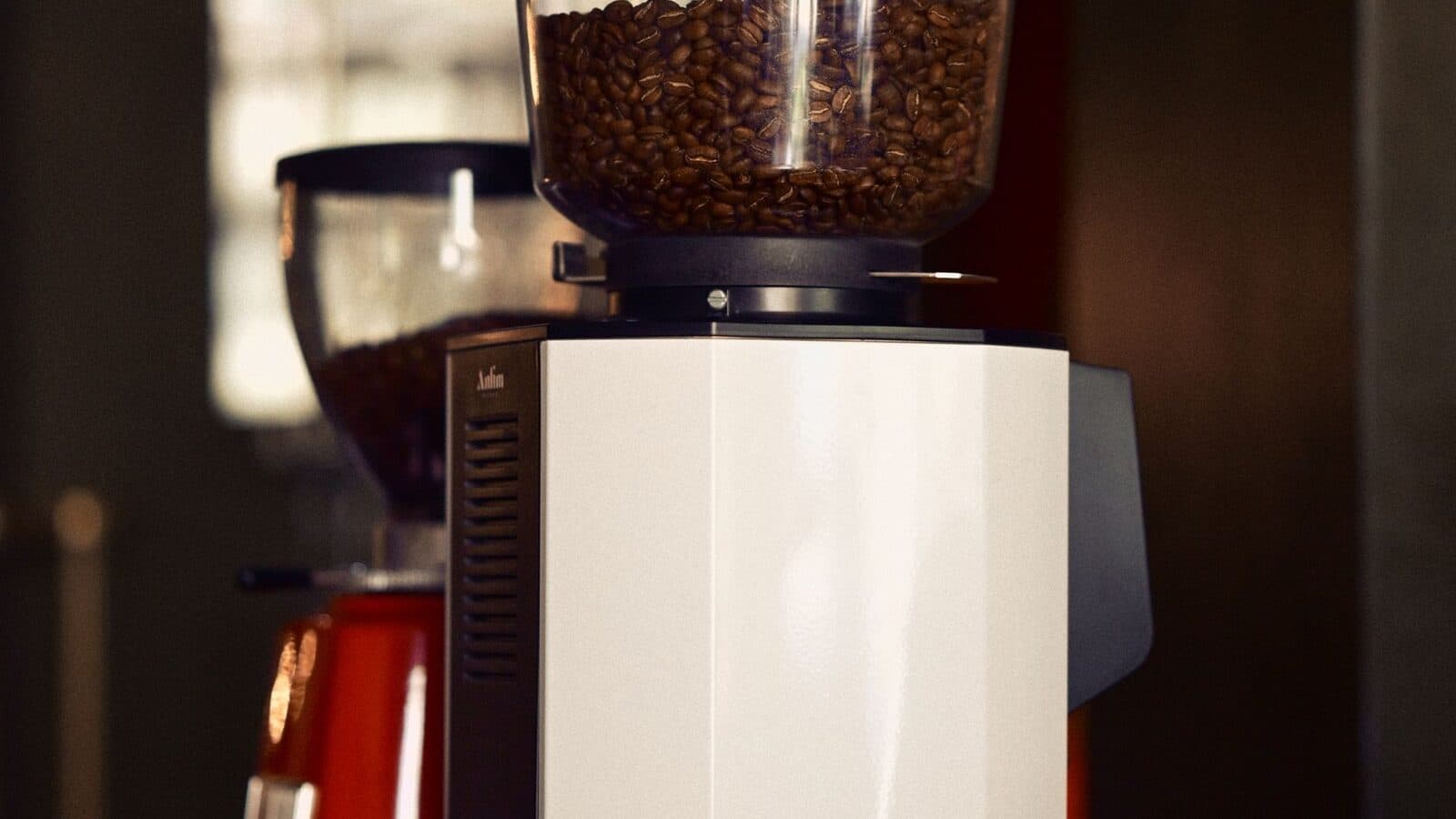
A burr grinder works on a completely different principle. Beans feed between two abrasive surfaces — the burrs — set a fixed distance apart. As the burrs rotate, beans get caught, crushed, and pulled through that gap, and nothing exits the chamber until it’s small enough to pass through. The gap determines particle size, not how long the motor runs. Narrow it and you get a finer grind; widen it and you get coarser.
That’s the core distinction: a blade grinder chops by time and chance. A burr grinder grinds to a set gap. One produces a range of sizes that’s inherently wide and unpredictable; the other produces a range that’s inherently narrow and repeatable.
Consistency, and why it actually matters to your cup
Here’s the part that’s easy to gloss over: it’s not that burr-ground coffee is “finer” or “more precise” in some abstract sense. It’s that brewing is an extraction process, and extraction is highly sensitive to particle size.
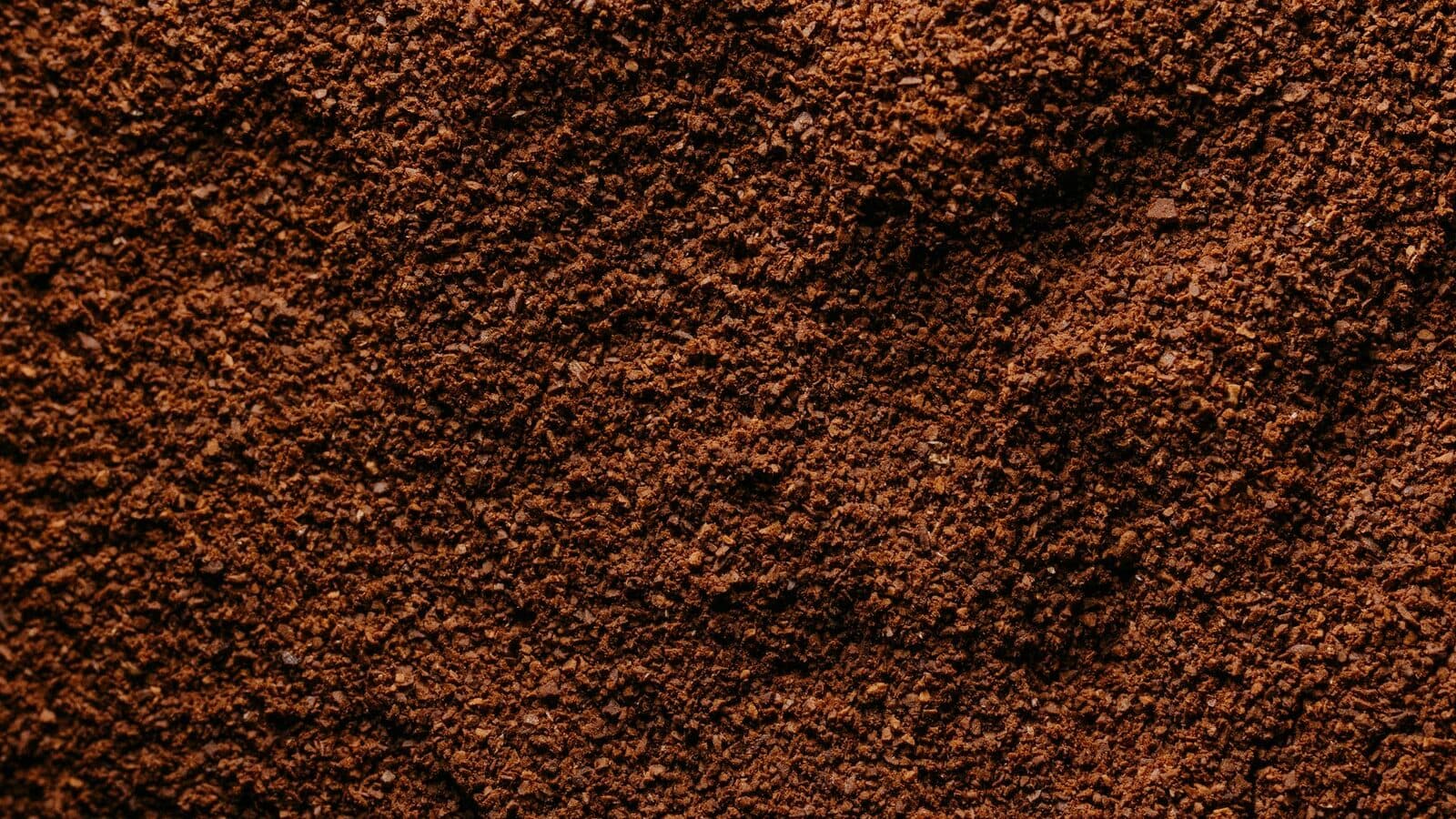
When hot water hits ground coffee, it pulls soluble compounds out of each particle at a rate that depends heavily on how much surface area that particle exposes relative to its volume. Small particles (fines) have a lot of surface area for their size, so they extract fast and hard. Large particles (boulders) have comparatively little, so they extract slowly and incompletely, even given the same contact time.
A blade grinder hands you both extremes in the same batch — a scattering of near-dust alongside chunks that are barely broken down — because nothing about how it works constrains the range. Brew that mix for the time your recipe calls for, and you get simultaneous over-extraction and under-extraction in the same cup: the fines dump out bitter, astringent compounds early, while the boulders never fully give up their sweeter, more balanced flavors. The result tastes harsh and weak at once, which is exactly the muddled, slightly bitter character people associate with bad drip coffee. A burr grinder delivers a tight distribution of particle sizes clustered around your target, so far more of the coffee extracts at roughly the same rate, and the cup tastes like what the beans were actually capable of. It’s the same reason a chef dices vegetables to a consistent size rather than a random mix of shreds and chunks — even extraction needs even particles.
Adjustability and repeatability
The other practical gap between the two is control. A burr grinder gives you an actual setting — a numbered dial, a click-stop scale, or a stepless collar — tied to a real, physical gap between the burrs. Set it once for pour-over, dial it tighter for a moka pot, and you can return to those exact settings later with confidence you’ll land in roughly the same place.
A blade grinder has no such thing. “Grind longer” gets you finer-ish, on average, but there’s no gap to set and no way to reliably reproduce a specific texture from one session to the next — you’re eyeballing it by pulse count and hoping the batch looks similar to last time. For anyone who wants to brew more than one way, or dial in a recipe with any precision, that’s a real limitation.
Conical vs flat burrs — a quick, honest take
Once you’ve decided on a burr grinder, you’ll run into a second question: conical or flat? Don’t let anyone oversell this one. Both are burrs, both grind to a set gap, and both are entirely capable of producing excellent coffee.
Conical burrs — cone-shaped, nested inside a ring — are the more common design across home grinders, from budget picks to premium hand grinders like the Comandante C40. They tend to be versatile across a wide range of settings, from espresso-fine to French-press-coarse.
Flat burrs — two parallel rings facing each other — are often favored by pour-over and filter enthusiasts for producing a slightly more uniform result at coarser settings, which some tasters associate with extra clarity in lighter, filter-style brews. That’s a real, commonly cited preference, but it’s a matter of degree, not a categorical win. Plenty of people brew outstanding filter coffee on conical burrs and outstanding espresso on flat ones.
The honest summary: burr geometry is a secondary consideration. Build quality, burr size, and how well a specific model holds its setting matter more than conical vs. flat on their own.
When a blade grinder is actually fine
To be fair to blade grinders: they’re a genuinely good tool for one job, and it isn’t coffee. Grinding whole spices — cumin seed, peppercorns, cinnamon bark — doesn’t demand a tight particle-size distribution the way brewing does, so a blade grinder (ideally one kept separate from your coffee routine) is a reasonable, inexpensive choice there.
For coffee specifically, a blade grinder is a compromise you make only at the absolute bottom of the budget, when the alternative is pre-ground coffee. And even then, it’s a close call — a basic electric burr grinder like the OXO Brew Conical Burr, or an inexpensive manual hand grinder, will out-grind a blade grinder for coffee at a similar price.
What to buy instead
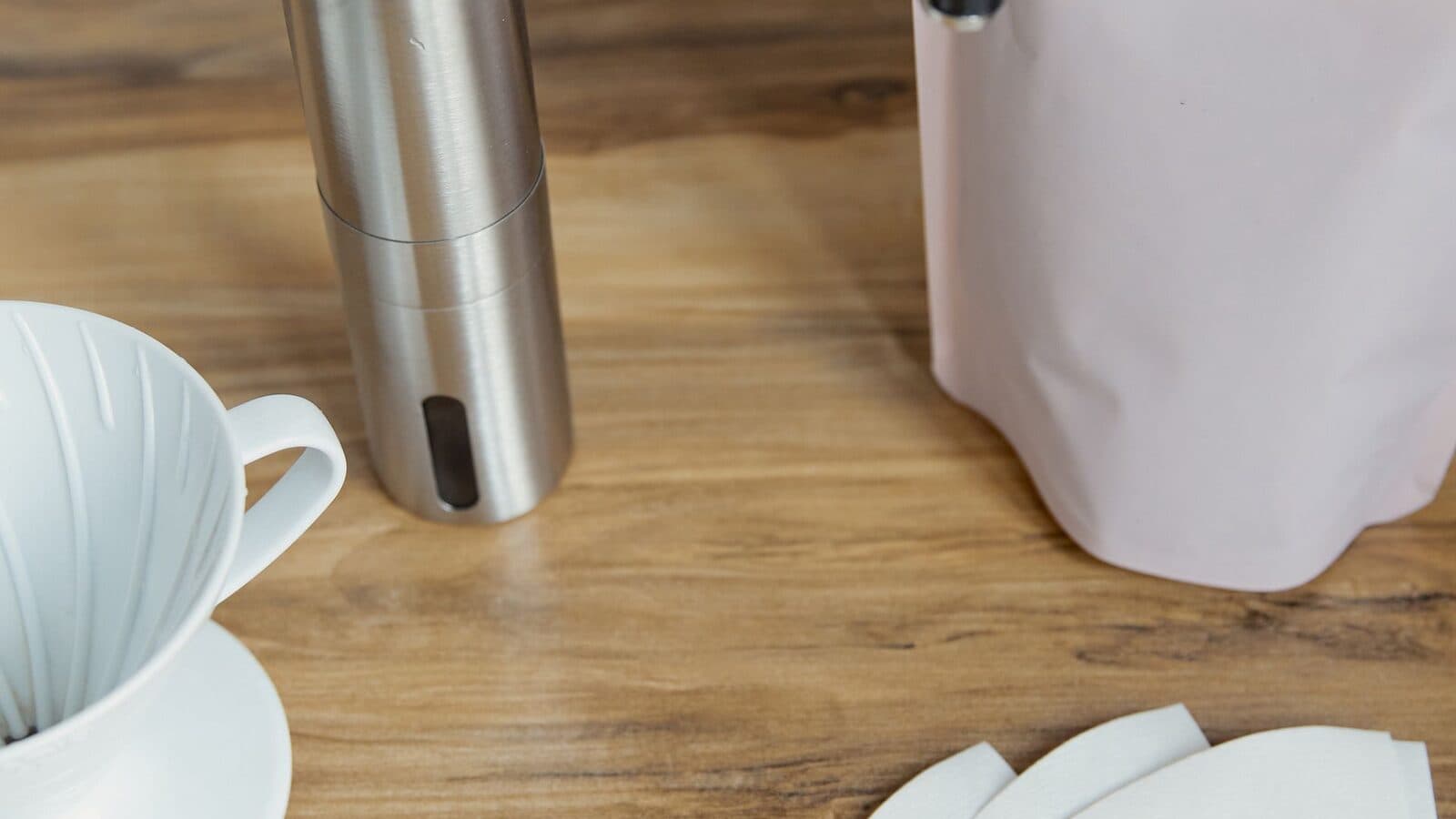
If you’re upgrading off a blade grinder, you don’t need to spend a lot to feel the difference. Our best coffee grinders guide covers the full range, from everyday electric burr grinders like the Baratza Encore up through single-dose and prosumer options. If budget is the main constraint, our best budget coffee grinders roundup is built around getting real burr performance for not much money. And if you’d rather skip the motor entirely, a good manual hand grinder — something like the Comandante C40 — is often the best dollar-for-dollar upgrade a home brewer can make, since hand grinders put their entire budget into the burr rather than a motor and housing.
Once you’ve got a burr grinder in hand, the next step is learning to use its range. Our guide on how to grind coffee walks through matching grind size to brew method, from espresso-fine up through French-press-coarse.
Sources
- Manufacturer specifications and product documentation for the grinders named in this piece (Baratza, OXO, Comandante).
- Coffee-extraction and grind-science fundamentals as commonly explained in the specialty coffee community.
- Reputable coffee-gear editorial and testing coverage, such as James Hoffmann’s grinder reviews, Serious Eats, Wirecutter, and Prima Coffee’s equipment guides, where relevant to general consensus.