The nonstick pan in your cabinet is almost certainly rated to last longer than it actually will. America’s Test Kitchen puts a well-made PTFE (Teflon-style) skillet at roughly five to seven years of service; ceramic-coated pans, per cookware makers like Caraway, usually give out sooner — often around two. But those numbers are a ceiling, not a promise. Most pans die years early, and almost always from a short list of avoidable habits rather than bad luck. Treat the coating gently and you reach the high end of its range; treat it carelessly and you’re shopping again by next winter. Below is the sourced checklist — drawn from Consumer Reports, America’s Test Kitchen, and cookware makers like Made In — that gets you there. It applies to PTFE and ceramic alike unless noted.
The short answer
Seven habits do almost all of the work:
- Never preheat an empty pan; cook on low to medium. Dry, high heat is the single biggest coating-killer.
- Retire your metal utensils for silicone, nylon, or wood.
- Hand-wash — skip the dishwasher and every abrasive pad.
- Skip aerosol cooking spray; use a little oil or butter.
- Let a hot pan cool before it meets water.
- Store pans so nothing rubs the cooking surface.
- Mind the heat source — keep handles off neighboring burners and don’t drag the pan across grates.
Quick habit table
| Habit to break | Why it kills the coating (source) | Do this instead |
|---|---|---|
| Preheating an empty pan / cranking the heat | Dry, high heat is the top coating-killer; an empty pan reaches extreme temperatures in minutes (Consumer Reports) | Add oil or food first; cook on low-to-medium |
| Stirring with metal utensils | Metal scratches and chips the coating, and one deep gouge can end a pan (Consumer Reports / Made In) | Use silicone, nylon, or wood |
| Dishwasher + scouring pads | Harsh detergents and heat wear the coating and exterior; steel wool scratches it (Consumer Reports) | Hand-wash with a soft sponge or cloth |
| Aerosol cooking spray | Burns at a lower temperature than oil and leaves a sticky buildup that ruins release (Consumer Reports / Made In) | Use a little oil or butter |
| Cold water on a hot pan | Thermal shock can warp the base and stress the coating (Made In) | Let the pan cool first |
| Stacking pans bare | Stacked pans scratch each other’s surfaces (Consumer Reports) | Add a towel or felt protector, or hang them |
Heat is the number-one coating-killer
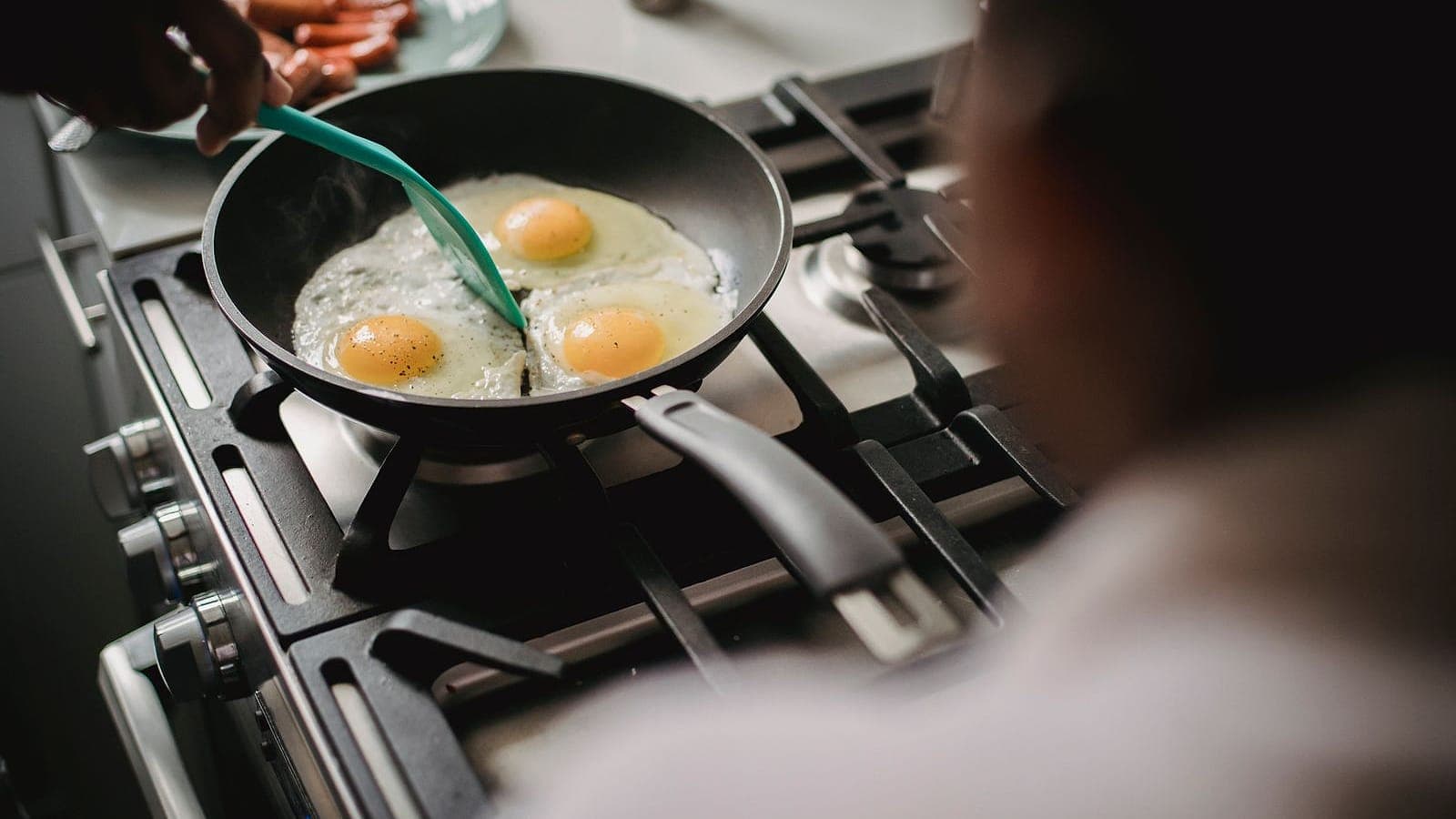
If you change only one thing, change this. Consumer Reports singles out high, dry heat as the fastest way to wreck a nonstick surface, and an empty pan is the worst offender: with no food or oil to absorb the energy, it climbs to extreme temperatures in a couple of minutes. That heat is what breaks down the coating’s ability to release food. Add your oil, butter, or ingredients first, keep the burner at low-to-medium, and let the pan come up to temperature gradually.
Ceramic coatings are, if anything, less heat-tolerant than PTFE — they tend to lose their slickness faster when pushed hot, so the low-and-slow rule matters even more if that’s what you own.
There’s a safety dimension here too, and it’s a real reason to keep the flame down. Past roughly 500°F, PTFE coatings can begin to break down and give off fumes, according to Poison Control — which is exactly what an empty pan on high heat can reach. We unpack what that does and doesn’t mean in our guide to whether nonstick cookware is safe; for care purposes, the short version is simply that high, empty-pan heat is bad for both the coating and the air in your kitchen.
Utensils and scrubbing
Nonstick coatings are thin, and they don’t heal. Consumer Reports and cookware makers like Made In are blunt about metal utensils: a spatula edge or whisk wire scratches and chips the surface, and a single deep scratch can be enough to end a pan’s useful life. Switch to silicone, nylon, or wooden tools and keep them that way — a set of soft utensils costs far less than a pan.
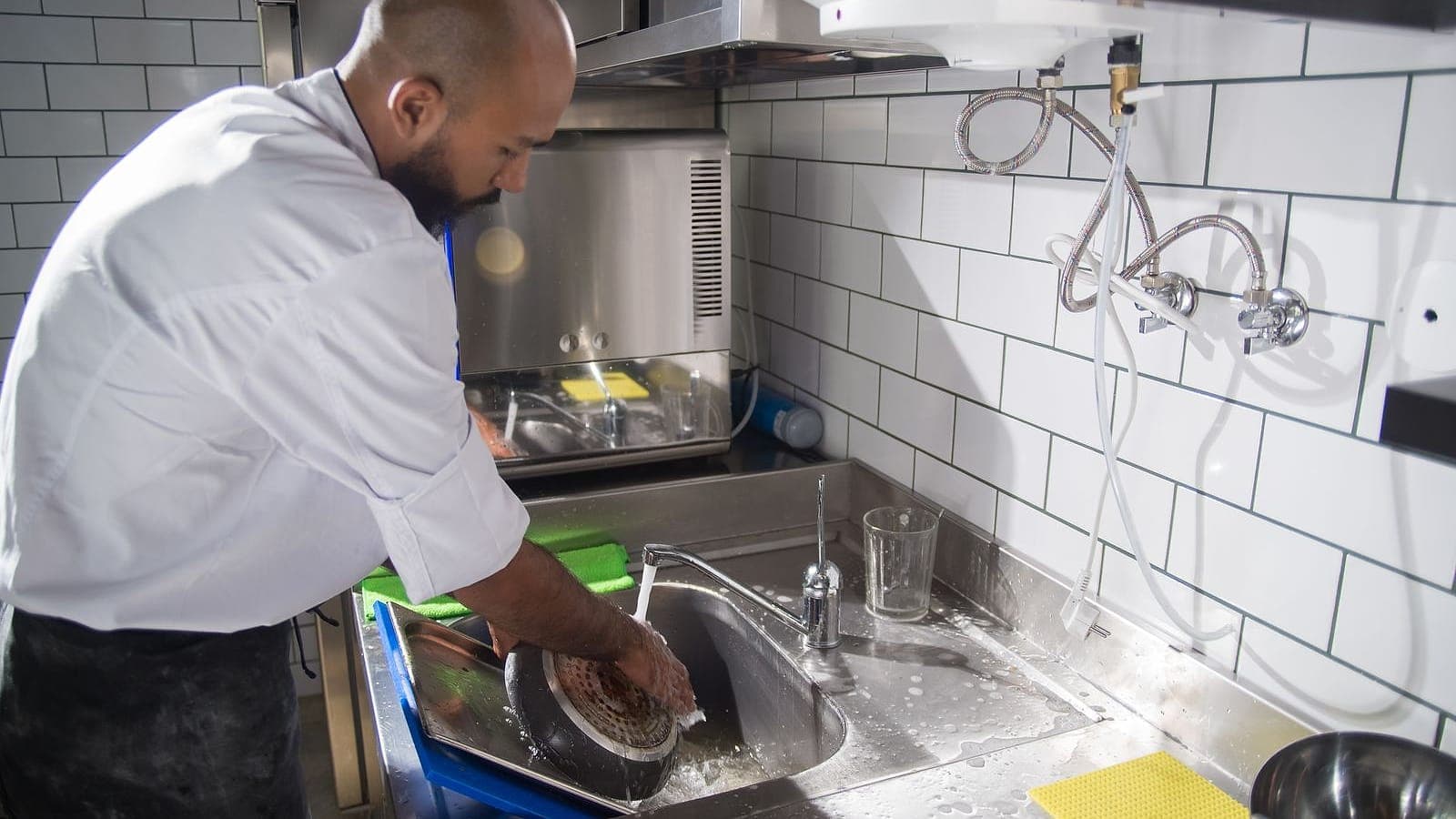
The same logic applies at the sink. Steel wool and abrasive scrubbing pads do exactly what metal utensils do, just more thoroughly. When something sticks, resist the urge to scour. Let the pan soak in warm, soapy water, then wipe it with a soft sponge or cloth. Stubborn residue almost always lifts with a little patience rather than abrasion.
Washing: hand-wash beats the dishwasher
Even pans labeled “dishwasher-safe” last longer when you wash them by hand. Consumer Reports notes that a dishwasher’s combination of high heat and harsh detergents wears down both the coating and the pan’s exterior over time — “safe” means it survives, not that it thrives. A quick hand-wash with a soft sponge is gentler and, honestly, faster than loading and unloading a rack.
Timing matters as much as method. Made In and other cookware makers warn against shocking a hot pan under cold water: the sudden temperature swing, or thermal shock, can warp the base and stress the coating, and a warped pan never sits flat or heats evenly again. Let the pan cool on the stovetop or a trivet before it goes anywhere near the tap.
The cooking-spray trap
This is the habit almost nobody suspects, and it’s worth calling out on its own. Aerosol cooking spray feels like it should help a nonstick pan — but Consumer Reports and Made In both flag it as a quiet coating-killer. Sprays burn at a lower temperature than plain oil or butter, and the residue they leave behind bakes into a sticky, gummy film that’s genuinely hard to remove. Over time that buildup is what makes a “nonstick” pan stop releasing food — the coating underneath may be fine, but the layer of scorched spray on top isn’t.
If your pan has started sticking for no obvious reason, this is the first thing to check. Skip the aerosol entirely and reach for a small amount of oil or butter instead. You need less than you think, and your pan keeps its slickness.
Storing pans without scratching them
A pan can survive every meal and still get destroyed in the cabinet. Consumer Reports points out that stacking pans bare lets their rims and bases grind against each other’s cooking surfaces every time you pull one out. The fix is trivial: slip a dish towel, a paper plate, or a felt pan protector between stacked pans, or hang them from a rack so the surfaces never touch. It’s the cheapest insurance on this list.
Do you need to season a nonstick pan?
No — and treating one like cast iron can actually shorten its life. PTFE and ceramic coatings are engineered to release food on their own; there’s no baked-on oil layer to build up. Some manufacturers suggest wiping a single drop of oil over a brand-new pan before its first use, but that’s an optional, per-brand courtesy, not a rule, and it does nothing resembling true seasoning.
Don’t confuse the two rituals. The scrub-oil-and-heat routine that keeps a skillet alive belongs to cast iron — a PFAS-free alternative where the seasoning is the nonstick surface and has to be maintained. On a coated pan, the high, repeated heat that seasoning requires is precisely the kind of abuse that wears the coating out early.
When good care isn’t enough
Care buys you time; it can’t resurrect a dead coating. When food starts sticking despite low heat and clean habits — or you notice a dull, whitish patch, bubbling, or visible flaking — that’s end-of-life, not user error. No amount of gentle washing brings the release back, and a flaking coating is a sign to retire the pan, not baby it further.
At that point it’s a replacement question, not a care question. Our guide to when to replace nonstick pans walks through the exact warning signs, and when you’re ready to shop, our tested nonstick picks are a solid place to start.