What Is Wok Hei — and Can You Get It at Home?
Cookloom is reader-supported. If you buy through links on this page we may earn a commission, at no extra cost to you. We recommend gear on the merits — see our editorial policy.
Order beef chow fun from a good Cantonese kitchen and the first thing you notice isn’t the sauce. It’s a smell — faintly smoky, a little charred, unmistakably alive — that clings to the noodles for as long as it takes to eat them. Cooks call it wok hei, one of the few flavors in food with a name specifically because it’s so hard to pin down, and even harder to recreate at home.
This guide covers what wok hei is, what’s happening chemically when a wok produces it, why home stoves struggle, and what to do about it.
What wok hei actually is
Wok hei (鑊氣) is Cantonese, translating roughly to “breath of the wok” — a poetic name for a specific set of sensory cues. A dish with it carries a light smokiness distinct from burnt food, a faint char at the edges, and an aroma that seems to lift off the plate rather than sit in the sauce. Chinese cooking writers and chefs have long treated it as a marker of skill: any cook can stir-fry vegetables until done, but wok hei signals the food was cooked fast, at heat most kitchens can’t sustain.
It’s worth being clear about what wok hei is not. It isn’t a seasoning or an ingredient you can buy, and it isn’t the same as charring food under a broiler. It’s a byproduct of a specific technique at a specific intensity, and it fades within minutes — a big part of why stir-fry is meant to be eaten immediately, not reheated.
The science behind the flavor
Nobody claims wok hei comes from one single reaction. Food scientists and cooking researchers who’ve studied it generally describe a convergence of a few things happening at once, made possible by heat far beyond what a home stove typically produces.
Extremely high heat driving rapid browning. At the temperatures a professional wok burner reaches, food sears in seconds rather than minutes, producing intense Maillard browning — the reaction between amino acids and sugars that builds savory, roasted flavor — plus light, localized charring at the edges, without overcooking the interior. On a cooler surface, the same food releases moisture and steams before it gets hot enough to brown properly.
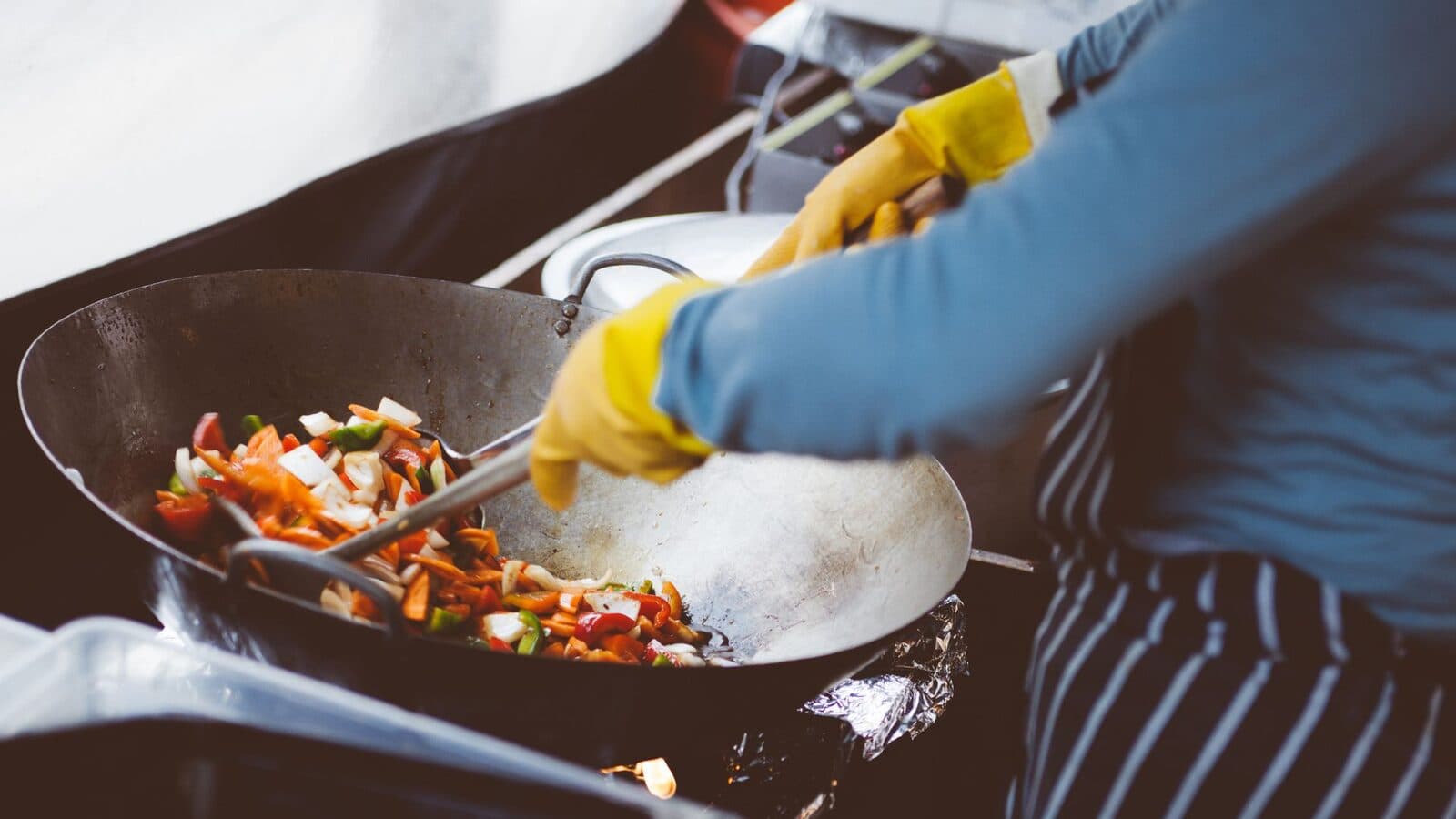
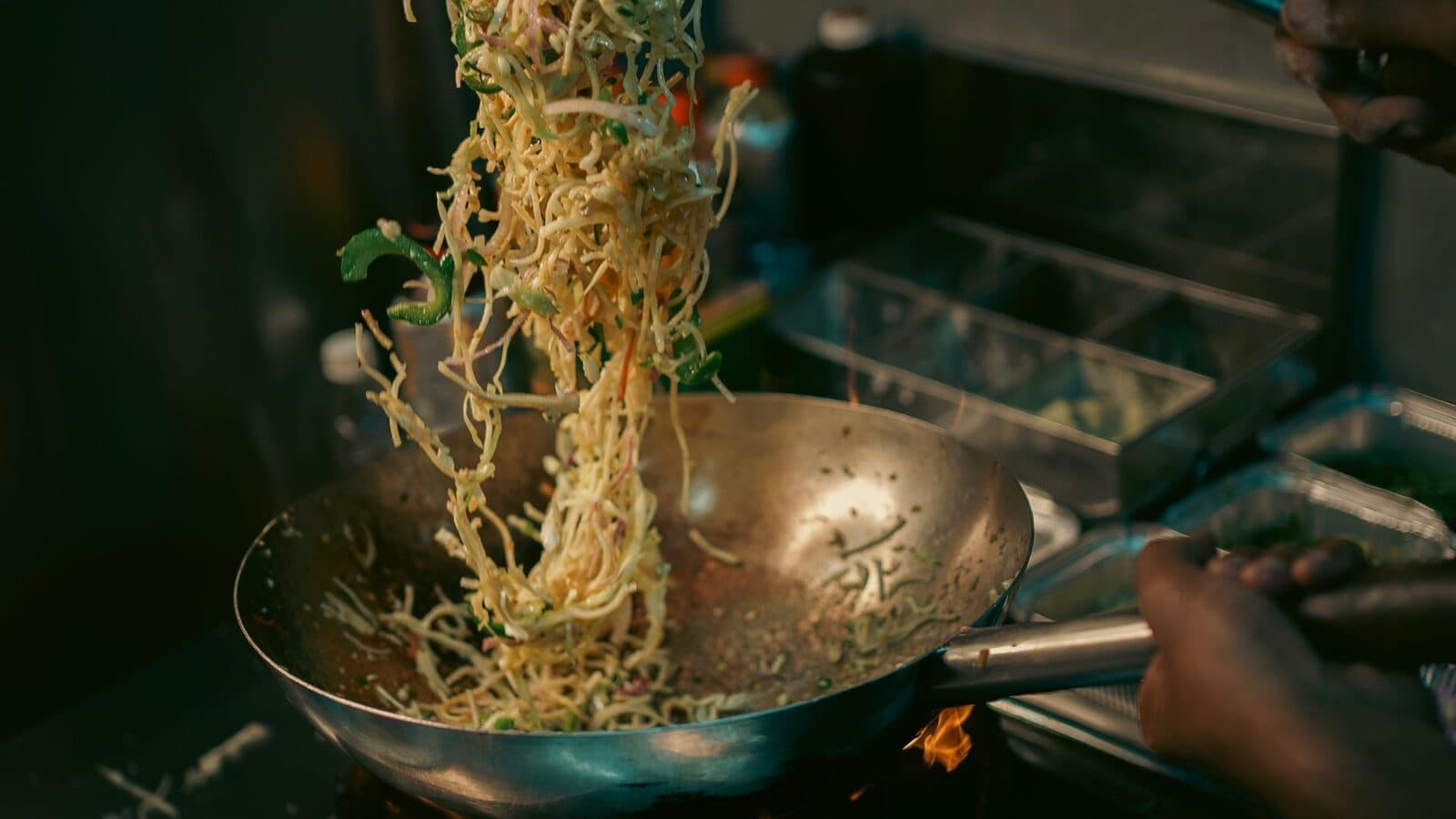
The tossing motion itself. Skilled wok cooking isn’t just stirring; it’s a rhythmic toss that throws food up and briefly into the space just above the flame. That motion keeps pieces moving through the hottest zone rather than sitting in their own released liquid, and briefly exposes the food to combustion byproducts and superheated air near the burner.
Oil-derived aromatic compounds. This is the part researchers have focused on most specifically. When oil is heated to very high temperatures and partially volatilized during tossing, it appears to generate a distinct set of aromatic compounds that settle back onto the food. Documented research into wok hei has pointed to oil-derived compounds as a likely signature of the aroma, though the exact chemistry remains an active area of study. Put simply: hot oil, thrown through hot air, repeatedly, is doing real work — and no single one of these three factors produces the effect alone.
Why home stoves struggle
Here’s the honest part. Restaurant wok stations are typically built around jet-style burners that put out vastly more heat than anything installed in a residential kitchen — commercial ranges are designed to keep a wok screaming hot even as cold, wet ingredients hit the surface and pull heat out fast. A home burner loses that battle almost immediately: the moment a batch of vegetables lands, the wok’s surface temperature drops, and without the reserve output to recover quickly, food starts releasing water and steaming instead of searing.
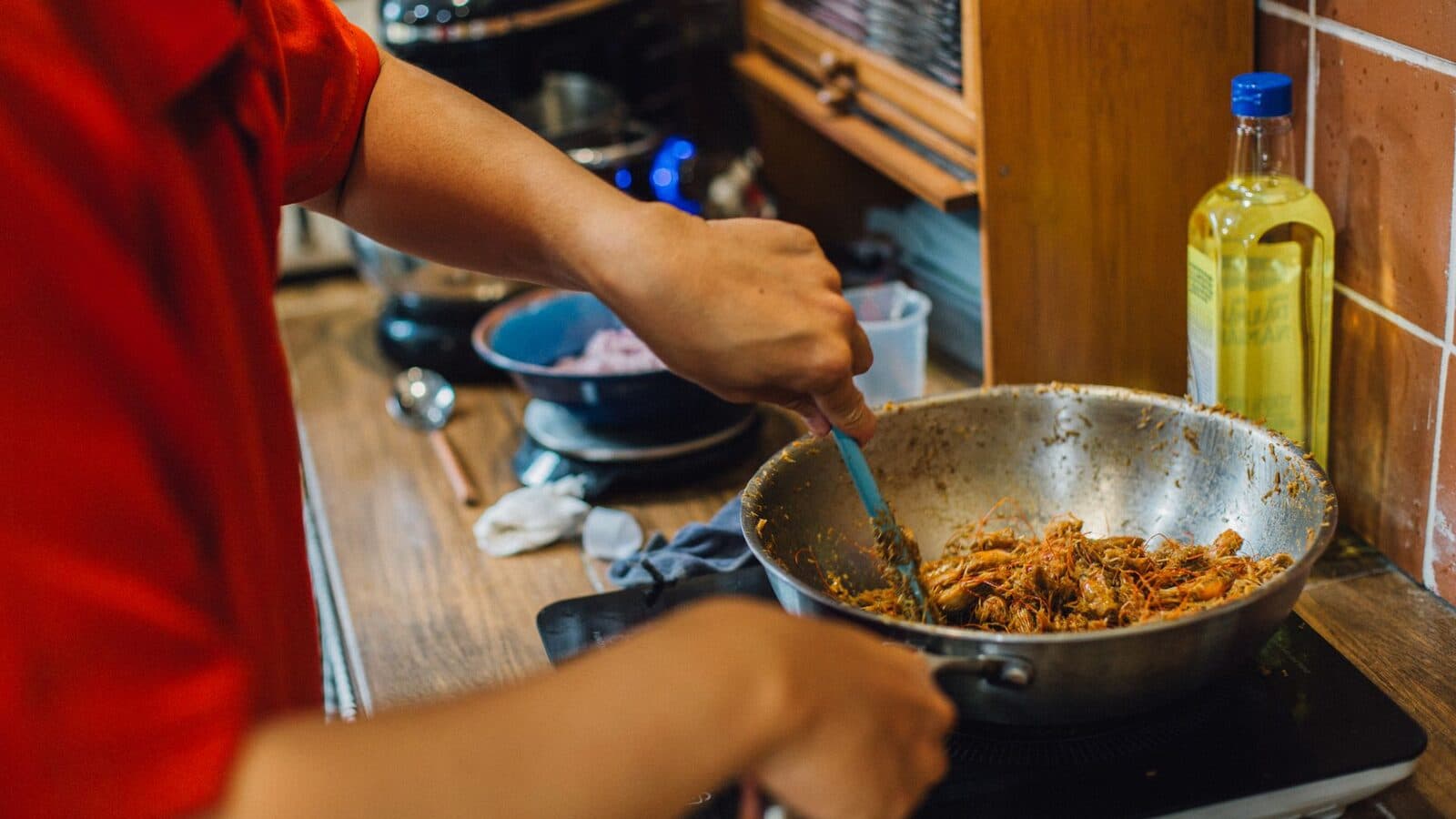
Round-bottom design compounds this at a restaurant station, since the curved shape sits directly over a concentrated jet of flame and heat radiates up the sides — exactly where a toss sends the food. On a home stove, even a round-bottom wok has to rest on a ring, spreading contact, and the burner beneath it isn’t rated to output what a commercial jet burner does.
None of this makes home wok cooking pointless — it just means the ceiling is lower, and it’s worth knowing that going in rather than blaming your technique. You can get close. Identical isn’t realistic on most home setups, and no honest guide should tell you otherwise.
How to chase it at home, practically
A few adjustments make a real, noticeable difference, even without a commercial burner.
- Cook in small batches. The single biggest lever you have. A crowded wok drops in temperature and never recovers; a batch sized for one or two servings sears instead of steams.
- Get the wok rippingly hot and dry before anything goes in. Preheat longer than feels necessary — water flashing to steam on a damp surface is the enemy of a good sear.
- Use a high-smoke-point oil, such as refined peanut or avocado oil, so it handles real heat without turning acrid.
- Dry your ingredients. Surface moisture is the fastest way to sabotage a sear.
- Prep everything before you turn on the heat. Wok cooking lives or dies on speed, so have every ingredient cut, sauced, and within arm’s reach.
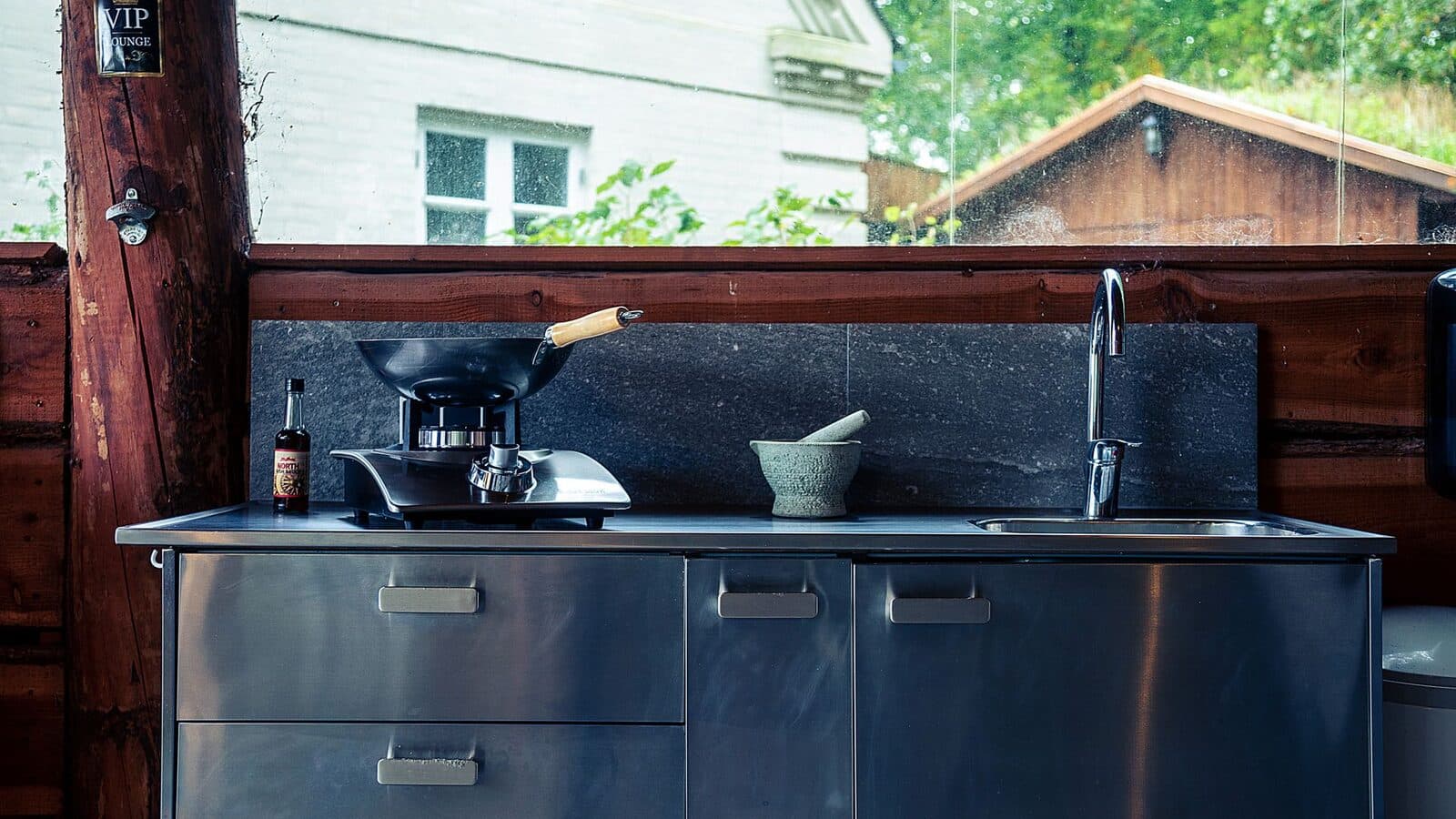
- Push your burner as hard as it goes. Cooking outdoors regularly? A dedicated high-output wok burner closes a meaningful chunk of the BTU gap a standard range can’t.
- Round-bottom carbon steel on a ring, over your strongest gas burner, gets you closest to the traditional setup. A flat-bottom wok on induction or electric still delivers real flavor and a decent sear — just rarely true wok hei.
- Some cooks finish with a quick pass near an open flame or a kitchen torch for a last touch of char — a known trick, not a guaranteed fix.
Setting realistic gear expectations
The wok itself matters here more than in most cooking: thin, responsive carbon steel heats and cools faster than heavier materials, useful when recovering temperature between tosses, and a well-seasoned, properly hot wok releases food cleanly instead of sticking. Our guide to seasoning a wok covers the process, worth doing before anything else here. Carbon steel, not cast iron, is the standard for active wok cooking — our carbon steel vs. cast iron breakdown explains why.
If you’re shopping, a traditional round-bottom carbon-steel wok over a strong gas burner remains the closest path to the restaurant experience, provided your stove and a wok ring can support it. On electric or induction, a flat-bottom design is more realistic — our flat-bottom woks guide covers options built for exactly that setup. Either way, our full wok buying guide is the place to start before chasing wok hei at all.
Sources
- Manufacturer specifications and design documentation for the wok models referenced (Yosukata, Made In, Craft Wok)
- Reputable cookware and cooking-technique editorial, including outlets such as Serious Eats, Wirecutter, America’s Test Kitchen, and The Kitchn, where relevant to wok cooking and stir-fry technique
- General food-science and cooking-technique references on Maillard browning, high-heat searing, and documented research into the aromatic compounds associated with wok hei