How to Use a Slow Cooker: A Practical Guide
A slow cooker rewards patience more than skill: add ingredients in the morning, come home to dinner that mostly made itself. But a few habits separate a watery, gray pot roast from a deeply savory one. Here’s how to load, run, and clean a slow cooker so it works the way it’s supposed to — safely, and with real flavor.
If you’re still choosing a machine, start with our guide to the best slow cookers. If the name has you second-guessing, slow cooker vs. Crock-Pot clears it up (short version: Crock-Pot is a brand that became a generic term — all Crock-Pots are slow cookers, not all slow cookers are Crock-Pots).
The short version
- Brown meat first for flavor; start with thawed, never frozen, meat.
- Dense vegetables on the bottom, meat on top, then liquid — and use less liquid than a stovetop recipe.
- Fill the crock one-half to two-thirds full.
- Low for all-day cooking, High when you’re short on time (1 hour High ≈ 2 hours Low).
- Keep the lid on. Every peek adds roughly 20–30 minutes.
Step by step
1. Prep and brown (optional, but worth it)
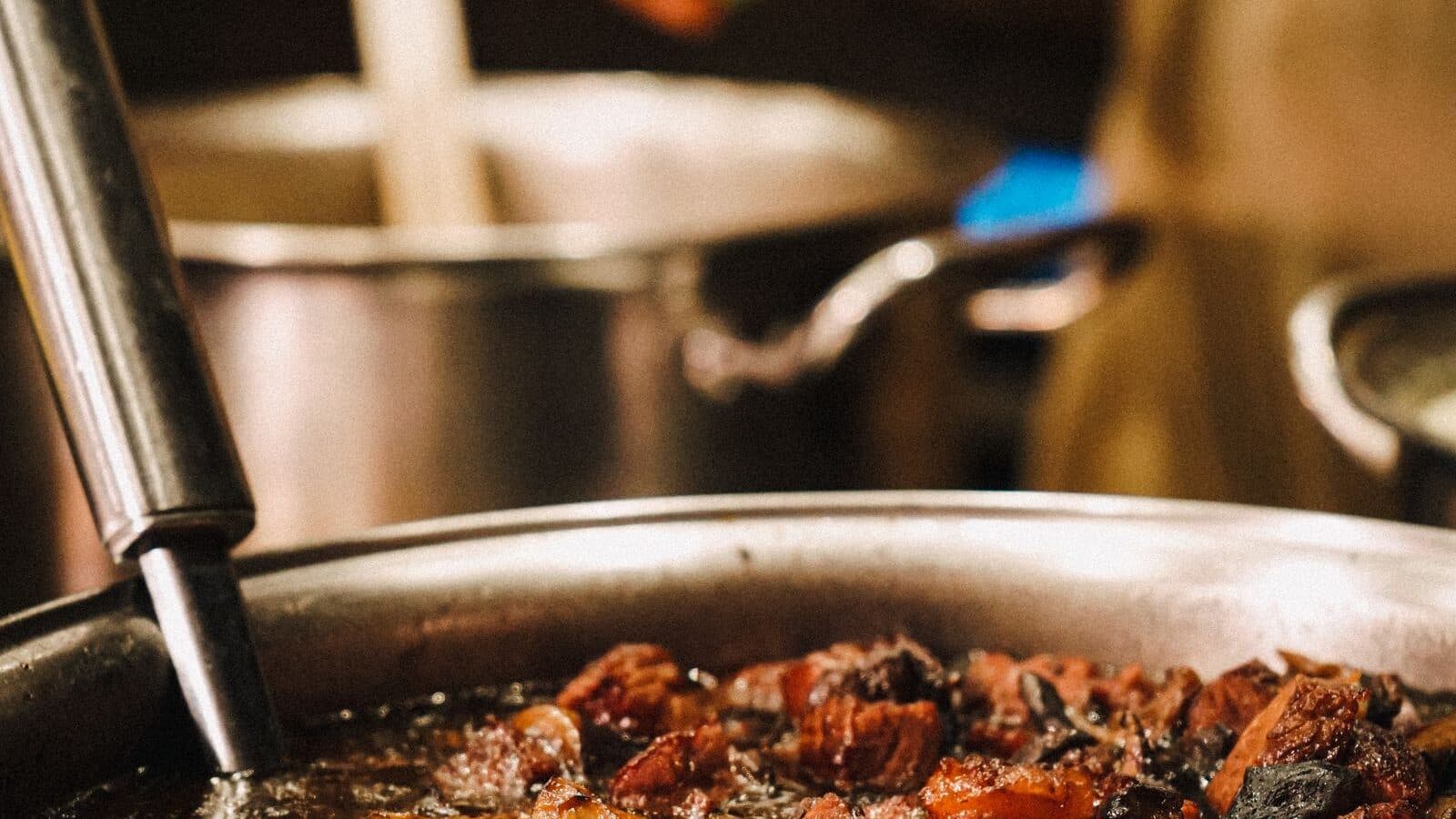
Pat your meat dry with a paper towel, season it, and sear it in a hot skillet with a little oil until it’s browned on the outside. That crust is pure flavor — the savory depth a bare braise simply can’t produce. If your machine is a brown/sauté multicooker like the Cuisinart MSC-600, you can brown right in the pot and skip the extra pan. Either way, one rule matters most here: start with thawed meat, not frozen. Frozen meat lingers too long in the bacterial danger zone as the cooker slowly heats up.
2. Layer it right
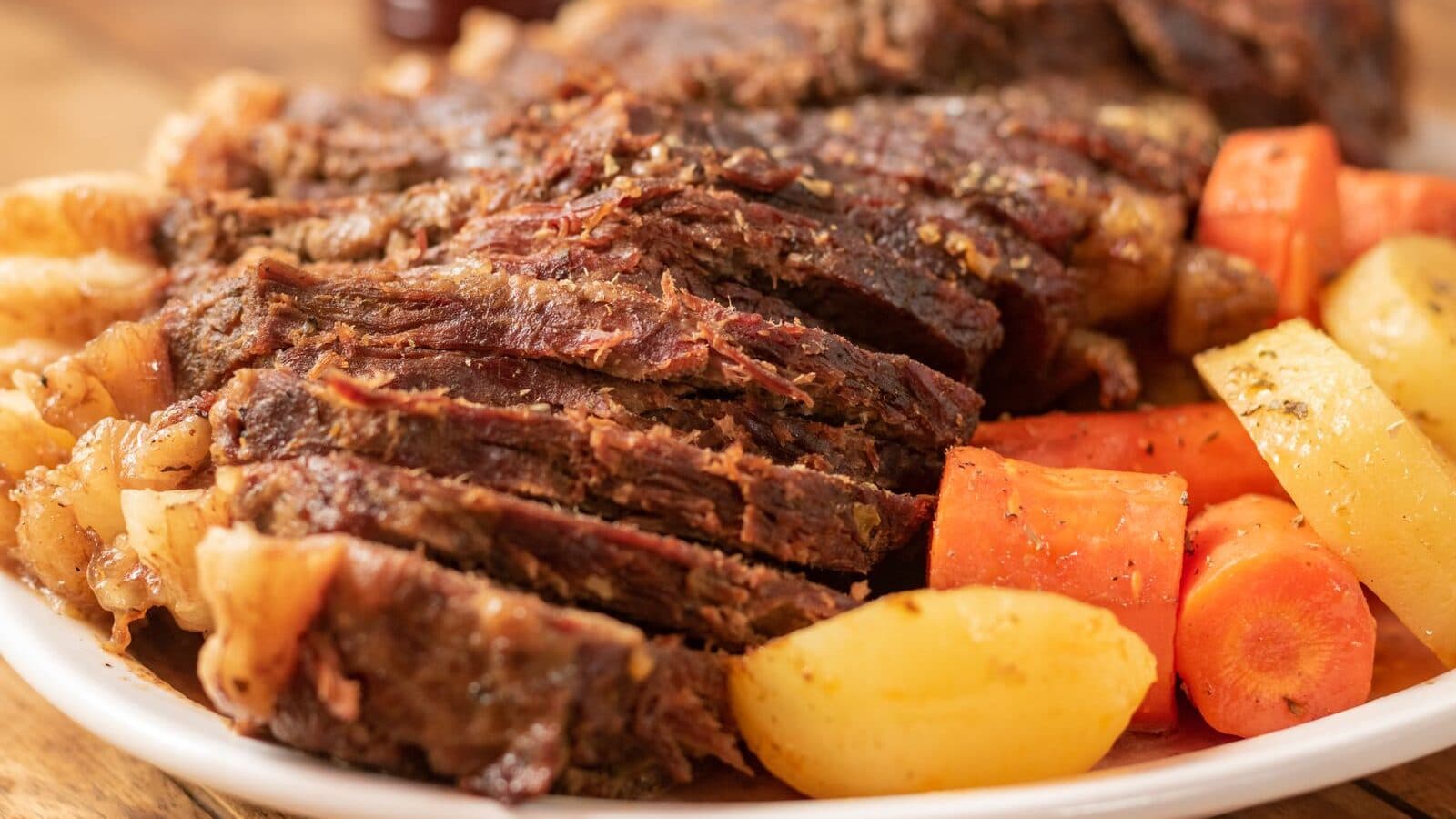
Slow cookers heat from the sides and bottom, so put dense root vegetables — potatoes, carrots, onions — on the bottom where the heat is strongest, and set the meat on top. Then add your liquid. Because a slow cooker traps steam and loses very little moisture over hours, you need less liquid than a stovetop recipe calls for. A common beginner mistake is drowning everything; the vegetables and meat will release their own juices as they cook.
3. Fill it one-half to two-thirds full
This is the single number worth memorizing. Too empty, and the food scorches against the hot walls or overcooks into mush. Too full, and the cooker may never reach a safe simmering temperature — or it overflows once ingredients release their liquid. Match the cooker to the batch: a 2-quart mini for dips, a 4–5 quart for a small family, a 6–7 quart for a crowd or batch cooking.
4. Choose High or Low
Both settings climb to a gentle simmer; the difference is speed. Pick based on your schedule, not the recipe’s ego.
| Setting | Approx. temp | Best for | Typical time |
|---|---|---|---|
| Low | ~200°F | Tough cuts, all-day cooking | 6–10 hours |
| High | ~300°F | Shorter windows, faster meals | 3–5 hours |
A useful rule of thumb: 1 hour on High is roughly 2 hours on Low. For collagen-rich cuts like chuck roast, pork shoulder, or short ribs, Low and slow gives the connective tissue time to melt into silk. When you started late, High gets dinner done.
5. Keep the lid on
It’s tempting to peek and stir. Don’t. A slow cooker’s glass lid holds the heat and steam that do the cooking, and lifting it off vents both — each peek can add roughly 20 to 30 minutes to your total time. Unlike a pot on the stove, a slow cooker doesn’t need stirring; the gentle, even heat handles it. Trust the machine and walk away.
6. Use the timer and keep-warm wisely
This is where a programmable model earns its keep. A cooker like the Crock-Pot 6-Quart Programmable Cook & Carry counts down and then auto-shifts to Warm when the cook ends, so dinner holds safely even if you’re stuck in traffic. On a manual High/Low/Warm dial, there’s no auto-shift — plan to be home to switch it off, or use an outlet timer only to delay the start by a short window, never to leave raw food sitting cold for hours. For a deeper look at set-and-forget machines, see our roundup of the best programmable slow cookers.
7. Mind food safety
The temperature danger zone is where bacteria multiply, and slow cookers are built to move food through it correctly when used as intended. A few honest guardrails:
- Cooked food held on Warm should stay above 140°F — that’s what the Warm setting is for.
- Don’t use a slow cooker to reheat leftovers. It heats too slowly, keeping food in the danger zone too long. Reheat on the stove or in the microwave instead.
- Refrigerate leftovers within about two hours of the cook finishing. Divide big batches into shallow containers so they cool quickly.
- Start with thawed meat, and never leave raw, unheated food in an unplugged crock all day.
8. Adapt recipes and finish strong
Long, moist heat is gentle on tough cuts but hard on delicate ingredients, so add those at the end. Stir in dairy (cream, milk, cheese) in the last 15–30 minutes so it doesn’t curdle; add delicate vegetables (peas, zucchini, spinach) and fresh herbs near the finish so they keep their color and bite. If the sauce is thin, thicken it at the end with a cornstarch slurry or by reducing it in a saucepan. Then let the pot cool before cleaning — most removable stoneware and inserts are dishwasher-safe, but never shock hot stoneware with cold water, which can crack it. Let it come down to room temperature first, then wash.
When a slow cooker isn’t the right tool
Slow cookers excel at braises, stews, chili, beans, pulled pork, soups, and dips — anything that gets better with time. They’re not the move when you need speed. If you’re weighing hours against minutes, our pressure cooker vs. slow cooker comparison lays out when to reach for each. Many cooks own both and use the slow cooker for lazy Sundays and the pressure cooker for weeknights.
Sources
- Manufacturer specifications and use-and-care guidance (Crock-Pot, Hamilton Beach, Cuisinart, All-Clad).
- USDA food-safety guidance on slow cooking, safe holding temperatures, and the temperature danger zone.
- America’s Test Kitchen and Serious Eats slow-cooker technique and recipe coverage.
- General home-cooking references on braising, liquid ratios, and adapting stovetop recipes for slow cookers.