How to Use a Rice Cooker: A Practical Guide
A rice cooker is one of the most forgiving appliances in your kitchen, and also one of the easiest to misuse. Get three things right — the cup you measure with, how you rinse, and how much water you add — and it will turn out clean, fluffy rice on autopilot. This guide walks you through the whole cycle, from the first scoop to cleaning the pot, plus how to push the machine well beyond plain white rice.
If you’re still shopping, our best rice cookers roundup covers what to buy at every price. This piece is about getting the most from the one you already have.
The one rule that fixes most bad rice
Before the steps, internalize this: rice-cooker “cups” are not US cups. The measuring cup that ships in the box holds about 180 ml, the traditional Japanese rice cup, while a US measuring cup is 240 ml. The fill lines molded into your inner pot are calibrated to that smaller cup. Measure your rice with a random kitchen cup, then fill water to the pot lines, and the ratio is off before you’ve started. Almost every “my rice is mushy” problem traces back to this mismatch.
Step by step
1. Measure with the cup that came with it
Use the included rice cup to scoop your dry rice, and count in whole cups so the pot’s water lines line up. Level each cup rather than heaping it. If you’ve lost the cup, measure roughly 180 ml per “cup” and set water by volume instead of trusting the lines. This single habit is the difference between consistent rice and a guessing game.
2. Rinse the rice
Put the measured rice in the inner pot or a bowl, cover with cold water, swirl it with your hand, and pour off the cloudy water. Repeat two or three times until the water runs mostly clear. Rinsing washes away loose surface starch, which is what makes rice clump and turn gluey.
A caveat worth being honest about: whether to rinse is partly preference and depends on the rice. Enriched US white rice carries an added vitamin coating that rinsing removes, so if that matters to you, rinse lightly or not at all. For most short- and medium-grain rice, a proper rinse gives noticeably cleaner, more separate grains.
3. Set the water ratio
Add the measured rice back to a dry inner pot, level it, and fill water to the line that matches your rice type and cup count. When there are no lines to trust, a workable default is about 1:1 to 1.25:1 water-to-white-rice by the rice cup — a touch more water for softer rice, a touch less for firmer, and meaningfully more for brown rice. Treat the first cook as a baseline and adjust a few tablespoons at a time until it’s exactly how you like it. Rice varies by variety, age, and even harvest, so your perfect number is something you dial in, not something printed on a box.
4. Pick the right menu
On a basic one-touch cooker there’s a single cycle — press cook and walk away. Smarter machines give you menus that change the temperature curve and timing:
- White / regular — the everyday setting for most long- and medium-grain rice.
- Sushi — a firmer, slightly drier result that holds its shape.
- Brown / GABA — a longer soak and cook for whole-grain rice; GABA adds a warm rest that many cookers advertise for brown rice.
- Porridge / congee — far more water and a gentle simmer for soft, spoonable rice.
- Quick — a faster cycle that trades a little texture for speed.
A fuzzy-logic cooker like the Zojirushi Neuro Fuzzy NS-ZCC10 is built around this idea: its Neuro Fuzzy logic micro-adjusts temperature and timing for each menu, with dedicated white (regular and sushi, plus softer/harder), mixed, porridge, sweet, semi-brown, rinse-free, and quick programs. You pick the grain; the chip handles the rest. For a deeper look at that authority tier, see our best Japanese rice cookers guide.
5. Let it rest, then fluff
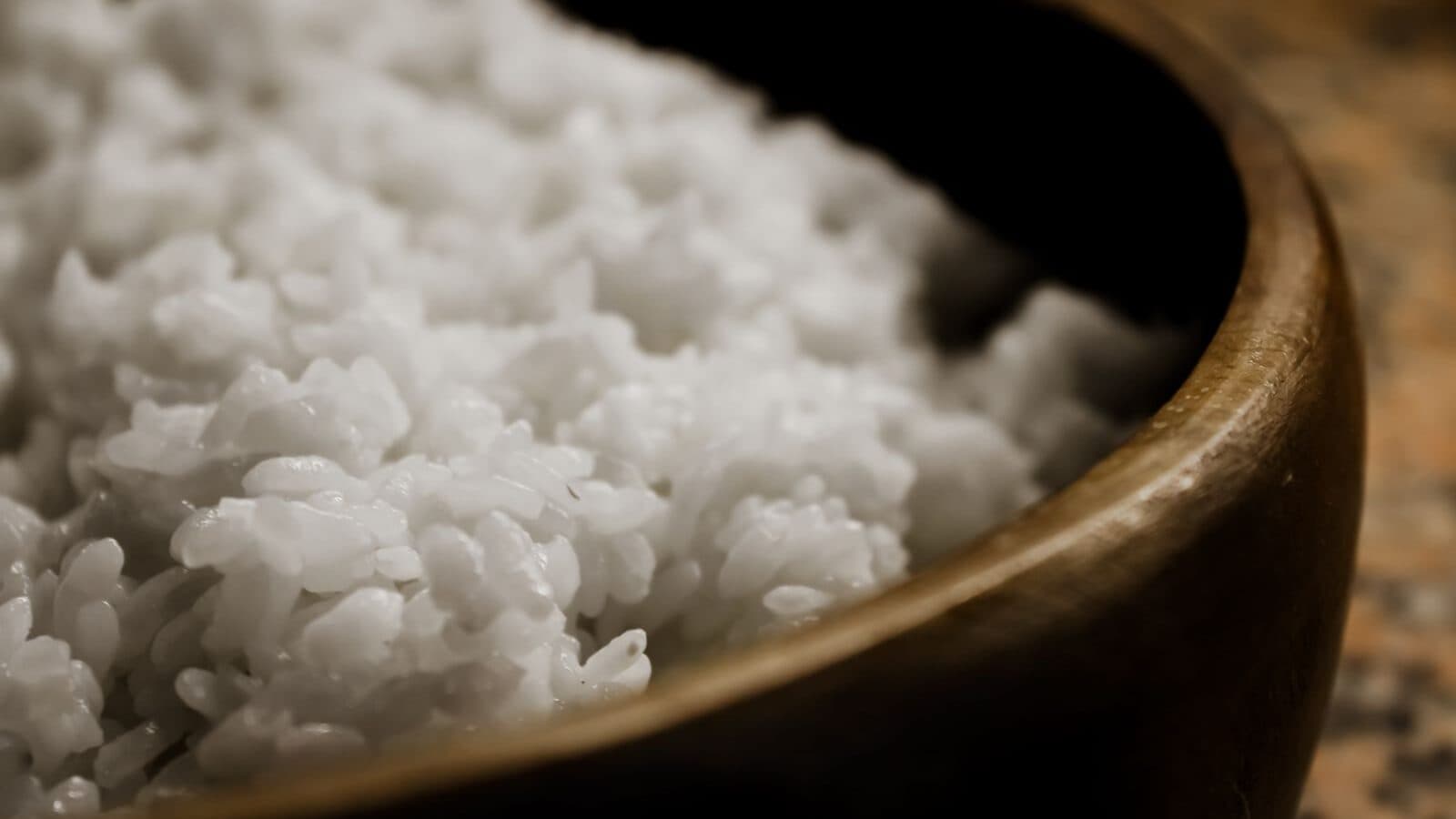
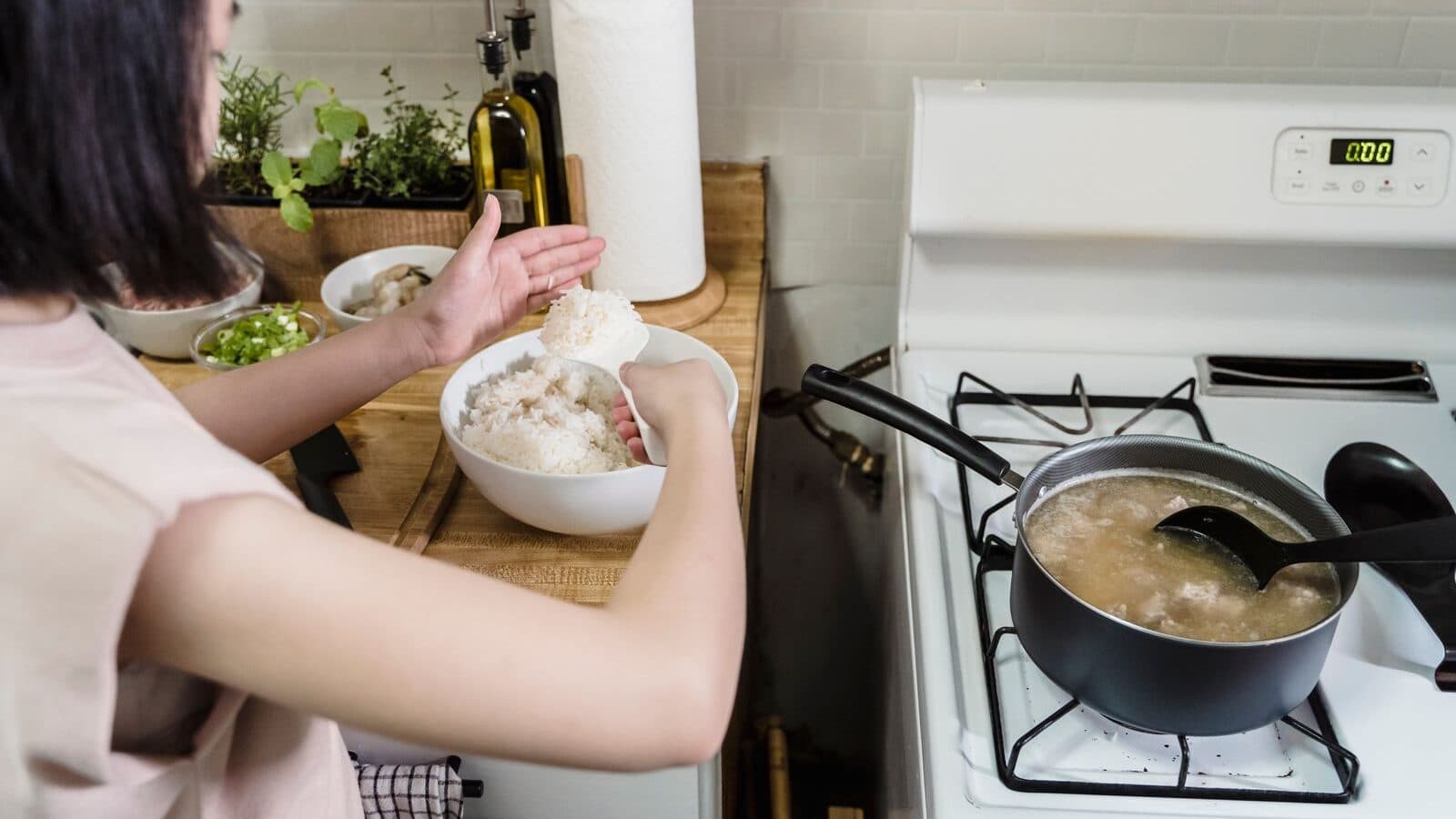
When the cycle ends, resist opening the lid. Leave the rice closed on keep-warm for about 10 minutes so the moisture redistributes and the bottom layer sets. Then open, slide the paddle down the side of the pot, and fluff by lifting and turning the rice to release steam — don’t stir it into a paste or scoop it packed down. This rest-and-fluff step is what separates fluffy rice from dense, sticky rice, and it costs you nothing but patience.
6. Use keep-warm — and know its limits
Keep-warm holds cooked rice above the safe temperature so it’s ready when you are. Better cookers keep rice pleasant for several hours, and premium keep-warm systems slow the quality decline noticeably. Still, keep-warm is a holding tool, not storage: the rice slowly dries and yellows over many hours, so eat it within a few hours for the best texture. For long holds, a cooker with a strong keep-warm reputation earns its price. What you should never do is leave cooked rice sitting out at room temperature — refrigerate leftovers promptly instead.
7. Go beyond plain rice
Most decent cookers are quietly multi-talented. With the steaming tray in place you can steam vegetables, dumplings, or fish above the rice while it cooks. The porridge or congee setting turns rice into breakfast; the same gentle cycle handles oatmeal and other whole grains like quinoa.
Some machines go further and become genuine multicookers. The Aroma Professional ARC-954SBD pairs its rice function with a 2-quart slow cooker and a steamer, uses Sensor Logic to adjust heat, and offers a Sauté-then-Simmer mode for grains — so one pot cooks rice, simmers a stew, or steams a side. If your kitchen is tight on space, that kind of overlap is worth planning around; our best small rice cookers guide leans into compact, do-more machines. And if you’re weighing a dedicated cooker against a do-everything pot, our rice cooker vs Instant Pot comparison lays out the trade-offs.
8. Clean and care for it
Longevity comes down to gentle habits. Hand-wash the nonstick inner pot with a soft sponge and warm soapy water — no metal utensils, scouring pads, or abrasive cleaners, which scratch the coating and shorten its life. If your cooker has a detachable inner lid and a steam cap, pop them off and wash them after each cook, since that’s where starchy spatter collects. Wipe the heating plate and the body with a damp cloth, and make sure the pot’s exterior and the plate are dry before you seat it back in. A pot treated this way stays reliable for years; an abused coating is the most common reason a good cooker gets retired early.
Sources
- Manufacturer specifications and included instruction manuals (Zojirushi, Aroma) for menu functions, keep-warm behavior, and inner-pot care.
- America’s Test Kitchen and Serious Eats coverage of rice-cooking technique, rinsing, and water ratios.
- Wirecutter’s rice-cooker guide for how fuzzy-logic and multicooker features compare in everyday use.
- USDA food-safety guidance on holding cooked foods above safe temperatures and refrigerating leftovers promptly.